What's the Right Age to Start Facial Aesthetic Treatment | Clariv Skin
-
- Published Updated
- 60 views
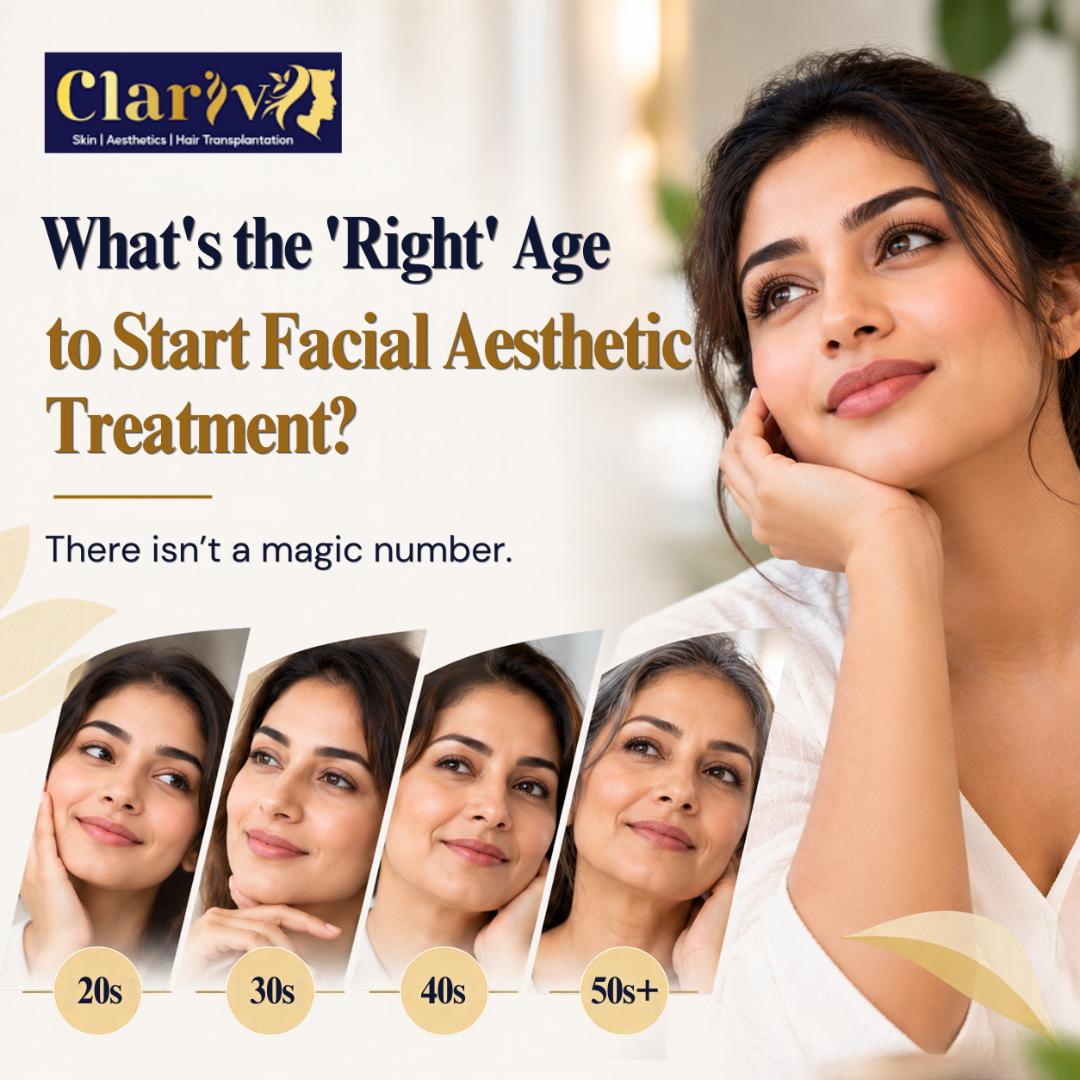
There's no single number that works as a universal answer here, and honestly, anyone who gives you one without asking about your specific skin and goals is oversimplifying a genuinely individual decision. Some people start in their late twenties with a preventive mindset, others wait until their forties when volume loss becomes more noticeable, and both approaches can be entirely reasonable depending on the person.
This article breaks down how age actually factors into facial aesthetic treatment decisions, the difference between preventive and corrective approaches, and what's worth discussing at Facial Aesthetic Clinics in Heelalige regardless of which category you fall into.
Facial Aesthetic Clinics Across Bangalore's Neighborhoods
Similar facial aesthetic care is also available across nearby localities, including facial aesthetic clinics in Hosa Road and facial aesthetic clinics in Ananth Nagar. Having options across these areas makes it easier to find a specialist nearby for this same honest, age-informed conversation.
Preventive vs Corrective: Two Different Approaches
What Preventive Treatment Actually Means
Preventive treatment generally refers to starting facial aesthetic care before significant signs of aging have developed, often focusing on maintaining existing collagen, preventing deeper line formation, and generally slowing visible changes rather than correcting something already noticeable. This approach has become increasingly popular among younger patients in their late twenties and early thirties.
What Corrective Treatment Actually Means
Corrective treatment, by contrast, addresses changes that have already become visible — established fine lines, noticeable volume loss, or more significant signs of aging that developed before treatment began. This remains the more traditional entry point for many patients, often starting in their forties or later.
Neither Approach Is Objectively "Right"
It's worth being clear that neither preventive nor corrective is inherently the better approach — they simply reflect different starting points and philosophies. What matters is choosing an approach that genuinely aligns with your specific skin, goals, and comfort level, rather than feeling pressured toward either extreme by marketing or social trends.
In Your Twenties: Is It Too Early?
What's Realistic at This Stage
For most people in their twenties, significant facial volume loss or deep static lines haven't yet developed, meaning there's often genuinely little to correct. That said, some twenty-somethings do pursue light preventive anti-wrinkle treatment specifically targeting expression lines before they become permanently etched, or very subtle enhancement treatments unrelated to aging concerns, like lip or jawline definition.
What a Thoughtful Practitioner Should Say
A responsible practitioner seeing a patient in their twenties should have an honest conversation about whether treatment is genuinely necessary or beneficial at this stage, rather than automatically recommending treatment simply because the patient asked. Sometimes the right answer is that treatment isn't needed yet, and that's a legitimate, patient-focused response.
In Your Thirties: A Common Starting Point
Why This Decade Sees Increased Interest
The thirties often bring the first genuinely noticeable signs of change for many people — subtle volume shifts, the beginning of expression lines becoming slightly more visible even at rest, or changes in skin texture and elasticity. This makes the thirties a common, reasonable decade for many people to begin exploring facial aesthetic treatment, whether preventive or lightly corrective.
What Treatment Often Looks Like at This Stage
Many patients in their thirties start with anti-wrinkle injections for expression lines, subtle filler for early volume support, or general skin treatments like chemical peels addressing texture and tone, often as a gradual, maintenance-focused approach rather than dramatic intervention.
In Your Forties and Beyond: More Noticeable Changes
Why This Stage Often Involves More Comprehensive Treatment
By the forties, collagen production has typically declined more significantly, often resulting in more noticeable volume loss, deeper static lines, and changes in facial contour that weren't present in earlier decades. This stage often involves more comprehensive treatment plans, sometimes combining multiple approaches to address several concerns simultaneously.
Why Starting Later Isn't a Disadvantage
It's worth emphasizing that starting facial aesthetic treatment later in life isn't inherently disadvantageous. Many patients achieve excellent, natural-looking results starting treatment for the first time in their forties or fifties, since modern techniques are well-suited to addressing more established signs of aging effectively.
Does Starting Earlier Actually Prevent More Aging Later
The Honest, Nuanced Answer
This is a genuinely debated question within aesthetic medicine, and the honest answer is more nuanced than confident marketing sometimes suggests. There's reasonable evidence that preventing deep, repeated muscle movement through early anti-wrinkle treatment can help delay the permanent etching of certain expression lines. However, this doesn't mean preventive treatment stops aging altogether, nor does it mean patients who start later are somehow "behind" in an irreversible way.
What This Means for Your Decision
Rather than treating this as a race against time, it's more useful to think of the decision based on your current, genuine concerns and comfort level with treatment, rather than anxiety about needing to start by a certain age to avoid some irreversible disadvantage.
Signs That Suggest It Might Be Time to Consider Treatment
Regardless of Your Specific Age
Rather than fixating on a specific number, it's often more useful to consider whether you're noticing specific changes that genuinely bother you — expression lines becoming more visible at rest, volume loss creating a tired appearance even when well-rested, or skin texture changes that regular skincare isn't addressing.
When Treatment Probably Isn't Necessary Yet
If you're exploring treatment purely because of external pressure, social media trends, or a vague sense that you "should" be doing something, rather than a genuine personal concern, it's worth taking time to reflect before booking, since treatment should address something you authentically want to change.
What a Good Consultation Should Cover Regardless of Age
An Honest Assessment Over Automatic Treatment
A thorough consultation should genuinely assess whether treatment is appropriate for your specific situation, rather than assuming every patient who walks in needs intervention. This includes an honest conversation about whether you're a good candidate for preventive treatment, corrective treatment, or possibly no treatment at all right now.
Setting Realistic, Age-Appropriate Expectations
Your practitioner should also set realistic expectations based on your specific age and skin condition, explaining what's genuinely achievable rather than promising results disconnected from your actual starting point.
Questions Worth Asking at Any Age
• Based on my specific skin and concerns, would you recommend starting treatment now, or waiting?
• What's the difference between what preventive and corrective treatment would look like for me specifically?
• Are there non-invasive alternatives worth trying before considering injectables?
• How does my specific age factor into your recommendation?
A practitioner who takes time to genuinely answer these, including potentially recommending you wait, is generally more trustworthy than one who pushes treatment regardless of your actual situation.
Final Thoughts
There's no single correct age to start facial aesthetic treatment — it genuinely depends on your individual skin, specific concerns, and personal comfort level with treatment, rather than a fixed number that applies universally. Whether you're exploring preventive care in your late twenties or considering your first treatment in your fifties, what matters most is an honest, individualized assessment rather than age-based assumptions in either direction.
If you're trying to figure out whether now is the right time for you specifically, visiting Clariv Skin for a consultation is a good way to get an honest, personalized assessment rather than guessing based on general age guidelines.
Contact Details
Clariv Skin — Hair, Skin & Aesthetic Clinic
Call Now: +91 77600 56665
Email ID: [email protected]
View Site: www.clarivskin.in