The Unseen Connection: Why Treating Your Skin Means Healing Your Gut
-

- Published Updated
- 3,458 views
There is a unique kind of exhaustion that comes with living with chronic skin flare-ups.
Whether it’s a sudden patch of red, scaly skin on your elbows or relentless flaking that makes you second-guess wearing black clothing, the physical discomfort is only half the battle. The emotional toll of constantly hiding your skin, trying new creams, and waiting for the next flare-up can feel like a full-time job.
Most of us follow the standard routine: buy a stronger steroid cream, switch to a hyper-allergenic lotion, or take an antihistamine to stop the itch. But after months or years of playing whack-a-mole with surface symptoms, a frustrating pattern emerges. The cream might calm the redness for a week, but the moment you stop using it, the patch creeps right back.
This endless cycle leaves many people asking a fundamental question: Why are we treating a deep, systemic issue purely from the outside?
When the Skin Speaks for the Gut
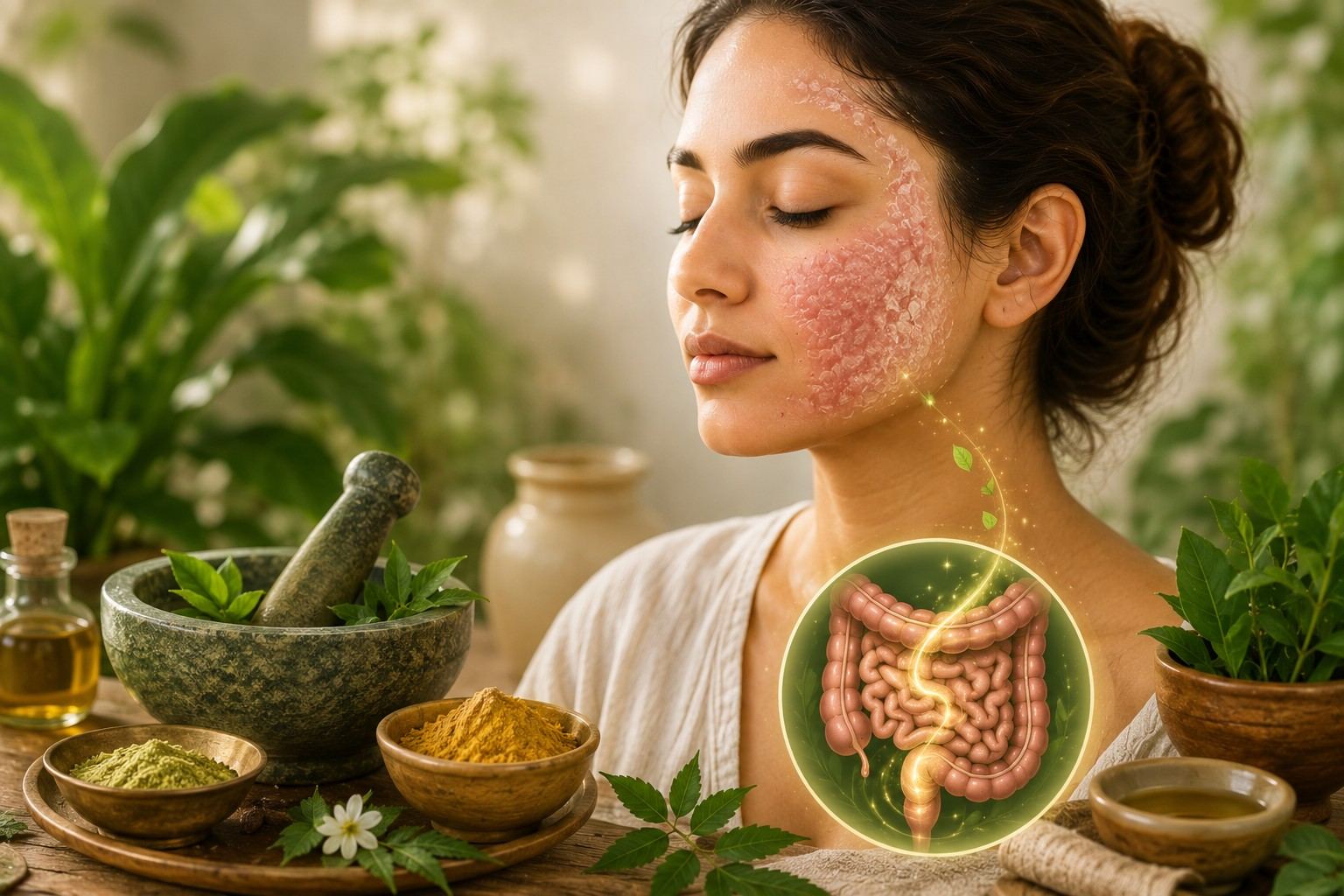
In traditional holistic systems, skin is never viewed as an isolated layer. It is a mirror reflecting the state of your internal environment—specifically, your digestive health and blood circulation.
When your digestion is sluggish or operating out of sync, your body fails to process food efficiently. Instead of clean fuel, incomplete digestion produces a heavy, sticky metabolic residue known in Ayurveda as Ama.
Think of Ama as biological clutter. When it builds up in the gut, it doesn't just sit there; it eventually enters the bloodstream and travels throughout the body. The skin, being your largest organ of elimination, attempts to push these metabolic toxins out.
The result? Redness, scaling, intense dryness, and tissue thickening.
Dryness and Flaking: Driven by an overactive nervous system and dry internal qualities (Vata imbalance), causing the skin barrier to crack easily.
Thickening and Scaling: Caused by heavy, stagnant metabolic energy (Kapha imbalance), leading to dense, itchy patches that feel impossible to soothe.
Redness and Heat: Fueled by systemic heat and toxins carried in the blood stream (Pitta imbalance).
When you look at skin flare-ups through this lens, applying a topical cream is like painting over a damp wall without fixing the leaking pipe behind it.
Shifting from Suppression to Deep Cleansing
True resolution requires going inward. Instead of forcing the skin into temporary submission, traditional therapeutic approaches work to clear the digestive channels, purify the blood, and calm an overstimulated nervous system.
Internal Purification
Before any skin condition can truly clear, the accumulated metabolic toxins must be safely removed from the tissues. Clinical detoxification methods—such as Virechana (medicated purgation to clear heat from the liver and gut) or Basti (nourishing herbal enemas)—work to reset the internal environment, addressing the root cause of systemic inflammation rather than suppressing it.
Soothing the Outer Layer
While internal cleansing takes place, specialized external therapies provide direct relief to irritated tissues:
Thakradhara: A continuous, rhythmic pouring of cooling, medicated buttermilk over the forehead. This therapy simultaneously calms an overactive stress response and reduces skin heat.
Herbal Poultices and Lepas: Applying targeted pastes made from cooling, blood-purifying botanicals directly to affected areas helps cool local inflammation and ease persistent itching.
Nourishing Oil Massage (Abhyanga): Using specialized herbal oils helps rebuild the skin’s compromised moisture barrier and soothes hyper-sensitive nerve endings.
For a deeper dive into these therapeutic protocols, you can explore this detailed breakdown on
Simple Daily Choices for Calmer Skin
While specialized clinical care offers deep restoration, small, intentional choices in your daily life keep inflammation at bay:
Simplify Your Foods: Avoid heavy, greasy, or overly spiced meals that generate excess heat in the digestive tract. Opt for warm, freshly cooked foods, and sip on warm water infused with cumin or fennel throughout the day.
Protect Your Skin Barrier: Ditch harsh synthetic soaps and hot showers that strip away natural oils. Stick to gentle, plant-based cleansers and wear soft, breathable fabrics like organic cotton.
Calm the Stress Response: Stress is one of the most immediate triggers for skin flare-ups. Simple daily practices—like ten minutes of alternate nostril breathing (Pranayama) or a quiet evening walk—help lower cortisol levels and prevent stress-induced flare-ups.
Taking the First Step Toward Real Relief
Managing a chronic skin condition like psoriasis or eczema shouldn't feel like a constant battle against your own body. It’s simply your skin's way of asking for a deeper level of care.
If you are ready to move beyond temporary fixes and explore root-cause healing, finding the right guidance is crucial. Platforms like
Your skin has the innate capacity to heal and renew itself—it just needs the right internal support to get there.