Finance PPC Campaign Strategies: CPC Advertising for Financial Services
-

- February 23rd, 2026
- 1,305 views

FREE SEO Topical Map Generator: Find Your Next Content Ideas
Running a Finance PPC campaign requires careful planning across targeting, cost-per-click (CPC) bidding, creative, and compliance. This guide explains how paid search and CPC advertising work for financial services, outlines common performance metrics, and summarizes regulatory considerations and best practices for long-term campaign health.
- Define goals (lead volume, cost-per-acquisition, revenue) before launching.
- Use precise audience segmentation, negative keywords, and conversion-focused landing pages.
- Monitor CPC, CPA, conversion rate, and lifetime value (LTV) to assess ROI.
- Follow advertising rules and transparency required by financial regulators.
How to build a Finance PPC campaign strategy
Start by translating business objectives into measurable metrics: target cost-per-acquisition (CPA), acceptable CPC, forecasted conversion rate, and target return on ad spend (ROAS). A finance PPC campaign typically supports objectives such as lead generation for mortgages, credit cards, personal loans, investment accounts, or insurance quotes. Clarify whether campaigns prioritize volume, quality, or lifetime customer value; these choices govern bidding, budget allocation, and creative approach.
Audience targeting and keyword strategy
Segmentation and intent
Segment audiences by intent (research vs. ready-to-convert), demographic attributes, and lifecycle stage. Use search intent signals and custom intent audiences in paid search and display channels. For high-intent keywords, expect higher CPC but better conversion rates.
Keyword selection and negatives
Combine broad-match modifiers, phrase match, and exact match terms to control reach. Maintain an evolving negative keyword list to filter unrelated queries. For financial topics, exclude informational or regulatory queries that do not convert, and separate brand vs. non-brand campaigns to manage CPCs and performance.
Ad creative, landing pages, and messaging
Ad copy best practices
Create clear, compliant headlines and descriptions that state offers, eligibility, and call-to-action. Use value-focused language like "compare rates" or "get a quote" and include credible trust cues (regulated disclaimers, licensed advisor notes) when appropriate.
Landing page conversion design
Match ad copy to landing page content to reduce friction and increase Quality Score equivalents. Optimize forms for minimal fields, load speed, mobile usability, and clear privacy disclosures. Use A/B testing to iterate on form length, CTAs, and page layout.
Bidding strategies, budgets, and CPC management
Bidding options and automation
Choose bidding tactics aligned to goals: manual CPC control for tight margins, target CPA or target ROAS for automated scaling. Test bid automation on a subset of campaigns and monitor for changes in lead quality. Factor in seasonality and product-specific demand when setting daily budgets.
CPC and cost controls
Track average CPC alongside conversion rate and CPA. High CPCs in competitive financial verticals are common; prioritize keywords that balance cost and conversion likelihood. Use bid adjustments by device, location, and audience to refine spend efficiency.
Measurement, analytics, and optimization
Key performance metrics
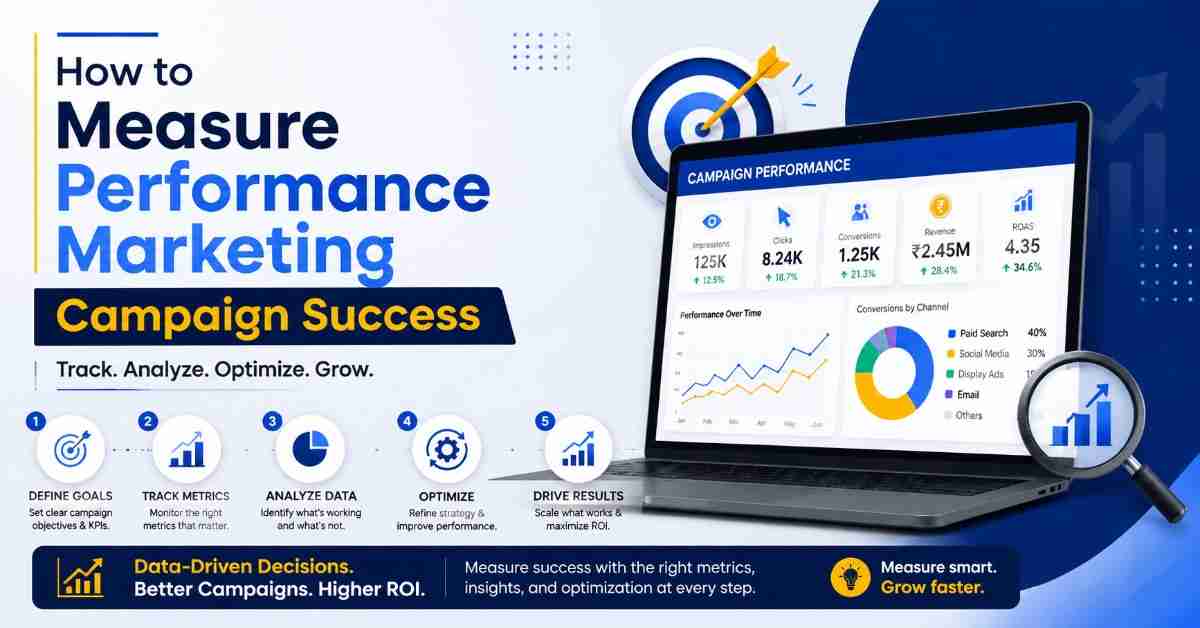
Monitor CPC, CTR, conversion rate, CPA, lifetime value (LTV), return on ad spend (ROAS), and incremental lift. Implement reliable conversion tracking—server-side or tag manager solutions can reduce attribution loss. Tie paid search performance to CRM data when possible to measure downstream revenue.
Experimentation and scaling
Run structured experiments (A/B tests, holdout groups) to validate changes in creative, landing pages, or bidding. Scale winning tactics gradually and isolate variables to understand causation. Use cohort analysis to evaluate long-term customer value from paid channels.
Compliance, transparency, and trust signals
Regulatory considerations
Financial advertising is subject to rules from regulators such as the U.S. Federal Trade Commission (FTC), the U.K. Financial Conduct Authority (FCA), and securities regulators in various jurisdictions. Advertisements must not be misleading and often require specific disclosures about rates, terms, or risks. Advertising platforms may also impose category-specific policies for financial products.
Trust and credibility measures
Display clear disclaimers, licensing information, and privacy notices. Where applicable, include certified seals, third-party reviews, or links to regulatory registrations to increase user confidence. Maintain transparent data handling practices and opt-in consent for communications.
For general U.S. advertising guidance and consumer protection principles, consult the Federal Trade Commission's advertising resources: FTC Advertising & Marketing Guidance.
Tools, platforms, and data sources
Common analytics and campaign tools
Use search engine ad platforms, demand-side platforms (DSPs), tag managers, and CRM integrations to manage campaigns and track leads. Leverage impression and click data with offline conversion imports to close the measurement loop between ad touchpoints and funded accounts.
Data privacy and tracking
Comply with local data protection laws (e.g., GDPR, CCPA) when collecting and processing user information. Adopt privacy-safe measurement techniques like aggregated reporting and consent-based tracking where required.
Frequently asked questions
What is a Finance PPC campaign and how does CPC advertising work?
A Finance PPC campaign is a paid search or paid media effort focused on financial products and services. CPC advertising charges advertisers each time a user clicks an ad. Campaigns are optimized by balancing CPC, conversion rate, and downstream revenue to meet CPA or ROAS goals.
Which metrics matter most for financial ads?
Primary metrics include cost-per-click (CPC), click-through rate (CTR), conversion rate, cost-per-acquisition (CPA), lifetime value (LTV), and return on ad spend (ROAS). Quality of leads is as important as volume—connect ad data to CRM outcomes to assess true performance.
How should compliance be handled in financial advertising?
Review relevant regulator rules for disclosures and prohibited claims, document compliance workflows, and include required disclaimers in ad creative and landing pages. Maintain records of creative approvals and compliance checks.
How often should a finance PPC campaign be reviewed?
Monitor performance daily for spend and pacing, review weekly for optimization actions, and conduct in-depth performance and attribution analyses monthly or quarterly to update strategy and budgets.
Can CPC advertising be profitable for highly regulated financial products?
Profitability depends on offer margins, conversion rates, and customer lifetime value. Use careful targeting, conversion optimization, and compliance-aware creative to improve unit economics over time.