How Flutter App Development Is Changing the Way Businesses Build Mobile Apps
-

- Published Updated
- 38 views
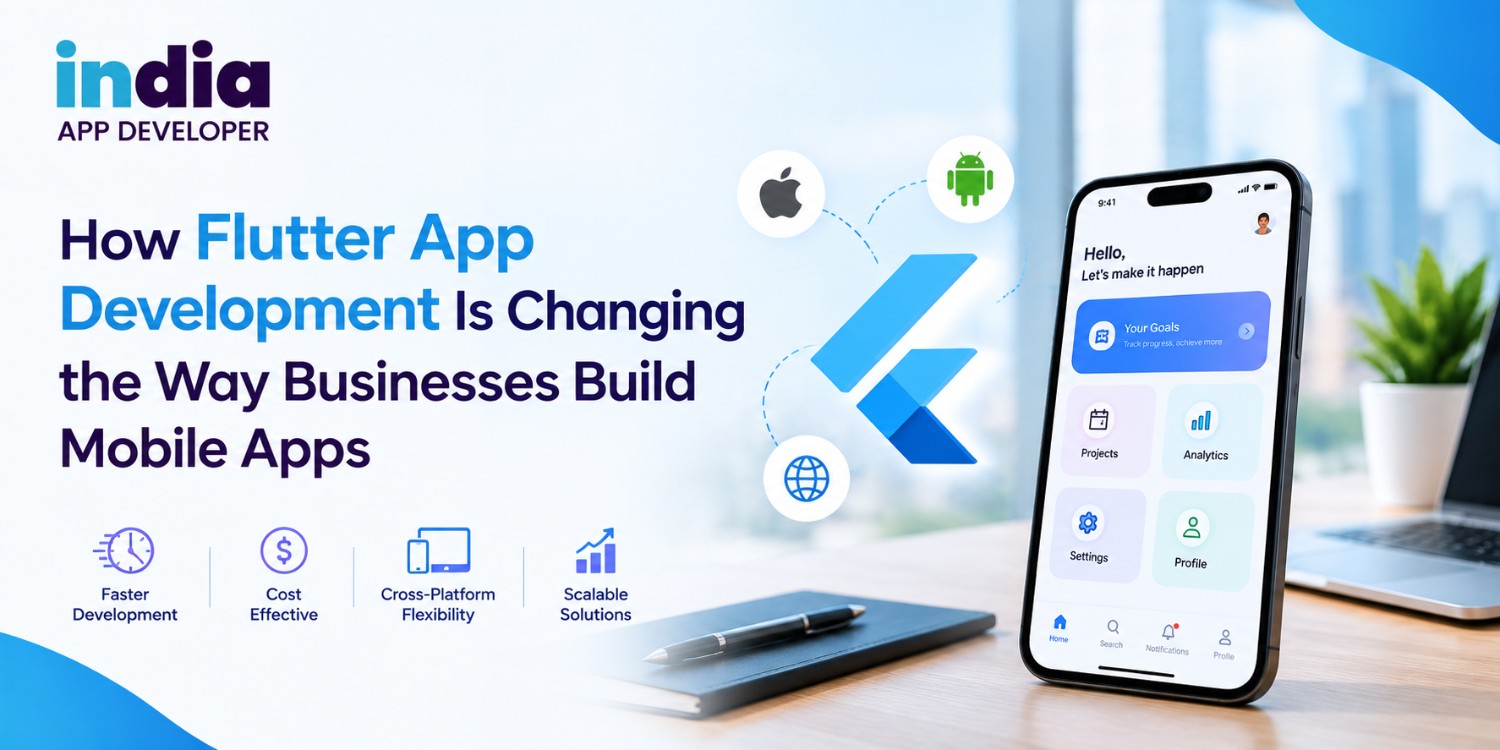
Mobile applications have become an important part of how businesses connect with customers, deliver services, and manage digital operations. From startups testing new ideas to established companies expanding their digital products, businesses increasingly need applications that provide reliable experiences across different devices and platforms.
At the same time, building separate applications for Android and iOS can involve different development environments, codebases, testing processes, and maintenance requirements. These challenges have encouraged businesses to explore cross-platform app development approaches that can simplify parts of the development lifecycle.
Flutter app development is one approach that has gained attention in this area. By allowing developers to build applications from a shared codebase, Flutter can change how businesses approach application design, development, testing, and ongoing improvements.
What Is Flutter App Development?
Flutter is an open-source UI software development kit created by Google. It enables developers to build applications for Android, iOS, web, desktop, and other supported platforms using a common framework.
Flutter applications are primarily developed with the Dart programming language. Instead of creating completely separate implementations for every mobile platform, developers can reuse a significant amount of application logic and interface code.
Another important aspect of Flutter is its widget-based architecture. Developers can use and customize widgets to create interfaces, navigation elements, buttons, layouts, animations, and other components. This provides flexibility when building applications with consistent visual experiences.
For businesses considering Flutter mobile app development, this shared development approach can provide an alternative to maintaining entirely separate application projects for each platform.
Why Businesses Are Rethinking Mobile App Development
Mobile app development has traditionally involved choosing between different platform-specific technologies. Native development can provide direct access to platform capabilities, but businesses developing for both Android and iOS may need to manage separate development processes.
Modern businesses also need to respond quickly to customer feedback. Features may need to be tested, redesigned, or updated as user expectations change. A development approach that makes iteration easier can therefore be valuable.
This is one reason cross-platform app development has become an important consideration for businesses. Instead of treating each platform as a completely separate project, teams can look for ways to share development resources while still delivering a quality experience.
Flutter is part of this broader movement toward reusable development approaches. Its goal is not simply to make development faster, but to provide a framework through which teams can build and maintain applications across multiple platforms.
How Flutter Is Changing the Mobile App Development Process
Flutter can influence several stages of the application development lifecycle, from initial prototypes to ongoing product updates.
Faster Prototyping and Iteration
Businesses often need to validate an application concept before investing heavily in a full product. Prototypes and minimum viable products can help teams understand whether an idea meets user needs.
Flutter's development workflow supports rapid experimentation. Developers can make interface changes and review the results during development, making it easier to test different layouts, interactions, and user flows.
This can be particularly useful for startups and businesses whose product requirements may evolve during the early stages of development.
A Shared Codebase
One of the most recognized characteristics of Flutter application development is the use of a shared codebase for multiple platforms.
Rather than maintaining completely independent implementations for Android and iOS, developers can reuse a significant portion of the application's code. Platform-specific functionality may still require additional implementation, but a shared foundation can reduce duplicated development work in suitable projects.
A common codebase can also make certain updates easier to coordinate because developers can manage shared functionality from a unified development environment.
Consistent User Interfaces
Providing a consistent experience across platforms can be challenging when applications are built independently.
Flutter's customizable widgets give developers control over the appearance and behavior of many interface components. Businesses can use this flexibility to maintain consistent branding, navigation patterns, and interaction styles.
For users, a familiar interface can make an application easier to understand regardless of which supported device or platform they use.
Faster Product Iteration
Applications rarely remain unchanged after launch. Businesses may introduce new features, respond to customer feedback, improve existing workflows, or fix usability issues.
Flutter development can support this iterative approach by providing a workflow where developers can quickly modify and test application components. This can help teams refine products as they learn more about their users.
Key Business Benefits of Flutter App Development
The benefits of Flutter app development can vary depending on the project, but several characteristics make it relevant to modern businesses.
Development Efficiency
A shared codebase can reduce duplicated development efforts across supported platforms. This allows teams to dedicate more attention to application functionality, user experience, testing, and product improvements.
Consistent Digital Experiences
Flutter provides tools for creating interfaces with consistent visual behavior. This can help businesses maintain a recognizable design language across their mobile applications.
Flexible Development
Business requirements can change over time. A flexible development framework can make it easier to experiment with new features and refine existing application experiences.
Simplified Management for Suitable Projects
Managing a common application foundation can simplify certain development and maintenance activities. However, the actual benefits depend on the application's architecture, integrations, platform requirements, and development practices.
Businesses should therefore evaluate Flutter based on their specific technical and product requirements rather than assuming that the same approach will work equally well for every application.
How Flutter Supports Startups and Growing Businesses
Startups often need to balance product development with limited resources and changing requirements. They may want to validate an idea before committing to a larger development investment.
Flutter app development for startups can be useful when a business wants to create an initial product for multiple platforms and then refine it based on user feedback.
For example, a startup may begin with a core set of features, launch an MVP, collect feedback, and gradually introduce additional functionality. A shared development approach can support this type of iterative product development.
Growing businesses can also use Flutter when expanding an existing digital product. New screens, workflows, integrations, and features can be added as business requirements evolve.
Development teams such as IndiaAppDeveloper may consider factors such as application architecture, platform requirements, integrations, and scalability when approaching cross-platform projects. The specific technology choice should still be based on the needs of the individual product.
Where Flutter May Not Be the Right Fit
Flutter can be suitable for many applications, but it is not automatically the right choice for every project.
Some applications depend heavily on platform-specific functionality or specialized native technologies. In such cases, native development may provide more direct access to particular platform capabilities.
Applications involving specialized hardware, advanced platform-specific features, or unusual performance requirements may also require a different technical approach.
Businesses should therefore assess their requirements before selecting a framework. Factors such as target platforms, application complexity, integrations, performance expectations, security requirements, and long-term maintenance should all be considered.
What to Consider Before Starting a Flutter App Project
Before beginning a Flutter project, businesses should clearly define their product requirements.
The first consideration is the target platform. Businesses should determine whether they need Android, iOS, web, desktop, or a combination of platforms.
Next, the core application functionality should be documented. Features such as authentication, payment processing, location services, push notifications, APIs, analytics, and third-party integrations can influence the overall architecture.
Scalability is another important consideration. A small MVP may have different requirements from an enterprise application expected to support a large user base.
Testing and maintenance should also be considered from the beginning. A well-organized architecture, appropriate testing strategy, documentation, and development workflow can make long-term application management more practical.
Finally, technical expertise matters. Experienced Flutter app developers can help businesses evaluate packages, structure application components, address platform-specific requirements, and plan for future updates.
The Future of Cross-Platform App Development
The need for applications across multiple platforms is likely to remain important as businesses continue expanding their digital services.
Flutter development is part of a wider shift toward reusable and cross-platform development approaches. Instead of maintaining completely independent development processes for every platform, businesses can evaluate frameworks that allow teams to share code and development resources where appropriate.
However, application quality will remain more important than the choice of framework alone. Performance, security, accessibility, user experience, scalability, and maintainability all influence whether an application can succeed over the long term.
For this reason, the future of mobile app development is likely to involve a combination of technologies and approaches. Businesses will continue choosing frameworks according to their product requirements, customer expectations, development resources, and long-term objectives.
Companies such as IndiaAppDeveloper can be part of this broader development ecosystem by working with businesses on different types of mobile application projects. The important consideration is to match the development approach with the project's actual requirements.
Conclusion
Flutter app development is changing how businesses can approach cross-platform mobile application projects. Its shared codebase, customizable UI components, development workflow, and multi-platform capabilities provide teams with an alternative way to build and iterate on digital products.
For startups, Flutter can support the development and testing of new product ideas. For established businesses, it can provide an approach for creating consistent mobile experiences across platforms.
However, businesses should not choose a technology simply because it is popular. Application complexity, platform requirements, integrations, performance expectations, security, maintenance, and long-term business goals should all be considered before development begins.
When these requirements align with Flutter's capabilities, it can be a practical option within a modern cross-platform app development strategy.