
When Performers Turn into Threats The Thrills of FNAF
-

- Published Updated
- 1,843 views

Introduce
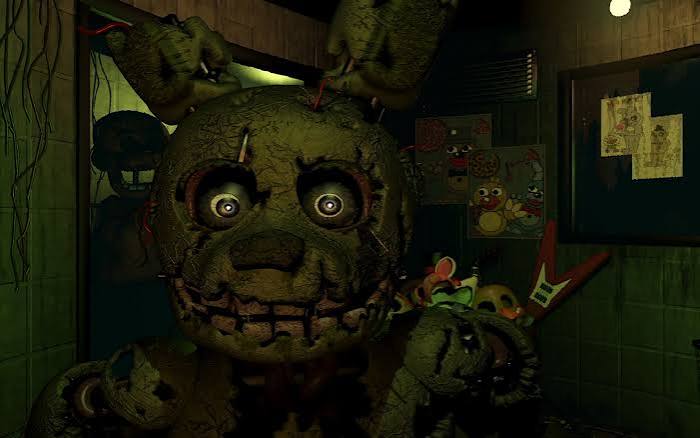
An interesting aspect of fnaf is that replayability doesn't stem from a desire to explore a brand-new world. Players might return simply to gauge how much they have improved. A level that once seemed daunting becomes manageable once the mechanics are understood; a shift that previously led to repeated errors can be completed with far greater calm. It is this evolution in skill that allows the same game to evoke different feelings at different times. This represents a unique form of replayability: players return not just for the content, but to put their own abilities to the test. Every failure yields experience, while every success builds confidence. Over time, players may begin to set personal goals—such as completing a night more steadily or minimizing mistakes. The game thus becomes an environment for self-imposed challenges. This explains why FNAF retains its appeal even after players have grasped its fundamental structure. As game knowledge deepens, the objective shifts from the simple question "Can I beat this?" to the more nuanced "How well can I do it?"
FNAF offers far more than just the satisfaction of clearing those initial nights. As the series evolved, the original formula expanded in various directions. A prime example is *Ultimate Custom Night* (2018), which allows players to select from 50 animatronic characters and set their difficulty levels on a scale of 0 to 20. This demonstrates how the *FNAF* formula can be transformed into a highly customizable challenge system. Players are no longer confined to a fixed structure but can instead craft their own unique scenarios. From an experiential standpoint, this represents a significant shift, turning replayability into a process of actively configuring difficulty. Players can choose a challenge level suited to their skills or devise a more demanding setup to test their limits. This customizability expands the very concept of "beating the game"; when the challenge is variable, a single victory does not necessarily mark the end, but can instead serve as the starting point for a new objective. Thus, *FNAF* is remembered not merely for its horror formula, but for its capacity to adapt that formula into a wide range of distinct experiences.
A notable aspect of FNAF is that the game does not need to constantly generate major events to hold the player's attention. Periods of relative calm play a crucial role in pacing; they give players time to observe, reflect, and prepare for their next move. If every moment were intensely stressful, the experience could quickly become exhausting. However, by interspersing moments of quiet, the game ensures that subsequent shifts stand out more sharply. This creates a distinctive rhythm of anticipation and reaction. Players remember not only the moments when events occur but also the preceding intervals of uncertainty, where they didn't know what might appear next. Consequently, the silence in FNAF is not merely empty space; it is an integral part of the game's pacing. Players are kept in a state where something *could* happen at any moment, yet the exact timing remains unknown. Thus, even periods that appear devoid of action retain their significance. This is a subtle technique the game uses to craft its unique atmosphere without relying constantly on grand spectacles.
There is a clear distinction between beating a standard level and completing a shift in FNAF. As the clock ticks toward the end, players see more than just a time marker; they feel the weight of the entire experience they have just endured. The opening minutes might be filled with confusion, the middle phase may demand intense concentration, and the final moments are often charged with anticipation. Therefore, when the shift ends, the greatest reward is often the simple realization: "I made it." This satisfaction doesn't necessarily stem from unlocking a new item or character; rather, it comes from having maintained one's composure and made enough correct decisions to reach the finish line. This feeling is particularly potent the first few times a player successfully completes a night. Players come to realize that situations which once caused them anxiety have now become part of their experience; a seemingly simple job transforms into a test they have successfully passed. The shift-based structure gives victory in FNAF a clear sense of closure. Players know exactly when they have completed a stage, while also understanding that further challenges await.



![Anomaly: The Rotting World [v0.1] – Game Overview](https://indibloghub.com/public/images/courses/6a42323801101189_1782723128.jpg)
