Food Delivery Dispatch Software: Streamline Last‑Mile Delivery and Fleet Operations
-

- February 23rd, 2026
- 1,227 views

FREE SEO Topical Map Generator: Find Your Next Content Ideas
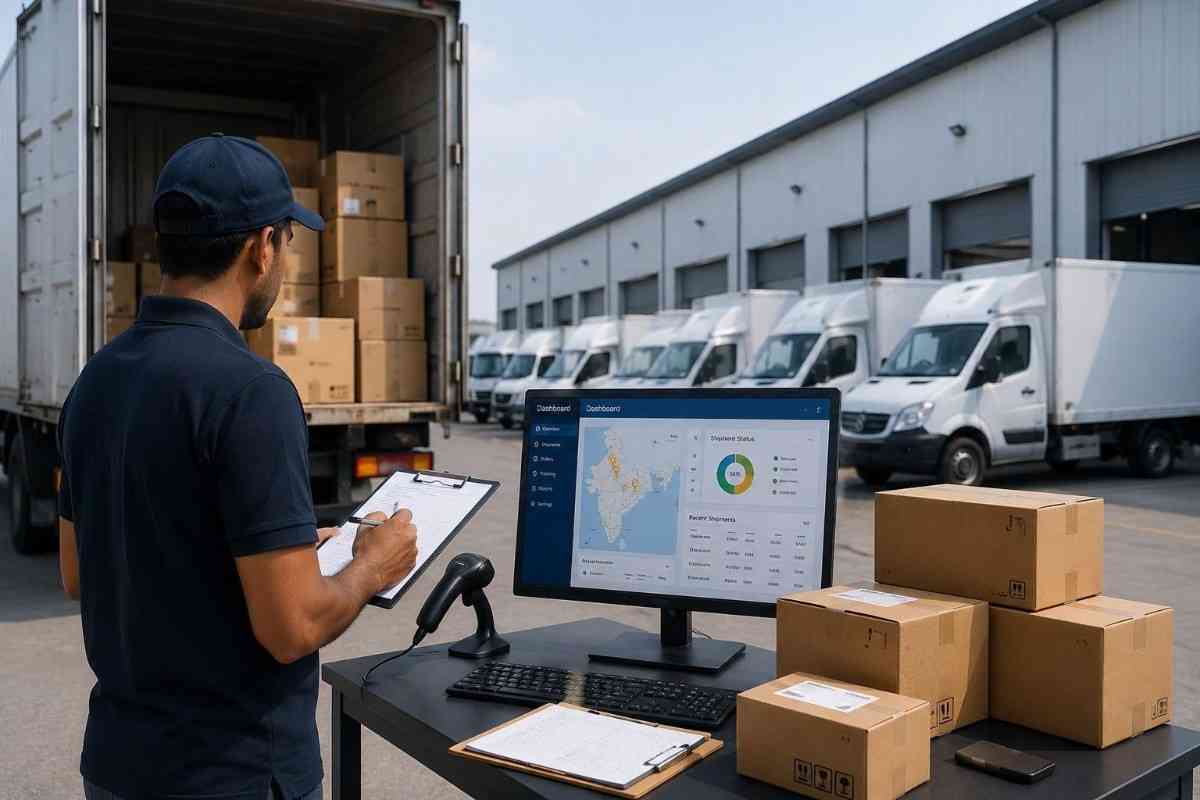
Food delivery dispatch software is a class of logistics platforms designed to coordinate orders, drivers, routes, and customer communications for restaurants, grocery services, and courier operations. These systems combine order management, real‑time dispatching, GPS tracking, and route optimization to make last‑mile delivery more predictable and efficient.
- Dispatch software centralizes orders, drivers, and routes for faster fulfillment.
- Key features include route optimization, real‑time tracking, ETA prediction, and driver apps.
- Integrations with POS systems, payment gateways, and APIs are common.
- Compliance, safety, and data privacy are important operational considerations.
Benefits of food delivery dispatch software
Implementing food delivery dispatch software can reduce delivery times, cut fuel and labor costs, and improve customer satisfaction by providing accurate ETAs and status updates. Route optimization algorithms consolidate multiple stops into efficient runs, while fleet tracking and telematics enable monitoring of driver behavior and vehicle utilization. For businesses managing hundreds of daily orders, automated dispatch reduces manual coordination errors and allows more deliveries per driver-hour.
Key features and how they work
Order management and prioritization
Centralized order boards gather incoming orders from multiple sources (online platforms, in‑store POS, phone) and apply rules for prioritization, such as delivery distance, promised time windows, and food preparation status. Automated assignment reduces wait time between food readiness and pickup.
Route optimization and multi‑stop planning
Route optimization uses mapping services and algorithms to sequence stops for minimal travel time and distance while honoring delivery windows. Many systems recalculate routes in real time to accommodate new orders, traffic changes, or driver availability.
Real‑time dispatch and fleet tracking
Real‑time dispatch sends assignments to driver apps and provides live GPS tracking for operations teams and customers. Visibility into driver location and ETA allows proactive communication when delays occur.
Driver apps and proof of delivery
Driver apps provide turn‑by‑turn navigation, order details, customer notes, and tools for contactless delivery verification (photos, signatures, QR scans). Proof of delivery data supports dispute resolution and accurate performance metrics.
Integration and technical considerations
POS and ordering integrations
Tight integration with point‑of‑sale systems and online ordering channels reduces double‑entry and order errors. Common integration points include menu synchronization, order status updates, and payment reconciliation.
APIs, webhooks, and extensibility
APIs and webhooks allow custom workflows, third‑party analytics, and connection to inventory or CRM systems. Clear API documentation and robust authentication protocols are essential for reliable integrations.
Data analytics and reporting
Operational dashboards aggregate KPIs such as on‑time delivery rate, average delivery time, cost per delivery, and driver efficiency. Historical data supports route planning, staffing forecasts, and marketing attribution.
Compliance, safety, and privacy
Regulatory and safety considerations vary by jurisdiction. Rules on driver hours, vehicle maintenance, and commercial insurance may apply. For businesses operating in the United States, federal and state transportation regulations guide safety and compliance practices; for example, guidance from the U.S. Department of Transportation can inform fleet policies and risk management (U.S. Department of Transportation).
Data privacy is also important: collecting customer contact details, delivery addresses, and payment records requires secure storage, access controls, and adherence to local privacy laws.
Operational impacts and measuring success
Key performance indicators
Common KPIs include on‑time delivery rate, average delivery time, cost per delivery, driver utilization, and customer satisfaction scores. Benchmarks depend on business size and service model (e.g., scheduled deliveries vs. on‑demand couriers).
Scalability and cost considerations
Software subscription models, per‑order fees, and implementation costs vary. Evaluate scalability by considering peak order volumes, geographic expansion, and integrations required for growth.
Implementation checklist
- Define delivery model and service areas.
- Map required integrations (POS, payments, CRM).
- Establish operational rules for dispatching and cancellations.
- Train drivers on app workflows, safety, and customer interaction.
- Set up monitoring dashboards and SLA targets.
Common challenges and mitigation
Handling variability and spikes
Peak periods create route and capacity challenges. Flexible driver pools, dynamic pricing, and temporary zones for batching orders can mitigate overloads.
Maintaining food quality during transit
Insulated carriers, proper packing standards, and minimizing pickup‑to‑delivery time help preserve food temperature and presentation. Dispatch rules that consider preparation time reduce the chance of early pickups.
Driver retention and training
Clear incentives, predictable scheduling, and straightforward app interfaces improve retention. Ongoing training on safe driving and customer service supports consistent performance.
Frequently asked questions
What is food delivery dispatch software?
Food delivery dispatch software is a system that coordinates orders, drivers, routes, and customer communication to automate assignment, optimize routing, and provide real‑time tracking for last‑mile food delivery operations.
How does route optimization improve delivery times?
Route optimization reduces travel distance and time by sequencing stops efficiently, grouping orders by proximity and time window, and rerouting dynamically to avoid traffic or delays, which shortens delivery windows and increases capacity.
What integrations are most useful for delivery operations?
Integrations with POS systems, payment processors, online ordering platforms, and mapping/traffic services are most valuable. APIs for custom reporting and CRM connections support operational and marketing workflows.
How should success be measured after implementation?
Track KPIs such as on‑time delivery rate, average delivery time, cost per delivery, driver utilization, and customer satisfaction. Compare against historical baselines and industry benchmarks to assess improvements.
Are there regulatory or safety resources to consult?
Consult national and local transportation regulators for guidance on driver hours, vehicle safety, and commercial operations. Industry best practices and regulatory guidance help ensure safe and compliant delivery programs.