Gel vs Cream Moisturizer: How to Choose the Right Texture for Your Skin
-

- Published Updated
- 1,646 views
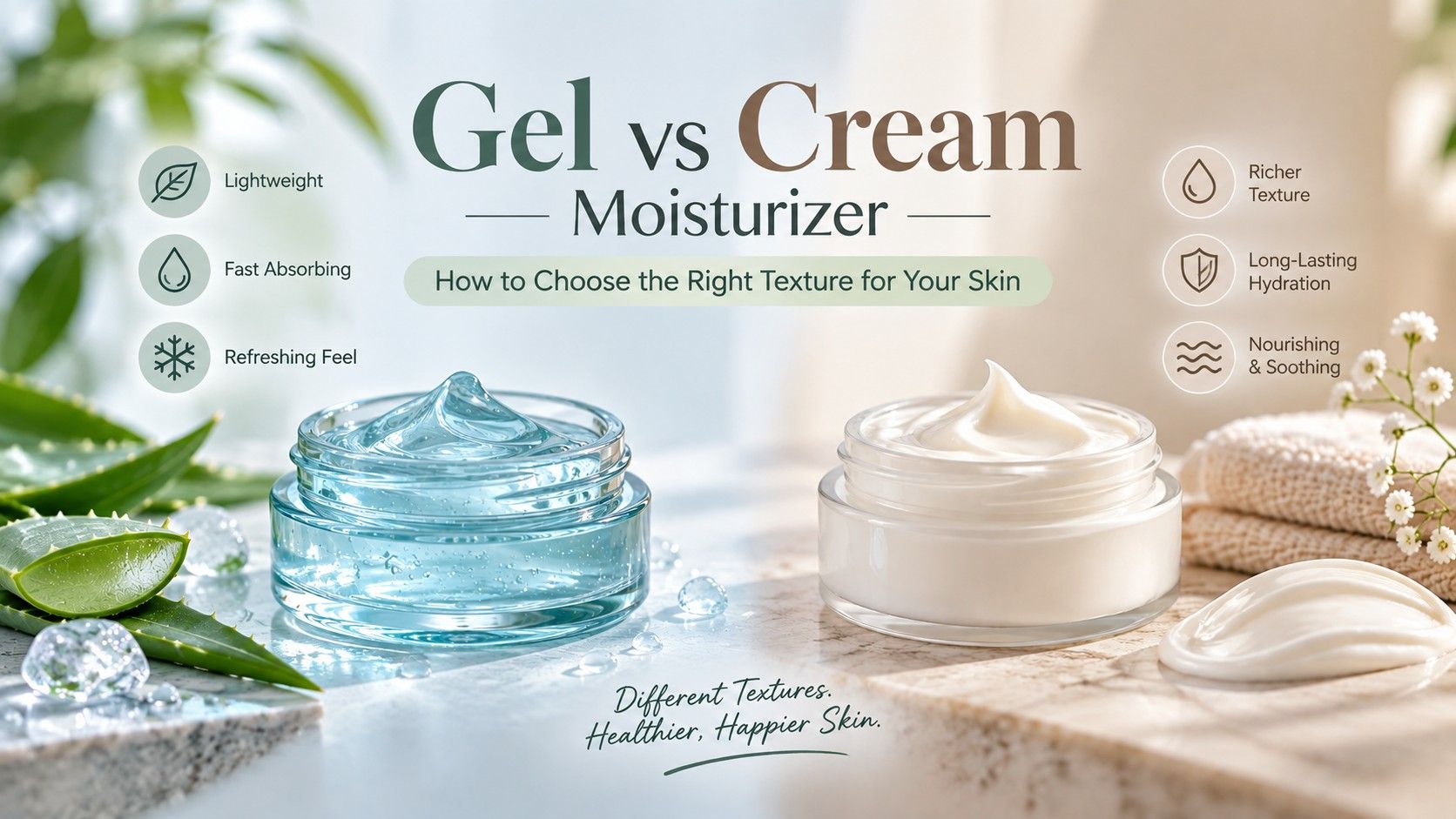
Choosing a moisturizer isn't just about ingredients. Texture matters, too. Gel and cream moisturizers can both help hydrate your skin, but they differ in consistency, feel, and the types of skin concerns they may suit. While a lightweight gel can feel refreshing and comfortable, a richer cream may provide the extra nourishment that dry skin needs.
Understanding these differences can help you build a skincare routine that feels comfortable throughout the day. The key is to consider your skin type, the weather, your preferred finish, and how your skin responds to different formulations.
1. What Is a Gel Moisturizer?
A gel moisturizer usually has a lightweight, water-rich consistency that spreads easily and absorbs quickly. Its fresh, cooling feel makes it a popular option for people who prefer skincare that doesn't feel heavy on the face.
Gel formulas are often suitable for oily and combination skin, especially when excess shine or a greasy finish is a concern. However, oily skin still needs hydration, so choosing a lightweight moisturizer doesn't mean skipping moisture altogether.
Depending on its ingredients, a gel moisturizer may also help soothe the feeling of tightness and leave the skin feeling soft and refreshed.
For example, Rare Chemistry's Dewy Skin Gel Moisturizer is formulated for oily, combination, and sensitive skin. Its product description highlights lightweight hydration, a non-sticky texture, and a refreshing feel.
Rare Chemistry
2. What Is a Cream Moisturizer?
Cream moisturizers generally have a thicker, richer consistency than gels. They may contain a combination of humectants, emollients, and occlusive ingredients that help attract moisture, soften the skin, and reduce water loss.
This texture can be particularly comfortable for dry skin, which may feel rough, flaky, or tight after cleansing. A richer moisturizer can help improve the feeling of softness and support the skin's moisture barrier.
Creams can also be useful during colder weather or in dry environments when your usual lightweight moisturizer doesn't feel sufficiently nourishing.
That said, a cream isn't automatically better for dry skin, and a gel isn't automatically unsuitable. The complete formulation and your individual skin response matter more than the product category alone.
Explore Rare Chemistry's moisturizer collection to discover different moisturizing textures and formulations.
Rare Chemistry
3. Gel vs Cream Moisturizer: Which One Should You Choose?
Your skin type can help guide your choice, but think of these recommendations as a starting point rather than strict rules.
Skin type |
Texture to consider |
What to look for |
|---|---|---|
Oily skin |
Lightweight gel |
Hydration without a heavy, greasy finish |
Combination skin |
Gel or gel-cream |
A comfortable texture that works across different facial areas |
Dry skin |
Richer cream |
Moisturizing ingredients that help soften and comfort dry skin |
Sensitive skin |
Gentle gel or cream |
A well-tolerated formula with minimal potential irritants |
Normal skin |
Gel, cream, or lotion |
A texture that suits your routine and personal preference |
Oily skin: A lightweight gel may feel more comfortable, particularly if your skin becomes shiny during the day. Look for a suitable formulation that provides enough hydration without leaving an unpleasant residue.
Combination skin: You might prefer a gel across the T-zone and a richer moisturizer on drier areas. Alternatively, a balanced gel-cream may provide a comfortable middle ground.
Dry skin: Consider a cream containing moisturizing ingredients such as glycerin, ceramides, or other emollients. These can help improve skin softness and support moisture retention.
Sensitive skin: Pay attention to the entire ingredient list, not just the texture. Fragrance-free products may be worth considering if fragrance tends to irritate your skin. Introduce new products gradually and discontinue use if irritation develops.
Normal skin: Both textures can work. Choose according to how your skin feels and whether you prefer a fresh, lightweight finish or a richer, more nourishing sensation.
4. Consider the Weather and Your Daily Routine
The climate can influence how comfortable a moisturizer feels. In hot and humid conditions, a lightweight gel may feel less heavy, while a richer cream may be more appealing during colder or drier months.
Your routine matters, too. If you layer several skincare products, a lighter moisturizer may fit more comfortably into your routine. If your skin feels dry after cleansing, you may prefer a cream that provides a more nourishing finish.
You don't necessarily need separate moisturizers for every season. Pay attention to your skin and adjust your routine when needed.
5. How to Apply Your Moisturizer
For a comfortable daily routine:
Cleanse your face with a gentle cleanser suited to your skin.
Apply any serums or treatment products according to their instructions.
Smooth a suitable amount of moisturizer over your face and neck. Applying it to slightly damp skin may help retain hydration.
During the daytime, finish with a broad-spectrum sunscreen.
Avoid applying excessive amounts simply because your skin feels dry. Start with a comfortable quantity and adjust based on how your skin responds.
Final Thoughts
There is no single moisturizer texture that works perfectly for everyone. Gel moisturizers can offer lightweight, refreshing hydration, while cream moisturizers can provide a richer, more nourishing feel.
Consider your skin type, climate, preferred finish, and ingredient sensitivities when choosing a formula. If you're unsure, start with a product that suits your current skin concerns and observe how your skin responds over time.
Ultimately, the right moisturizer is one that keeps your skin feeling comfortable, hydrated, and well cared for as part of your everyday skincare routine.