Gemstone Jewelry Care Guide: Preserve Sparkle and Value
-

- February 23rd, 2026
- 1,110 views

FREE SEO Topical Map Generator: Find Your Next Content Ideas
Proper gemstone jewelry care helps preserve color, brilliance, and structural integrity over years of wear. This guide on gemstone jewelry care covers cleaning methods, storage, everyday handling, and when to seek professional services to reduce the risk of damage or loss.
- Match cleaning methods to the gem’s hardness and porosity.
- Store pieces separately to avoid scratching and metal abrasion.
- Avoid heat, chemicals, and ultrasonic or steam cleaning for sensitive gems.
- Get regular inspections of settings and professional cleanings as needed.
Gemstone Jewelry Care: Essential Principles
Gemstone jewelry care begins with understanding three key factors: the Mohs hardness of a gem, its porosity or chemical sensitivity, and the type of mounting or setting. Hardness (measured on the Mohs scale) indicates scratch resistance; chemical and thermal stability determine whether a gem can withstand common cleaning agents or heat; the setting—prongs, bezel, channel—affects how the piece should be handled and inspected.
Routine Cleaning and Safe Methods
General cleaning steps
Most durable gemstones such as sapphires and diamonds can be cleaned with warm water, a mild dish soap, and a soft brush. Use gentle agitation to remove dirt from under stones and inside settings. Rinse thoroughly and dry with a soft, lint-free cloth. For metal polishing, use a cloth formulated for fine jewelry rather than household polishes that may be abrasive.
When to avoid ultrasonic and steam cleaners
Ultrasonic and steam cleaners provide fast results but are unsafe for many gems. Avoid these methods for porous or fracture-prone materials like opal, emerald (often treated with oils or resins), turquoise, amber, and pearls. Where uncertainty exists, consult a professional jeweler or gemological reference before using mechanical cleaners.
Storage, Handling, and Daily Wear
Storage best practices
Store gemstone jewelry in individual soft pouches or lined compartments to prevent scratching and tangling. Keep pieces away from heat sources and direct sunlight if the gem is light-sensitive (e.g., some sapphires and certain colored stones). For long-term storage, consider a humidity-controlled environment for organic gems like pearls and amber, which can dry out or crack.
Handling tips
Handle jewelry by bands or backing rather than gripping stones directly. Remove jewelry during housework, exercise, swimming, and when using chemicals (cleaners, cosmetics, and chlorine), since these can corrode metals and alter gem appearance. Regularly check prongs and settings for looseness; a loose stone increases the chance of loss.
Gem-Specific Care Guidelines
Diamonds and sapphires
Diamonds and corundum (sapphire and ruby) are among the hardest gemstones and tolerate routine cleaning with mild soap and a soft brush. Ultrasonic cleaning is generally safe for well-cut, non-fractured stones set in secure mountings.
Emeralds, opals, pearls, and turquoise
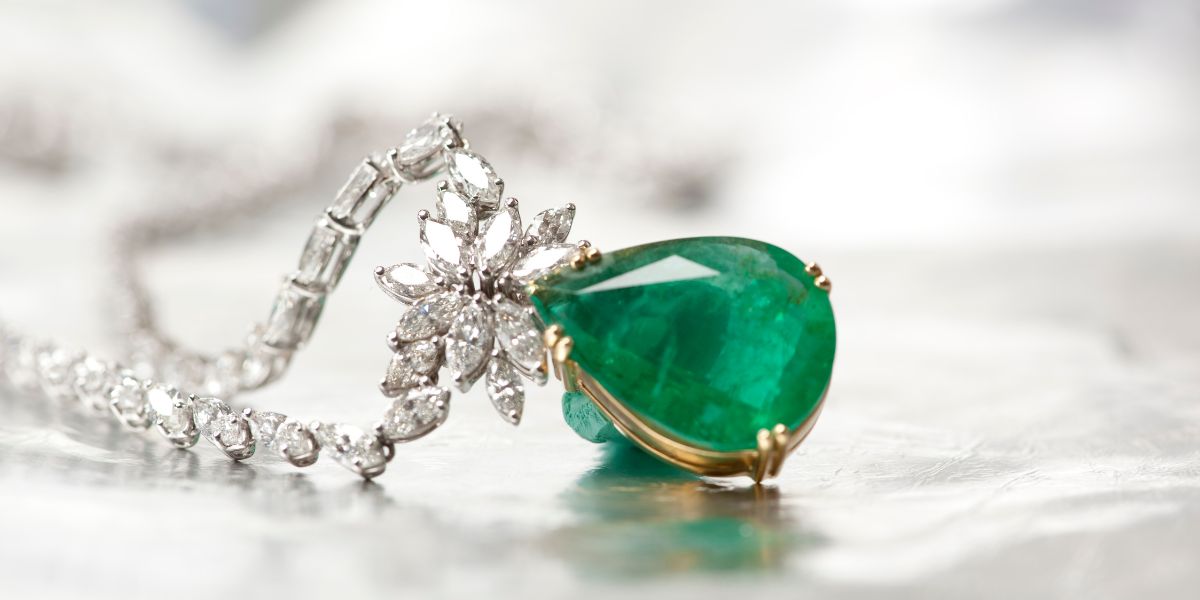
Emeralds are often treated with oils to improve clarity—clean gently and avoid solvents. Opals contain water and are sensitive to sudden temperature changes and alcohol-based cleaners. Pearls and turquoise are porous and can be stained by perfumes, cosmetics, and household cleaners; wipe them with a soft damp cloth and avoid soaking.
Organic materials: amber, coral, and jet
Organic gems are relatively soft and can be scratched or chemically damaged. Keep them away from solvents and high heat. Clean with a soft cloth and mild water; do not use ultrasonic cleaners.
Maintenance, Appraisals, and Professional Care
Routine inspections
Schedule regular inspections with a qualified jeweler to verify the security of settings, catch worn prongs, and assess any treatments that may require special care. Professional cleanings and polishing can restore appearance but should be selected based on the gem type to avoid damage.
Documentation and valuation
Keep receipts, certificates, and any lab reports (for example, grading reports from trusted gemological labs) with the jewelry. For high-value pieces, periodic appraisals help document condition and value for insurance or estate purposes. The Gemological Institute of America provides educational resources about gem identification and care that can be used as a reference: Gemological Institute of America (GIA).
Signs of Damage and When to Seek Help
Visible chips, loose stones, sudden cloudiness, or changes in color indicate a need for professional attention. Avoid attempting repairs at home; DIY fixes can increase damage. For structural concerns—broken clasps, bent prongs, or worn shanks—use a reputable jeweler for repair and re-tipping of prongs.
Tools and Supplies to Keep on Hand
Recommended items
- Soft lint-free polishing cloths designed for jewelry
- Soft-bristle brush (baby or watch brush)
- Mild, pH-neutral dish soap
- Individual storage pouches or a jewelry box with compartments
FAQ
How often should I perform gemstone jewelry care?
Frequency depends on wear. For frequently worn pieces, a basic cleaning and inspection every 1–3 months is common; a professional inspection once a year is recommended for high-value or heirloom pieces.
Can all gemstones be cleaned with household soap?
No. Durable stones like diamonds and sapphires generally tolerate mild soap and water, but porous or treated gems (pearls, opals, emeralds, turquoise, amber) need gentler handling and often should not be soaked.
Is it necessary to insure valuable gemstone jewelry?
Insurance is a personal decision. For high-value items, insurance can cover loss, theft, or damage; documentation such as recent appraisals and lab reports supports claims and valuation. Consult an insurance professional for options and requirements.
How can scratches or small chips be fixed?
Minor scratches on metal can often be polished out by a professional jeweler. Chips in stones may require re-cutting, re-polishing, or replacement depending on severity and the gem type. A qualified jeweler or gemologist can recommend appropriate restoration steps.
What routine steps protect settings and prongs?
Avoid catching jewelry on clothing, remove rings during manual tasks, and have prongs inspected and re-tipped by a jeweler if wear is evident. Tightening and re-setting small stones should be handled by professionals.