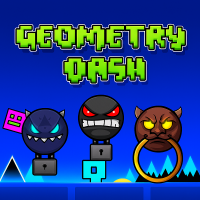
Geometry Dash: A Rhythm-Based Test of Skill and Patience
-
- Published Updated
- 8,991 views

Since its release in 2013 by developer RobTop Games, geometry dash online has grown from a simple mobile rhythm game into a global phenomenon. What began as a minimalist platformer with one-touch controls has evolved into a deeply engaging experience that challenges players’ reflexes, patience, and determination. Despite its straightforward mechanics and geometric art style, Geometry Dash remains one of the most recognizable and enduring indie games in the rhythm-platformer genre.
Simple Concept, Intense Execution
At first glance, Geometry Dash appears deceptively simple. Players control a small geometric icon—typically a cube—that automatically moves forward through a side-scrolling level. The main action is tapping the screen (or pressing a key) to jump over spikes, avoid obstacles, and navigate platforms. In some sections, the cube transforms into different forms, such as a ship, ball, wave, or UFO, each with unique movement mechanics.
However, simplicity does not mean ease. Geometry Dash is famously difficult. The timing required to survive each level is precise, often demanding split-second reactions and memorization of obstacle patterns. A single mistake sends the player back to the very beginning of the level. There are no mid-level checkpoints in the standard mode, making completion a true test of consistency and skill.
Rhythm as the Core Experience
What sets Geometry Dash apart from many other platformers is its tight synchronization with music. Each level is designed around a high-energy electronic soundtrack, and the placement of obstacles aligns closely with the rhythm and beat. This integration transforms gameplay into a rhythmic experience rather than just a visual one.
Players often rely on audio cues as much as visual indicators to anticipate jumps and transitions. Over time, success becomes a combination of muscle memory and musical familiarity. The soundtrack is not just background noise—it is a structural component of the level design. This harmony between sound and movement creates a satisfying flow state, where players feel fully immersed in the rhythm.
The Thrill of Difficulty
One of the most discussed aspects of Geometry Dash is its steep difficulty curve. Levels range from relatively approachable to extremely challenging, categorized by difficulty ratings such as Easy, Hard, Insane, Demon, and Extreme Demon. Demon-level stages are particularly notorious within the community for their complexity and precision requirements.
While some players find the high difficulty frustrating, many embrace it as the game’s defining strength. Each failed attempt becomes part of a learning process. Gradual improvement is visible through percentage completion—going from 20% to 50% to 80% feels like genuine progress. Finally completing a difficult level after dozens or even hundreds of attempts delivers an immense sense of accomplishment.
This “fail, learn, retry” loop keeps players engaged. Geometry Dash rewards persistence and resilience. Instead of offering shortcuts or easy victories, it demands mastery.
Visual Style and Aesthetic Identity
Geometry Dash features a clean, colorful, and geometric visual style. The minimalist design ensures clarity, which is crucial for a game requiring precise reactions. Backgrounds are vibrant but rarely distracting, while obstacles are sharply defined to communicate danger clearly.
The game’s animations are smooth and energetic, often enhanced by flashing lights and synchronized visual effects that match the music. Although the graphics are simple compared to modern high-budget titles, the cohesive art direction gives Geometry Dash a unique and instantly recognizable identity.
Level Editor and Community Creativity
Perhaps the most significant reason for Geometry Dash’s long-term success is its powerful level editor. Players can create custom levels using a wide range of tools, objects, triggers, and effects. This feature has led to an enormous library of user-generated content, ranging from beginner-friendly stages to nearly impossible masterpieces.
The community has produced levels that push the game’s mechanics to their limits. Some custom levels feature complex storytelling, intricate visual designs, and advanced synchronization techniques. Others focus purely on difficulty, becoming famous challenges within the competitive scene.
This user-generated ecosystem ensures that Geometry Dash never truly runs out of content. Even years after release, new levels continue to appear, keeping the game fresh and engaging.
Competitive and Cultural Impact
Geometry Dash has also fostered a competitive culture. Skilled players upload gameplay videos showcasing flawless runs of extreme levels, gaining large audiences on platforms like YouTube and Twitch. Beating an “Extreme Demon” level is often considered a badge of honor within the community.
The game’s distinctive soundtracks and visual themes have become part of internet culture, with certain levels achieving iconic status. Speedruns, challenge runs, and reaction compilations further contribute to its online popularity.

![Anomaly: The Rotting World [v0.1] – Game Overview](https://indibloghub.com/public/images/courses/6a42323801101189_1782723128.jpg)