SearchAPI Google Flights Data Extraction
-

- Published Updated
- 114 views
Introduction
Air travel pricing changes rapidly as airlines respond to demand, competition, seasonal trends, route performance, remaining inventory, and booking patterns. For travel agencies, online travel agencies, metasearch platforms, corporate travel companies, and aviation researchers, having access to current and historical flight information can support better commercial decisions. Automated flight data extraction makes it possible to collect structured information from multiple searches and transform it into actionable travel intelligence.
SearchAPI Google Flights Data Extraction can help businesses collect flight search information from Google Flights and organize it for pricing analysis, route research, competitive benchmarking, and travel-market intelligence.
Modern extraction workflows can also Extract Google Flights Flight API Data for selected origins, destinations, dates, airlines, and passenger configurations. Instead of manually checking individual flight searches, businesses can automate repetitive searches and process the resulting information in a consistent structure.
Google Flights Route Data scraping is particularly useful when organizations need to examine how United, Delta, American, Alaska, and Southwest compete across overlapping domestic markets. Their networks cover numerous important US airports and city pairs, creating substantial opportunities for route-level analysis.
Understanding the Value of Flight Search Data
Google Flights brings together flight options from different carriers and presents travelers with information such as fares, schedules, durations, stops, airports, and cabin options. When these observations are collected systematically, they can become a valuable source of competitive and market intelligence.
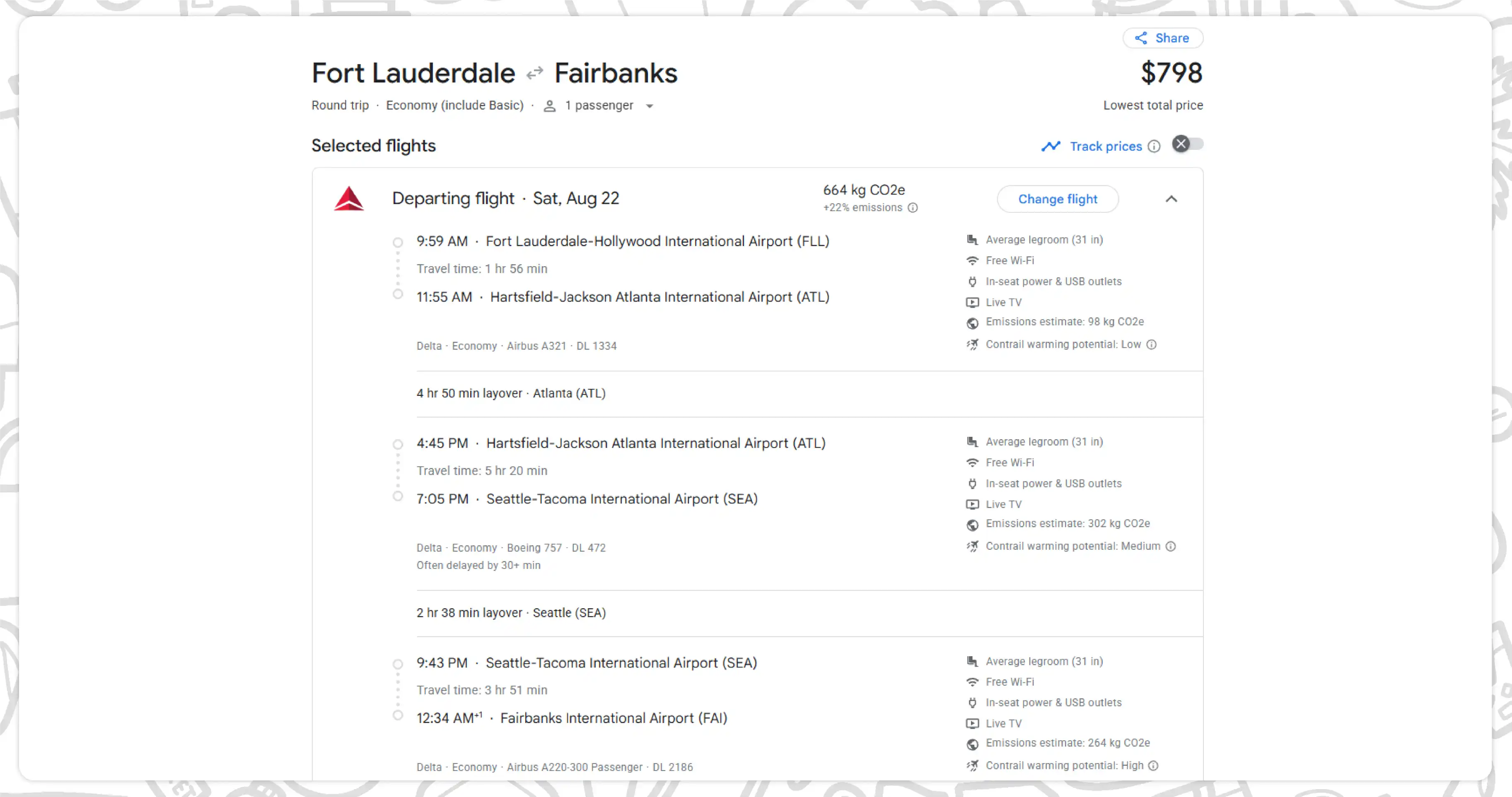
Google Flights Flight Data Scraping allows companies to repeatedly collect flight-search observations instead of relying on individual manual checks. A structured record can contain airline name, flight number, origin, destination, departure time, arrival time, journey duration, stop information, cabin category, and displayed fare.
The value becomes greater when the same routes are monitored over multiple dates and time periods. A single fare provides limited insight, whereas hundreds or thousands of observations can reveal patterns in pricing, availability, competition, and scheduling.
For example, a travel company could monitor New York–Los Angeles, Chicago–Dallas, Atlanta–Seattle, Denver–San Francisco, or Miami–New York repeatedly. These observations can then be compared across the five selected airlines.
Comparing Major US Carriers
United, Delta, American, Alaska, and Southwest have different network structures, operating strategies, and competitive strengths. Collecting their flight information through a common methodology allows businesses to compare these carriers using standardized fields.
United has a substantial presence across major hubs including Chicago, Denver, Houston, Newark, Los Angeles, and San Francisco. Route-level extraction can help identify differences between United's direct and connecting options and competing services.
Delta maintains major operations through Atlanta, Detroit, Minneapolis, New York, Salt Lake City, and Seattle. Monitoring Delta's flight results can provide information about fares, schedules, route frequency, and competitive positioning.
American Airlines operates a broad domestic network with important hubs including Dallas-Fort Worth, Charlotte, Chicago, Miami, Philadelphia, Phoenix, and Washington. Its large network provides extensive opportunities for route and pricing comparisons.
Alaska Airlines has particularly strong operations in the western United States and Pacific Northwest, while also serving a wider range of domestic destinations. Its route data can help businesses understand regional competition and pricing behavior.
Southwest operates a large domestic network and has historically used a distinctive approach to schedules, fares, and route coverage. Including Southwest in comparative monitoring can provide additional insight into competitive fare structures.
Creating a Structured Airfare Database
Repeated flight searches can be transformed into a historical database containing observations across airlines, airports, routes, and travel dates.
Google Flights fare Intelligence becomes more valuable when current observations can be compared with historical records. Analysts can determine whether a particular fare is unusually high, unusually low, or consistent with previous observations.
A structured airfare database can include:
- Airline and flight number
- Origin and destination airport
- Departure and arrival date and time
- Total journey duration
- Number of stops
- Cabin class
- Displayed fare
- Currency
- Search timestamp
- Travel date
- Route identifier
- Availability-related observations
These fields can be stored in CSV, JSON, Excel, PostgreSQL, cloud databases, or analytical data warehouses depending on the organization's requirements.
Building Broader Market Coverage
A major advantage of automated extraction is the ability to expand beyond a small collection of routes. Once the extraction workflow is established, businesses can increase the number of origins, destinations, travel dates, and airline combinations being monitored.
Google Flights Global Flight Prices Dataset development can involve collecting observations across domestic and international markets. A travel company operating across several countries could create a unified historical airfare database covering multiple regions and currencies.
Such a dataset can help analysts study international fare differences, seasonal travel patterns, route competitiveness, and changes in airline pricing behavior.
The database can also be segmented by market. Domestic US routes can be analyzed separately from transatlantic routes, regional markets, or international connections. This segmentation helps prevent broad averages from hiding important route-level differences.
Monitoring Changes in Airfares
Airline fares can change several times during the booking lifecycle. A traveler searching for a flight today may encounter a different fare later, even when the route and travel date remain unchanged.
Google Flights price Monitoring API workflows can help businesses repeatedly observe these changes. A monitoring system can execute predefined searches at regular intervals and compare new observations against previously collected records.
This approach can be used to identify:
- Significant fare increases or decreases
- Changes in the cheapest available itinerary
- Shifts in direct-flight pricing
- Changes in connecting-flight options
- Differences between competing airlines
- Seasonal pricing movements
- Route-level price volatility
Historical monitoring is particularly useful for OTAs and travel platforms that want to understand how airfare changes as departure dates approach.
Automating Search Workflows
Travel businesses often need to monitor hundreds or thousands of combinations involving airports, dates, airlines, and passenger configurations. Manual collection quickly becomes inefficient.
Extract Google Flights Flight Search Data to automate these repetitive activities. Search parameters can be generated programmatically, submitted through an appropriate extraction infrastructure, and transformed into standardized records.
A typical workflow may involve collecting search parameters, submitting requests, receiving structured results, parsing relevant fields, validating records, removing duplicates, and storing the output.
Real-Time Data API integration can then make processed information available to dashboards, internal applications, recommendation systems, pricing engines, and analytical tools.
This architecture allows different teams to work with the same standardized flight information without repeatedly performing the original searches.
Using Data for Competitive Analysis
Flight data can reveal how different airlines compete on the same city pair. Suppose United, Delta, American, Alaska, and Southwest all serve overlapping markets. An analyst can compare their fares, schedules, journey durations, stop counts, and available itinerary combinations.
This comparison can highlight whether an airline is consistently positioned as the lower-priced option or whether pricing changes substantially depending on the travel date.
Competitive analysis can also examine schedule advantages. An airline offering more nonstop departures may compete differently from one providing fewer direct flights but lower fares.
Travel companies can use this information to improve customer recommendations, negotiate partnerships, develop promotional strategies, and understand changing market conditions.
Connecting Prices With Demand
Airfare analysis becomes more useful when pricing observations are examined alongside demand-related signals. Google Flights Booking Demand analytics can support analysis of popular routes, preferred travel dates, price sensitivity, and market activity.
For instance, businesses can monitor the same route over several weeks and compare observed prices with the number and type of available itineraries. This may help identify periods when pricing becomes more competitive or when fewer options remain.
Demand-oriented analysis can also support forecasting. Historical observations may be used to identify recurring seasonal patterns, holiday-related movements, and differences between weekday and weekend travel.
Studying Availability Patterns
Flight availability is another important component of travel intelligence. Google Flights Seat Availability dataset development can help businesses study observed availability patterns across monitored routes.
Availability data should be interpreted carefully because displayed search results do not necessarily represent the airline's complete inventory. Nevertheless, repeated observations can provide useful market signals.
For example, an analyst may observe that certain flight options disappear as departure approaches while remaining alternatives become more expensive. When collected consistently, such observations can contribute to research into fare behavior and inventory dynamics.
Combining availability observations with prices, schedules, and travel dates creates a richer dataset for airfare analysis.
Designing a Scalable Data Pipeline
Large-scale flight monitoring requires more than simply collecting search results. The data pipeline should be designed to maintain consistency as the number of routes and searches increases.
A scalable architecture can include automated scheduling, structured extraction, validation, normalization, storage, historical snapshots, and reporting layers.
Important considerations include:
- Consistent airport and airline identifiers
- Standardized currencies and timestamps
- Duplicate detection
- Historical versioning
- Failed-request monitoring
- Missing-field validation
- Automated anomaly detection
- Secure data storage
- Flexible API delivery
Data-quality checks are especially important when building long-term datasets. An unexpected change in returned fields or incomplete search results can otherwise affect downstream analytics.
Applications Across the Travel Industry
The extracted information can support multiple travel-related businesses. OTAs can use airfare intelligence for competitive benchmarking. Travel agencies can compare available itinerary options. Corporate travel platforms can monitor frequently used routes. Researchers can build historical datasets for airfare studies.
Metasearch businesses can use structured observations to improve market analysis and recommendation systems. Travel consultants can examine pricing patterns when preparing itinerary recommendations.
Revenue-management teams can also use historical data to understand competitive fare movements, although observed search data should complement rather than replace proprietary airline inventory and booking information.
Data Quality and Responsible Use
Reliable flight intelligence requires careful validation and responsible extraction practices. Search results can vary according to travel dates, passenger numbers, currencies, locations, cabin selections, and other parameters.
Organizations should establish consistent search configurations and preserve the timestamp associated with every observation. This makes historical comparisons more meaningful.
Extraction systems should also comply with applicable terms of service, API conditions, intellectual-property requirements, privacy obligations, and other relevant legal or contractual requirements.
The objective should be to create a dependable analytical dataset while maintaining responsible and transparent data practices.
How Travel Scrape Can Help You?
Automated Collection
Travel Scrape can automate structured flight-data collection across selected airlines, routes, dates, fares, schedules, durations, and itinerary options.
Competitive Intelligence
Travel Scrape can organize airline observations into comparable datasets, helping businesses evaluate pricing, schedules, route coverage, and competition.
Historical Tracking
Travel Scrape can maintain historical flight records, enabling businesses to identify airfare trends, seasonal movements, route changes, and pricing volatility.
Scalable Extraction
Travel Scrape can support large route portfolios by processing numerous search combinations and delivering standardized datasets for analytics platforms.
Data Integration
Travel Scrape can deliver structured flight information for dashboards, databases, forecasting systems, pricing applications, recommendation engines, and business intelligence workflows.
Conclusion
SearchAPI Google Flights Data Extraction provides travel businesses with an efficient framework for collecting structured flight-search observations across United, Delta, American, Alaska, and Southwest. By monitoring fares, schedules, routes, durations, stops, cabin classes, and availability-related signals, companies can build valuable datasets for airfare intelligence and competitive analysis.
Repeated extraction makes it possible to move beyond individual price checks and develop historical perspectives on airline markets. When these records are combined with route-level analysis, demand indicators, and availability observations, travel businesses can gain deeper insight into pricing behavior and market dynamics.
A Real-Time Flight Data Scraping API can further support automated delivery of fresh flight observations into dashboards, databases, analytics platforms, and travel applications. With appropriate validation, scalable infrastructure, and responsible extraction practices, this data can become a strong foundation for modern travel intelligence.
Ready to elevate your travel business with cutting-edge data insights? Scrape Aggregated Flight Fares to identify competitive rates and optimize your revenue strategies efficiently. Discover emerging opportunities with tools to Extract Travel Website Data, leveraging comprehensive data to forecast market shifts and enhance your service offerings. Real-Time Travel App Data Scraping Services helps stay ahead of competitors, gaining instant insights into bookings, promotions, and customer behavior across multiple platforms. Get in touch with Travel Scrape today to explore how our end-to-end data solutions can uncover new revenue streams, enhance your offerings, and strengthen your competitive edge in the travel market.