What Is a Hair Patch? Types, Benefits, Limitations and Maintenance
-
- Published Updated
- 61 views
Hair loss can affect confidence at any age. While hair transplants offer a permanent solution, not everyone is ready for surgery. That’s where a hair patch comes in: a quick, non-surgical way to restore a fuller look.
What Is a Hair Patch?
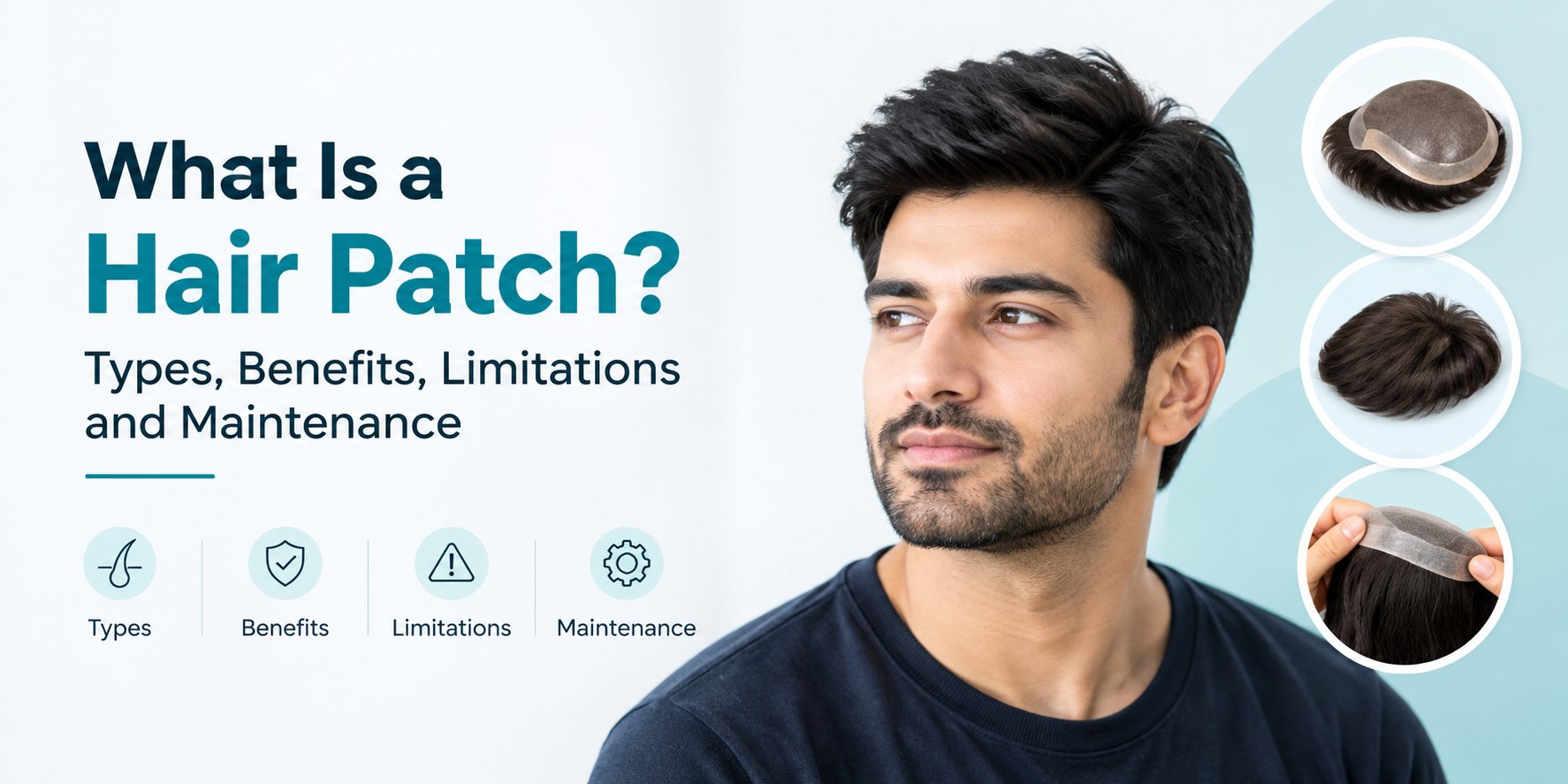
A hair patch (also called a hair system, toupee, or non-surgical hair replacement) is a thin base made of lace, skin-like polyurethane, or a combination of both, with natural or synthetic hair attached. It is fixed over the thinning or bald area using medical-grade adhesive, tape, or clips, instantly blending with your existing hair.
Types of Hair Patches
1. Based on Base Material
Lace base: Breathable and lightweight, with a natural hairline. Best for warm climates, though less durable
Skin (polyurethane) base: Mimics the scalp and lasts longer. Less breathable.
Combination base: Lace at the front for a natural hairline, skin at the back for durability.
2. Based on Hair Type
Human hair: Looks and feels natural, can be styled and colored, but costs more.
Synthetic hair: Affordable and low-maintenance, but cannot handle heat styling and looks less natural.
3. Based on Attachment Method
Tape/adhesive: Removed and reapplied every 2-4 weeks.
Clip-on: Easy to remove daily, suited for occasional wear.
Bonded long-term: Stays on for weeks, with professional servicing.
Benefits of a Hair Patch
Instant results: Visible transformation in a single appointment, with no healing time.
Non-surgical: No incisions, anesthesia, or downtime.
Customizable: Color, density, texture, and hairline can be matched to your natural hair.
Affordable upfront: Lower initial cost than a hair transplant.
Suitable for all stages: Works for patchy loss, receding hairlines, or advanced baldness.
Reversible: You can stop using it anytime.
Limitations of a Hair Patch
Temporary solution: It covers hair loss but does not treat it or stimulate regrowth.
Ongoing costs: Replacement every 6-12 months, plus adhesives and servicing, adds up over time.
Regular maintenance: Needs consistent care and salon visits.
Scalp concerns: Adhesives may cause itching, irritation, or allergic reactions in sensitive skin.
Lifestyle restrictions: Swimming, intense workouts, and sleeping need extra care.
Risk of traction: Poorly fitted patches can stress existing hair and worsen thinning.
How to Maintain Your Hair Patch
Wash gently: Use sulphate-free shampoo and lukewarm water. Avoid vigorous rubbing.
Condition regularly: Apply conditioner to the hair strands only, not the base.
Air dry: Avoid high heat from dryers, especially on synthetic hair.
Brush carefully: Use a wide-tooth comb or soft brush, starting from the ends.
Keep the scalp clean: Cleanse the area under the patch during reattachment to prevent buildup.
Get professional servicing: Visit your stylist every 3-4 weeks for cleaning and re-fixing.
Store properly: Keep it on a mannequin head or stand when not in use.
Ideal Candidates for Hair Patch
- Men with pattern baldness: Receding hairline, crown thinning, or advanced baldness (Norwood stages 2 to 7).
- Women with diffused thinning: Those with overall volume loss or widening partings.
- People not eligible for a hair transplant: Insufficient donor hair, unstable or rapidly progressing hair loss, or being too young for surgery.
- Patchy hair loss (alopecia areata): Can be covered while the condition is managed under medical guidance.
- Post-medical treatment hair loss: Individuals experiencing hair loss after chemotherapy or other treatments, once the scalp is healthy and a doctor approves.
- Those who want instant results: Weddings, events, job interviews, or professional needs.
- People who want a reversible option: Anyone not ready for a permanent procedure.
- Those waiting for transplant results: Many use a patch while transplanted hair grows in.
Who Should Be Careful or Avoid It
-
Active scalp infections or open wounds: Eczema, psoriasis flare-ups, fungal infections, or sores should be treated first.
-
Allergy to adhesives: Always do a patch test before regular use.
-
Very sensitive or irritated scalp: Clip-on systems may be a gentler option than adhesives.
-
Severe, untreated dandruff or scalp conditions: These can worsen under a sealed base.
-
People unwilling to maintain it: Regular cleaning, re-fixing, and replacement are essential.
Hair Patch vs. Hair Transplant: Which Is Right for You?
A hair patch suits those who want instant, reversible results or are not yet candidates for surgery. A hair transplant, on the other hand, uses your own follicles for permanent, natural growth with no replacement cycles. If you are looking for a long-term solution, consult a qualified hair restoration specialist to understand which option fits your hair loss stage, budget, and goals.
Final Thoughts
A hair patch can be an effective short-term way to regain confidence, provided you understand its limitations and commit to regular maintenance. Before deciding, get a professional scalp evaluation to explore all your options, including permanent restoration.
Considering a long-term solution? Book a consultation with a hair restoration expert to find the approach that suits you best.