How to Choose the Best Hindi Daily Horoscope App: Features, Privacy, and Tips
-

- Published Updated
- 318 views
Choosing a Hindi daily horoscope app starts with clear priorities: accuracy, language quality, and data privacy. A good Hindi daily horoscope app delivers readable daily rashifal, reliable birth-chart features, and permissions that match what the app actually does.
- Look for clear sourcing (Vedic/Jyotish methods), birth-chart tools, and local language quality.
- Check permissions and data handling before installing; astrology apps often ask for unnecessary access.
- Use the RASHI framework checklist below to evaluate options quickly.
How to choose a Hindi daily horoscope app
Start by deciding whether the priority is accurate natal charts, daily transits and advice, or simple daily rashifal in Hindi. The term Hindi daily horoscope app covers a range: from short daily predictions (rashifal) to full natal-chart calculators (kundli) with transit, panchang, and compatibility tools. Match the app's core features to the intended use.
Key features to evaluate
Language and content quality
Read multiple daily entries to judge whether Hindi text is natural, localized (Devanagari vs. transliteration), and avoids generic templates. Accurate apps explain which astrological system is used (Vedic/Jyotish, sidereal vs. tropical).
Birth-chart and personalization
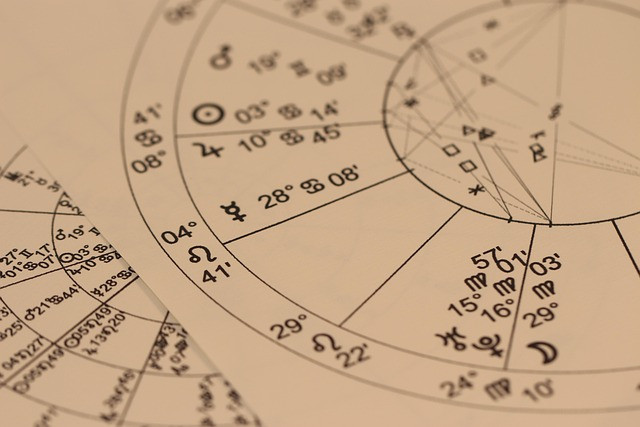
Personalized horoscope Hindi content depends on birth time, place, and date. Verify whether the app generates a natal chart (kundli), uses correct timezone and longitude/latitude, and shows transit calculations.
Transparency and sourcing
Trustworthy apps list methods and sources (e.g., classical texts, astronomical ephemeris). If the app claims predictions based on algorithms, look for explanations of those algorithms.
Privacy and permissions
Be cautious with apps requesting contacts, microphone, or persistent location without clear reasons. Review data-safety information and privacy policies. For guidance on app permissions and user data, consult platform developer policies such as Google Play's user data rules (https://support.google.com/googleplay/android-developer/answer/9857753) .
RASHI checklist: a named framework for quick evaluation
Use the RASHI checklist to compare apps fast:
- R — Reliability: Check update frequency, crash reports, and user reviews.
- A — Accuracy: Does it ask for birth time/place and use correct ephemeris?
- S — Source clarity: Are methods and citations provided?
- H — Hindi quality: Native-level Hindi, correct script, culturally relevant phrasing.
- I — Integrity: Privacy policy, minimal permissions, clear monetization.
Real-world scenario
A user wants a daily rashifal app in Hindi and prefers personalized advice. Using the RASHI checklist, the user filters options: one app offers only generic daily feeds (fails A and H), another asks for full contact access (fails I), and a third asks only for birth data and has a clear privacy policy and natal-chart tools (passes RASHI). The third app becomes the top candidate.
Practical tips for using astrology apps in Hindi
- Verify birth details: enter exact birth time and place; an incorrect time skews the ascendant and houses.
- Cross-check predictions: compare transit and planetary positions with a secondary source or ephemeris for critical decisions.
- Limit sensitive data sharing: avoid apps that require contact lists or microphone access for horoscope features.
- Prefer apps that let content be saved or exported (PDF/CSV) for record-keeping.
Trade-offs and common mistakes
Trade-offs
Apps that offer free content often rely on ads or data monetization; paid apps may provide deeper analysis but require ongoing subscriptions. Simple daily rashifal feeds are quick but less personal than natal-chart-based forecasts. High customization (detailed transit analysis) usually means a steeper learning curve.
Common mistakes
- Accepting default birth time when exact time is available — leads to inaccurate ascendant and house placements.
- Assuming long articles mean accuracy — quality of method matters more than length.
- Ignoring privacy checks — astrology apps sometimes request unnecessary permissions for ad targeting.
Checklist for final selection
- Confirm method transparency and whether sidereal (Vedic) or tropical system is used.
- Test Hindi text for clarity and local expression.
- Check permissions and data policy; uninstall if requests seem unrelated to functionality.
Implementation notes for developers and power users
Developers should implement minimal permissions, localize strings in Devanagari, and expose data export for user trust. Power users can verify astronomical calculations using open ephemeris data or cross-check with reputable Jyotish software.
FAQ
What is the best way to find a reliable Hindi daily horoscope app?
Use the RASHI checklist: prioritize reliability, accuracy of birth-chart calculations, transparent sourcing, high-quality Hindi content, and minimal data collection. Test multiple apps and review their privacy policy before entering personal data.
How accurate are daily rashifal app predictions?
Accuracy varies: generic rashifal is broad, while predictions based on a full natal chart and current transits are more specific. Accuracy also depends on correct birth data and the astrological system used.
Can a daily rashifal app generate a natal chart (kundli)?
Many apps offer natal-chart generation when accurate birth time and location are provided. Confirm that the app accounts for timezone, daylight savings, and geographic coordinates to avoid errors.
What permissions should an astrology app request?
Reasonable requests include storage (to save charts) and optional location (for default timezone). Avoid apps requesting contacts, microphone, or call logs unless those features are clearly explained and necessary.
How to verify whether Hindi content is translated or native-written?
Read multiple entries and look for idiomatic phrasing, correct Devanagari use, and cultural references. Machine-translated content often reads awkwardly and includes unnatural sentence structure.