Best HIPAA-Ready Video Conferencing Solution for Medical Practices
-

- Published Updated
- 7,716 views
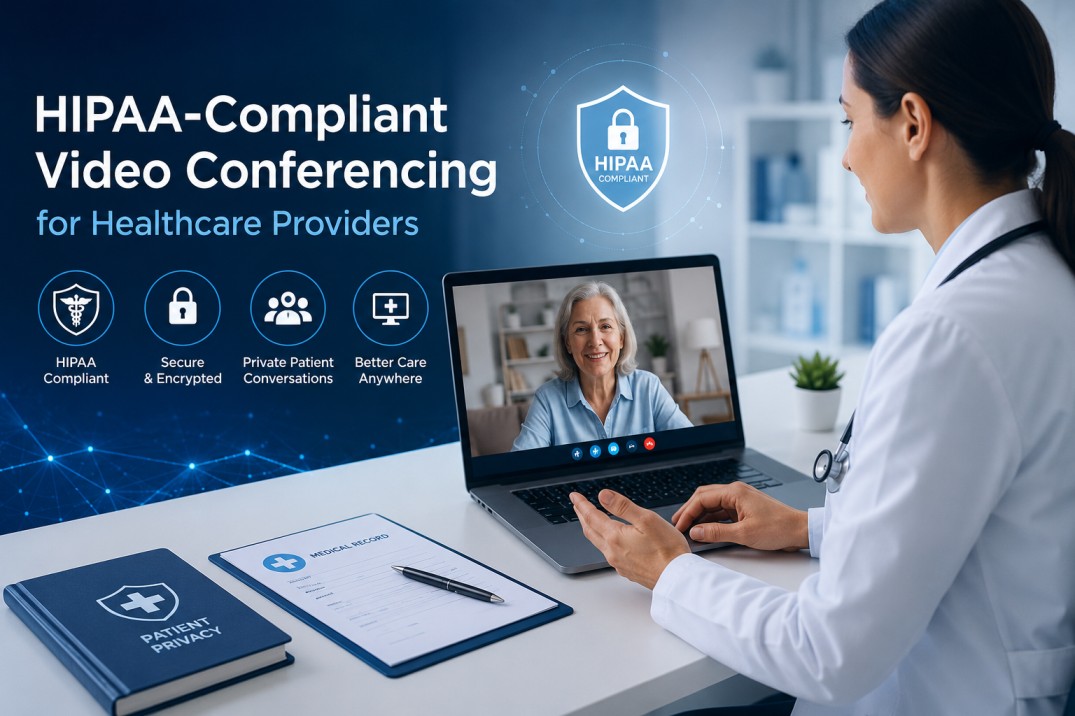
The healthcare industry has rapidly embraced digital transformation, with telehealth and virtual care becoming essential components of patient engagement and healthcare delivery. Medical practices of all sizes are increasingly relying on video conferencing platforms to conduct patient consultations, coordinate care, provide follow-up appointments, and collaborate with healthcare professionals across multiple locations.
However, healthcare providers face a unique challenge when adopting virtual communication technologies: protecting sensitive patient information while complying with strict healthcare regulations. The Health Insurance Portability and Accountability Act (HIPAA) establishes rigorous requirements for safeguarding Protected Health Information (PHI), making security and compliance critical considerations when selecting a video conferencing platform.
For medical practices seeking a secure, reliable, and HIPAA-ready communication solution, choosing the right platform is essential. A HIPAA-ready video conferencing solution not only protects patient privacy but also enables healthcare organizations to deliver high-quality virtual care while maintaining regulatory compliance.
Understanding HIPAA Requirements for Video Conferencing
HIPAA was established to protect patient health information and ensure healthcare organizations maintain appropriate safeguards when collecting, storing, transmitting, or accessing sensitive medical data.
When healthcare providers use video conferencing technology for telemedicine or patient communication, the platform must support multiple security and privacy requirements, including:
- Encryption for data transmission
- Secure user authentication
- Access control management
- Audit trails and activity logs
- Secure data storage practices
- Business Associate Agreements (BAAs)
- Protection against unauthorized access
Without these protections, medical practices risk exposing confidential patient information, potentially resulting in regulatory penalties, legal consequences, and loss of patient trust.
A HIPAA-ready video conferencing platform is specifically designed to address these compliance requirements while supporting efficient and secure healthcare communication.
Why Medical Practices Need HIPAA-Ready Video Conferencing
Growing Patient Demand for Virtual Care
Patients increasingly expect healthcare services to be available remotely. Whether for routine consultations, follow-up visits, mental health counseling, or chronic disease management, virtual healthcare has become a preferred option for many patients.
Video conferencing allows medical practices to provide convenient care while reducing travel time, minimizing appointment delays, and improving access to healthcare services.
Improved Accessibility
Many patients face challenges such as geographic distance, transportation limitations, mobility issues, or busy schedules. Virtual appointments help healthcare providers reach patients who might otherwise struggle to access care.
This expanded accessibility can significantly improve patient outcomes and engagement.
Enhanced Practice Efficiency
HIPAA-ready video conferencing platforms streamline appointment scheduling, patient communication, and healthcare collaboration.
Medical practices can:
- Reduce no-show rates
- Increase provider productivity
- Optimize scheduling
- Improve resource utilization
- Support hybrid care models
These operational efficiencies contribute to better patient experiences and improved practice performance.
Regulatory Compliance
Healthcare organizations are responsible for protecting patient information regardless of whether care is delivered in person or virtually.
HIPAA-compliant communication platforms help ensure that virtual consultations meet legal and regulatory standards while reducing organizational risk.
Essential Features of a HIPAA-Ready Video Conferencing Solution
When evaluating video conferencing platforms for healthcare use, medical practices should prioritize security, compliance, reliability, and usability.
End-to-End Encryption
Encryption is one of the most critical security requirements for healthcare communications.
A HIPAA-ready platform should protect:
- Video streams
- Audio communications
- Chat messages
- Shared files
- Meeting recordings
Encryption ensures that sensitive information remains secure during transmission and cannot be intercepted by unauthorized parties.
Secure Authentication
Healthcare organizations must verify the identities of users accessing patient information.
Advanced authentication features may include:
- Multi-factor authentication (MFA)
- Single Sign-On (SSO)
- Identity verification
- Password-protected meetings
These measures help prevent unauthorized access to patient consultations and healthcare data.
Access Controls and Permissions
Medical practices need the ability to control who can access meetings and sensitive information.
Role-based permissions allow administrators to assign different access levels for:
- Physicians
- Nurses
- Administrative staff
- Specialists
- External participants
This reduces security risks while maintaining operational flexibility.
Business Associate Agreement (BAA)
A Business Associate Agreement is a key requirement under HIPAA regulations.
Healthcare organizations should only work with technology providers willing to sign a BAA that outlines responsibilities related to the protection of PHI.
A BAA demonstrates a vendor's commitment to healthcare compliance and accountability.
Audit Logs and Monitoring
HIPAA requires organizations to maintain records of activities involving patient information.
Comprehensive audit logs provide visibility into:
- User access
- Meeting participation
- System activity
- Administrative actions
- Security events
These logs support compliance audits and incident investigations.
Secure File Sharing
Healthcare consultations often involve sharing medical records, diagnostic reports, prescriptions, imaging results, and treatment plans.
A HIPAA-ready platform should offer secure file-sharing capabilities with encryption and controlled access.
How JupiterMeet Supports Medical Practices
Medical practices require more than a basic video conferencing application. They need a communication platform that supports patient privacy, healthcare workflows, and compliance requirements.
JupiterMeet is designed to help healthcare organizations deliver secure virtual care experiences through enterprise-grade communication capabilities.
Secure Telehealth Consultations
Healthcare providers can conduct confidential patient appointments through encrypted video conferencing, ensuring that conversations remain private and protected.
From primary care visits to specialist consultations, providers can deliver quality care remotely without compromising security.
Healthcare Team Collaboration
Medical professionals frequently collaborate on patient care decisions.
JupiterMeet enables secure communication between:
- Physicians
- Specialists
- Nurses
- Care coordinators
- Administrative teams
This improves coordination while protecting sensitive patient information.
HIPAA-Ready Security Infrastructure
Security is at the core of healthcare communication.
JupiterMeet supports secure virtual interactions through advanced security features that help organizations meet healthcare compliance requirements.
Reliable Performance
Healthcare consultations require stable, high-quality communication.
Reliable audio and video performance helps ensure productive patient interactions while minimizing disruptions during critical healthcare conversations.
Scalable Healthcare Communication
Whether serving a small clinic or a multi-location healthcare network, medical practices need communication solutions that can scale alongside organizational growth.
JupiterMeet provides the flexibility to support evolving healthcare communication needs.
Key Benefits for Medical Practices
Increased Patient Satisfaction
Patients appreciate the convenience and accessibility of virtual appointments.
Benefits include:
- Reduced travel requirements
- Shorter wait times
- Flexible scheduling
- Easier access to specialists
These improvements contribute to a more positive patient experience.
Reduced No-Show Rates
Virtual consultations eliminate many of the obstacles that prevent patients from attending appointments.
As a result, practices often experience fewer missed appointments and improved scheduling efficiency.
Expanded Patient Reach
Medical practices can serve patients beyond their immediate geographic area, enabling broader access to care while increasing practice growth opportunities.
Better Continuity of Care
Telehealth allows providers to maintain regular communication with patients, improving treatment adherence and long-term health outcomes.
Frequent virtual follow-ups can be especially valuable for chronic disease management and post-treatment monitoring.
Cost Savings
Video conferencing can reduce operational costs associated with:
- Office space utilization
- Administrative processes
- Travel expenses
- Physical infrastructure requirements
These efficiencies support sustainable healthcare delivery models.
Common Healthcare Use Cases
Primary Care Consultations
Routine health assessments, symptom evaluations, and patient follow-ups can often be conducted effectively through secure video appointments.
Mental Health Services
Psychologists, psychiatrists, therapists, and counselors rely heavily on secure virtual communication for patient engagement.
HIPAA-ready video conferencing enables confidential behavioral healthcare sessions.
Specialist Consultations
Providers can connect patients with specialists remotely, improving access to expert medical care while reducing travel burdens.
Post-Operative Follow-Ups
Virtual visits allow providers to monitor patient recovery and address concerns without requiring in-person appointments.
Chronic Disease Management
Patients with diabetes, hypertension, cardiovascular disease, and other chronic conditions benefit from regular virtual monitoring and communication.
Internal Healthcare Meetings
Medical practices can use secure video conferencing for:
- Staff meetings
- Care coordination
- Clinical reviews
- Continuing education
- Compliance training
Choosing the Best HIPAA-Ready Video Conferencing Solution
When evaluating platforms, healthcare organizations should consider several factors:
Security and Compliance
Ensure the platform supports:
- HIPAA readiness
- Encryption
- Access controls
- Audit logs
- BAA availability
Ease of Use
Both providers and patients should be able to join meetings easily without extensive technical knowledge.
Reliability
Healthcare appointments require dependable performance with minimal disruptions.
Scalability
The platform should accommodate organizational growth and increasing telehealth demand.
Integration Capabilities
Compatibility with healthcare systems and workflows can improve operational efficiency.
Customer Support
Reliable support helps healthcare organizations quickly address technical issues and maintain uninterrupted patient care.
The Future of Telehealth Communication
Telehealth adoption continues to accelerate as healthcare providers recognize its benefits for accessibility, efficiency, and patient engagement.
Emerging technologies such as artificial intelligence, remote patient monitoring, electronic health record integrations, and digital health platforms will further enhance virtual healthcare experiences.
As healthcare delivery becomes increasingly digital, secure communication infrastructure will remain a critical foundation for patient care.
Medical practices that invest in HIPAA-ready video conferencing solutions today will be better positioned to meet evolving patient expectations and regulatory requirements in the future.
Conclusion
Selecting the best HIPAA-ready video conferencing solution is one of the most important technology decisions a medical practice can make. Healthcare providers need a platform that balances security, compliance, usability, and performance while supporting high-quality virtual care delivery.
JupiterMeet empowers medical practices to conduct secure patient consultations, collaborate effectively with healthcare teams, and maintain compliance with healthcare privacy standards. By implementing a HIPAA-ready communication platform, healthcare organizations can improve patient access, enhance operational efficiency, and strengthen trust in an increasingly digital healthcare environment.
As telehealth continues to shape the future of medicine, secure and compliant video conferencing will remain essential for delivering safe, effective, and patient-centered care.