Use AI to Plan a Hobby Project Around Supplies You Already Own
-

- Published Updated
- 2,148 views
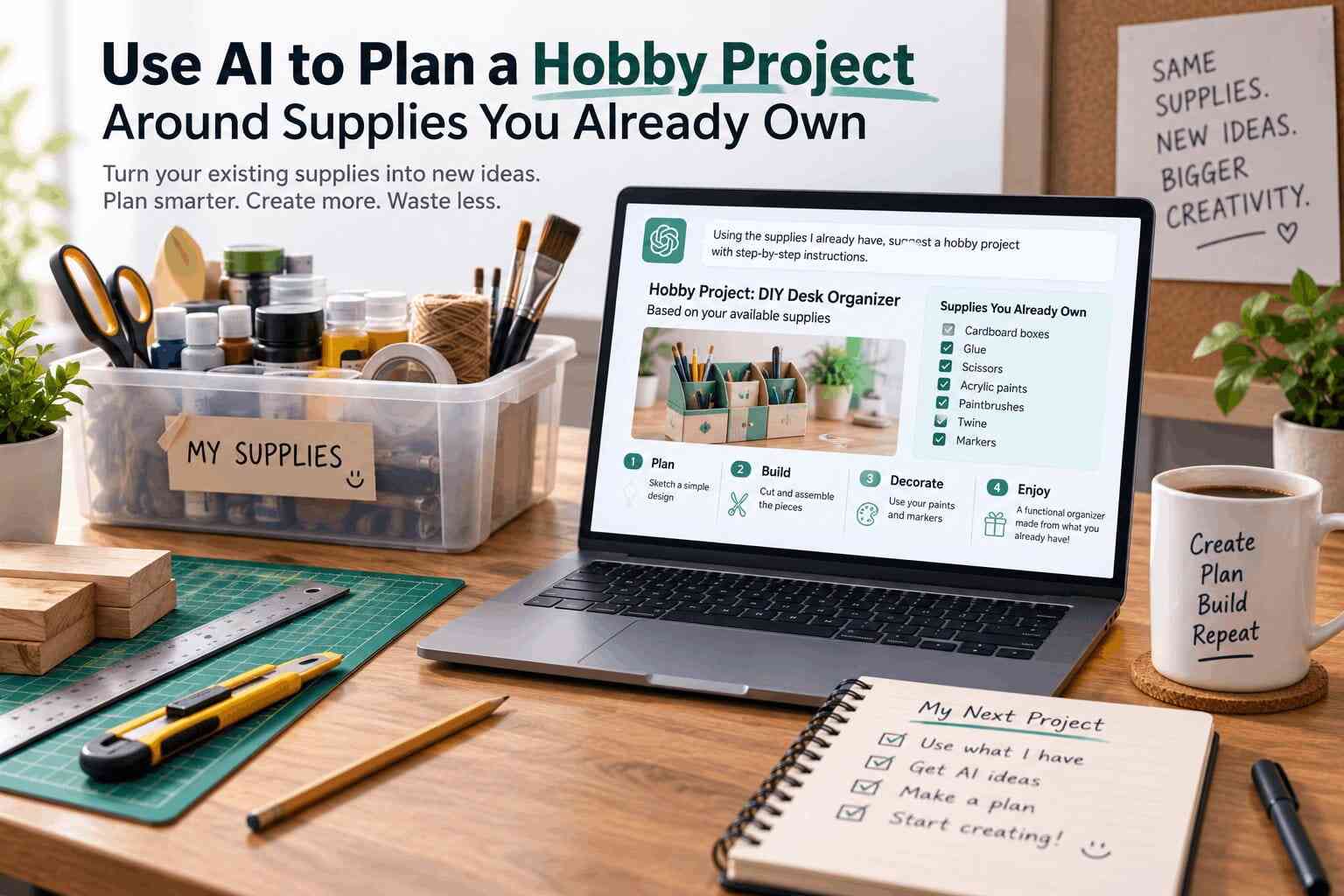
A drawer of unused craft supplies can make starting a project harder rather than easier. You have paper, scraps, paints, and several unfinished ideas, but no clear choice about what to make. Searching for inspiration may add more materials to a shopping list before you have used what is already there.
AI hobby project planning can begin with the opposite question: what can I complete with these supplies, this amount of time, and my current skills? The assistant can propose bounded options and help outline one of them. You still choose the project and verify that the suggested materials and methods fit the actual objects in front of you.
Describe the supplies in practical terms
List materials, approximate quantities, dimensions where relevant, and their condition. “Some paper” gives little guidance. “Twelve sheets of plain card, several small colored scraps, glue suitable for paper, and scissors” supports more realistic ideas.
Separate supplies from tools. Materials are consumed or become part of the project, while tools are reused. This helps prevent an assistant from recommending a technique that depends on equipment you do not own.
Mark unknowns honestly. If you cannot identify a paint type or adhesive, do not ask the assistant to assume compatibility. Check the label and use instructions before including it in a method.
For a first planning attempt, choose a low-risk craft such as a paper collage or a small handmade notebook design. Keep specialist techniques within guidance you already understand.
Set limits that protect the hobby experience
State the time available, workspace, cleanup needs, and spending limit. A two-hour evening session calls for a different project from a weekend with a dedicated worktable.
Include the kind of experience you want. You may want a relaxing activity, practice with one skill, or a useful finished object. Those purposes suggest different choices even when the supplies are identical.
Decide whether the project must be finished in one session. Drying, setting, or other waiting periods can make an apparently short activity unsuitable for that goal. Use the actual material instructions for those periods rather than invented timing.
A boundary such as “no purchases for this project” is useful. It forces the ideas to work with existing resources and prevents an optional embellishment from becoming a supposed requirement.
Ask for a small choice of genuinely different projects
Request three options with different outcomes, not ten near-identical variations. For the paper supplies, options might include a set of bookmarks, a collage card, or a small folder for loose notes.
For each option, ask for the intended result, required supplies from your list, likely skill demands, and any unresolved material question. Keep duration estimates clearly approximate.
A prompt could read:
Suggest three simple paper projects using only these listed supplies. I have one evening and a small table. No shopping. Explain the finished object, the main skill practiced, and any uncertainty I should check before starting. Avoid adding tools or materials I did not list.
Do not choose solely from the prettiest description. Select the option whose finish you understand and whose steps fit the time and space available.
Define what complete means before starting
A project can expand endlessly when “make it look good” is the only finish condition. Choose a visible endpoint: three usable bookmarks with clean edges and a simple design, for example.
Set optional decoration aside until the basic object is complete. This gives you a stopping point even if enthusiasm or available time changes during the session.
You can ask the assistant to divide the plan into essential steps and optional refinements. Check that the essential version still produces something you want. If it feels like an unsatisfying fragment, choose a smaller finished object rather than a larger unfinished one.
This approach is especially useful when a hobby is meant to offer a break from work. A modest completed project may be more rewarding than an elaborate plan that creates another obligation.
Build an AI hobby project planning sequence
Once you choose the project, request a sequence that includes preparation, making, checking, and cleanup. Ask the assistant to use only methods supported by your materials and established instructions.
For bookmarks, preparation might involve deciding a size and arranging paper pieces before attaching them. The checking stage might involve confirming that the finished piece fits a book comfortably and has no loose decoration that interferes with use.
Ideas found through AI-focused reading such as Aiera.blog can broaden the ways you plan creative work. The best project for a particular evening still depends on the supplies, patience, and workspace you actually have.
Keep the plan beside the materials, but allow ordinary creative choices during the making process. The sequence should support the hobby rather than turn every decision into an instruction-following exercise.
Test a small part before committing the materials
If the project involves combining materials, test on scraps first using the products' stated instructions. Check whether the result suits your design before using the main pieces.
A sample can also test scale and appearance. Lay out one bookmark before cutting every sheet. Fold a spare piece before deciding the dimensions of the final folder. These small trials can reveal a problem while the cost of changing direction remains low.
If a suggestion seems unsuitable, stop and revise the plan. Do not assume that a detailed AI explanation establishes material compatibility or a safe technique.
Keep any tools and materials within the use arrangements appropriate for the people participating, particularly when children are involved.
Prevent the project from becoming a shopping task
During the session, note attractive additions without buying them immediately. Ask whether the current supplies can produce a simpler equivalent or whether the addition is unnecessary for the agreed finish.
If a genuinely essential material is missing, choose between reducing the scope and postponing the project. Do not disguise a missing requirement as a minor detail and continue with an unsuitable substitute.
A no-purchase session can reveal useful preferences. You may discover that you enjoy arranging color more than detailed cutting, or that a certain kind of project does not suit your workspace.
Record one lesson for the next attempt
When finished, note what worked, what took longer than expected, and which supplies remain. Keep a photograph if it helps you remember the result, but you do not need a formal project report.
The next plan can begin from that real experience. AI supplies possible routes; a clear finish and your observations turn one of those routes into a hobby project you can actually enjoy completing.