Honda Super-One Electric Hatchback: Everything You Should Know
-

- Published Updated
- 59 views
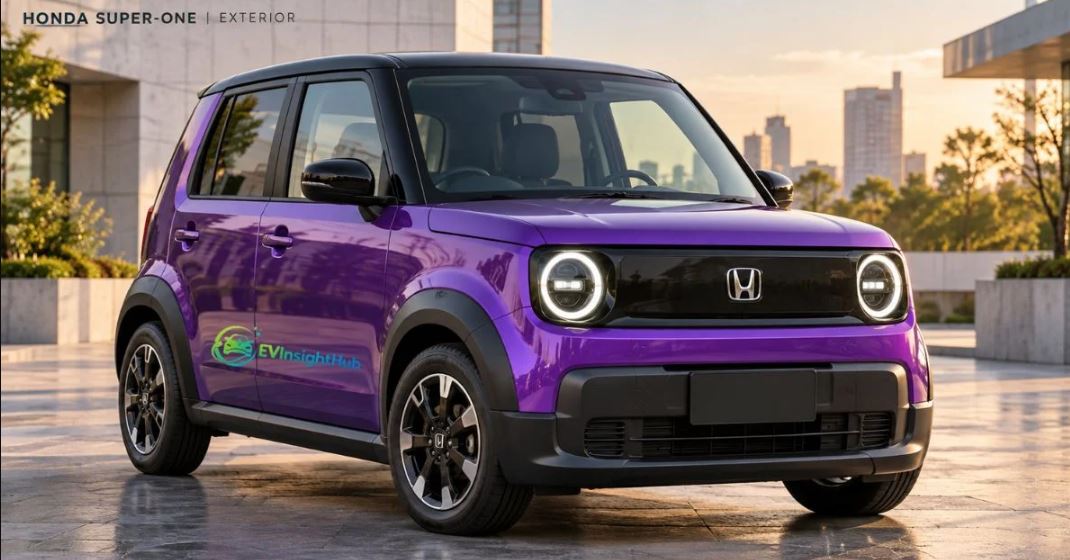
The electric vehicle market is expanding quickly, and compact electric cars are becoming an important part of that growth. While many EVs focus on larger dimensions, long-distance range, and premium features, smaller electric hatchbacks are designed around a different purpose: efficient, practical, and convenient urban transportation. The Honda Super-One is an interesting example of this approach, combining a compact body with modern electric technology and a practical interior.
The Honda Super-One is equipped with a 29.6 kWh battery and has a claimed 202 km WLTP range. Its specifications suggest that the vehicle is primarily aimed at everyday city driving, where drivers typically make shorter journeys and can charge the vehicle regularly.
Compact Electric Design
One of the main characteristics of the Honda Super-One is its compact hatchback format. Smaller vehicles can be particularly useful in busy cities because they are easier to maneuver through narrow streets and can be simpler to park than larger SUVs and sedans.
The Super-One also has a distinctive design that gives it a modern electric-car identity while maintaining the practicality associated with a small hatchback. Its compact dimensions make it suitable for drivers who want an EV for commuting, shopping, school runs, and other regular urban activities.
Rather than focusing exclusively on maximum range, Honda has designed the Super-One around a balance of efficiency, practicality, and everyday usability.
Battery and Driving Range
Battery capacity is one of the most important specifications when evaluating an electric vehicle. The Honda Super-One uses a 29.6 kWh battery, which provides a claimed 202 km WLTP range.
A range of this size can be suitable for urban drivers who generally travel shorter distances each day. For example, commuters who have access to home or workplace charging may be able to use the Super-One for several days of routine travel before needing a longer charging session.
Actual range can vary depending on driving style, traffic, weather, road conditions, passenger load, and the use of heating or air conditioning. As with other EVs, the official WLTP figure should therefore be viewed as a standardized reference rather than a guaranteed real-world distance.
Performance and Boost Mode
Despite being a compact electric hatchback, the Honda Super-One is not designed solely around low-speed efficiency. It can deliver up to 70 kW in Boost mode, giving the vehicle additional power when stronger acceleration is required.
Electric motors can provide immediate torque, which is useful in urban driving. Quick responses can make it easier to move away from traffic lights, merge into moving traffic, or navigate busy roads.
The Super-One also offers multiple driving modes, giving drivers more control over how the vehicle responds in different situations. The availability of these modes adds some flexibility to the driving experience without changing the vehicle's fundamental focus on urban mobility.
Interior and Seating
A compact exterior does not necessarily mean the interior has to be impractical. Honda has equipped the Super-One with a four-seat layout and its flexible Magic Seats system.
Magic Seats are designed to provide additional flexibility when carrying passengers or cargo. Depending on the configuration, the available interior space can be adapted to accommodate different types of loads.
This can be particularly useful for an urban vehicle because owners may use the car for very different purposes throughout the week. A typical day might involve carrying passengers, while another trip may require additional cargo space.
The vehicle also has a 162-litre boot, providing useful storage for everyday items such as shopping bags, backpacks, and smaller luggage.
Charging Capability
Charging speed is another important factor when considering an EV. The Honda Super-One supports fast charging of up to 50 kW.
Fast charging can be useful for drivers who need to add energy during the day instead of waiting for a longer home-charging session. When connected to a compatible charging station, the higher charging rate can make public charging more convenient.
However, actual charging performance can depend on several factors, including battery temperature, charging-station capability, battery state of charge, and the vehicle's charging curve.
For owners who regularly charge at home, overnight charging can remain the most convenient option for routine use, while public fast charging can provide additional flexibility during longer trips.
Everyday Urban Practicality
The Honda Super-One's combination of a compact body, four seats, flexible seating, and a 162-litre boot makes it particularly interesting as a city vehicle.
Urban drivers often prioritize easy maneuverability, convenient parking, reasonable operating costs, and sufficient range for regular travel. A smaller EV can address several of these requirements without the size and weight associated with larger electric vehicles.
The Super-One's 202 km claimed WLTP range may also be adequate for many daily routines. Drivers who travel relatively short distances and have convenient charging access may find this type of EV more practical than a larger model with a significantly bigger battery.
Expected Price and India Availability
The Honda Super-One could also attract attention from buyers interested in compact electric cars in India. However, Honda has not officially confirmed an India launch for the model.
Estimated pricing is around ₹20–21 lakh, but this should be treated as an estimate rather than confirmed Indian-market pricing. If Honda eventually introduces the Super-One in India, the final price could depend on specifications, taxes, equipment, production strategy, and other market factors.
India's electric-car market is becoming increasingly competitive, with manufacturers offering vehicles across different price ranges and body styles. A compact Honda EV could potentially appeal to buyers who want a smaller alternative to larger electric SUVs.
Is the Honda Super-One Worth Watching?
The Honda Super-One is an interesting compact EV because it does not attempt to compete solely through battery size or maximum range. Instead, it combines a 29.6 kWh battery, 202 km claimed WLTP range, up to 70 kW in Boost mode, 50 kW fast charging, and a practical four-seat interior.
Its Magic Seats and 162-litre boot also give it useful flexibility for everyday transportation. These characteristics make the Super-One particularly relevant for urban drivers who want a compact electric vehicle for regular commuting and city travel.
Of course, buyers should consider their own driving requirements before choosing any EV. Drivers who frequently travel long distances may prefer a vehicle with a larger battery and greater range, while those who primarily drive around town may value compact dimensions and convenient charging more highly.
Overall, the Honda Super-One represents an interesting approach to compact electric mobility. Its combination of practical dimensions, flexible interior, electric performance, and fast-charging capability makes it a model worth following as Honda continues to expand its electric vehicle lineup.