Hotel AI and PMS Integration: How Smart Hotels Are Connecting Guest Conversations With Operations
-

- Published Updated
- 1,852 views
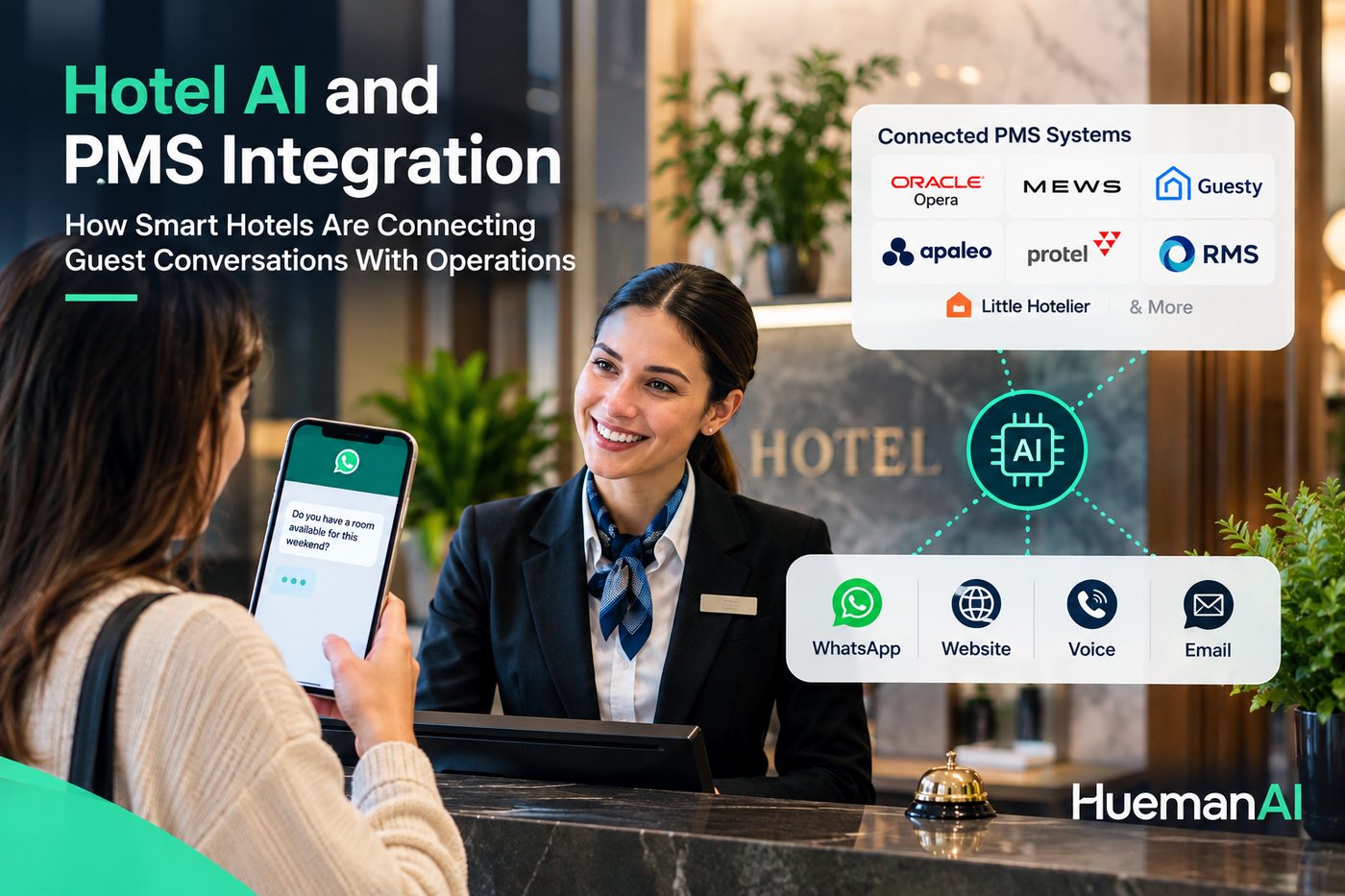
A hotel can have a beautiful website, a strong booking engine and a reliable Property Management System (PMS), but there is still one major challenge: keeping up with guest communication.
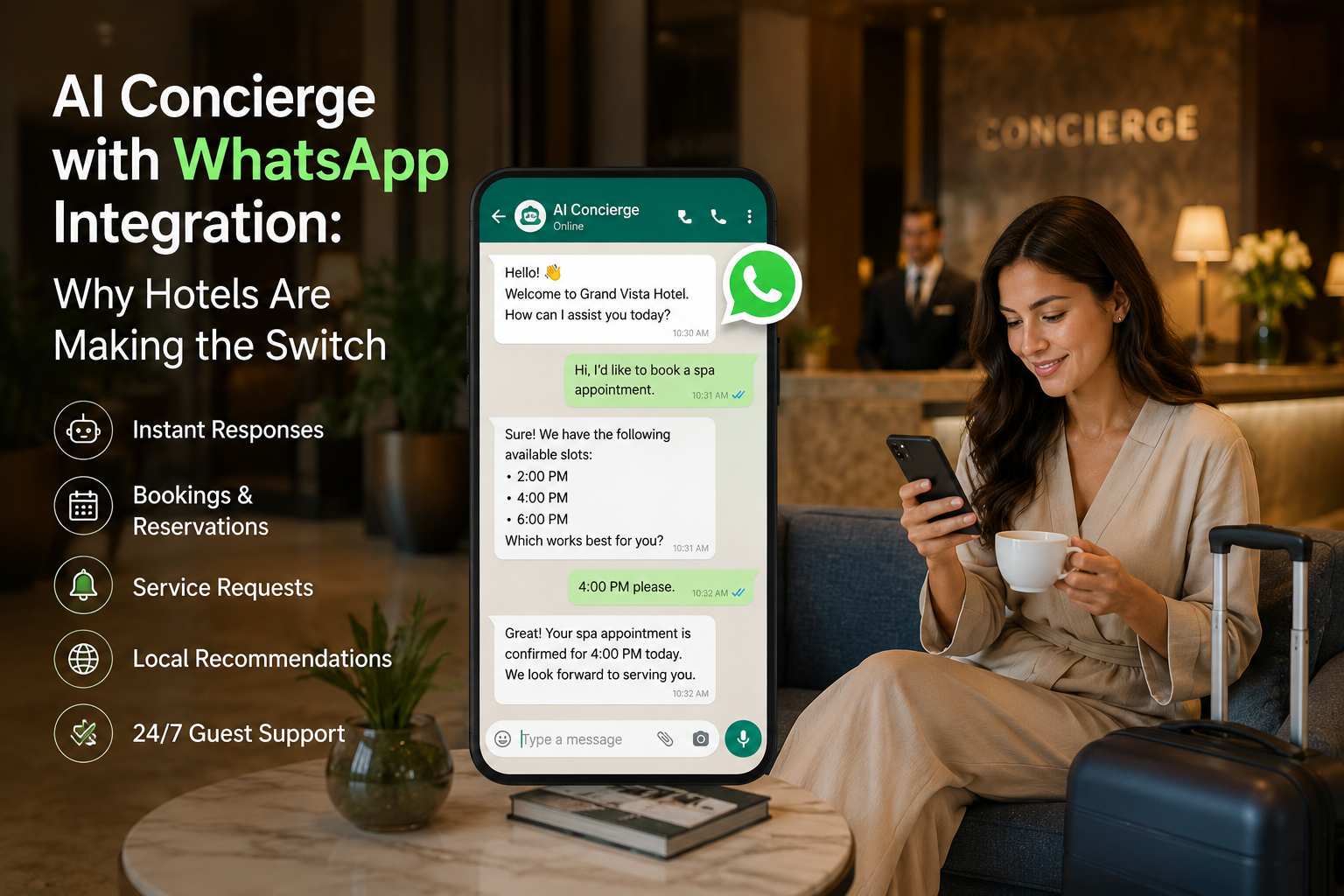
Guests ask questions throughout the day. They may want to know about room availability, check-in times, cancellations, breakfast, airport transfers or special requests. Some send WhatsApp messages. Others use website chat, email or phone.
For hotel teams, managing all these conversations manually can take a lot of time.
This is where hotel AI and PMS integration is becoming increasingly important.
What Is Hotel PMS Integration?
A Property Management System is at the centre of many hotel operations. It can manage reservations, room availability, guest information, rates and other important operational data.
AI, on the other hand, can communicate directly with guests.
When these two systems are connected, the AI can become more useful because it is no longer working with only static information.
For example, a guest might ask:
“Do you have a room for two people this Friday?”
An AI assistant connected to the hotel's systems can potentially check relevant availability and continue the conversation based on current information.
Instead of simply answering questions, AI can become part of the booking journey.
Why Hotels Are Looking at AI Integration
Hotels already have many software tools. The problem is often not a lack of technology but the lack of connection between those systems.
A guest may start a conversation on WhatsApp, while the reservation information lives inside the PMS.
Without integration, a staff member may need to check the PMS manually, return to the conversation, provide the answer, and then update the booking.
That adds extra steps.
With an integrated setup, the process can become more connected:
Guest message → AI → Hotel PMS → Availability → Booking → Confirmation
This can help reduce repetitive work and create a smoother experience for both guests and hotel employees.
Which PMS Platforms Can Work With Hotel AI?
Different hotels use different systems depending on their size, location and operating model.
Popular hotel PMS platforms include Oracle OPERA, Mews, Guesty, Apaleo, Protel, RMS and Little Hotelier.
The important thing is not just whether an AI platform says it “integrates with PMS.”
Hotels should ask what that integration actually allows.
Can the AI access live availability?
Can it work with rates?
Can it create or update reservations?
Can it access relevant guest information?
Can it pass information back into the hotel's operational system?
These details make a major difference.
OPERA and AI Integration
Oracle OPERA is widely used in hotel operations, particularly by larger and more structured properties.
An AI system connected to OPERA can potentially use relevant hotel information during guest conversations instead of relying only on pre-written answers.
For example, a guest can ask about a room for a specific weekend. The AI can use the connected system to support the availability and booking workflow.
This is much more useful than a chatbot that simply replies:
“Please contact our reservations team.”
The goal is to move the conversation forward.
Mews, Guesty and Other PMS Platforms
Modern hotel and property management platforms such as Mews and Guesty are also becoming part of the wider hospitality technology ecosystem.
For independent hotels and multi-property operators, integrations can make AI more useful across reservations, messaging and guest support.
A growing hotel group may have multiple properties, several communication channels and a large volume of guest questions.
Connecting AI with existing systems can help create one more consistent communication layer without forcing the hotel to completely replace its current technology.
AI Should Support Staff, Not Create More Work
One of the biggest concerns around hospitality AI is whether technology will make hotels feel less personal.
In reality, AI can be used for the repetitive parts of communication while employees focus on situations that require human judgement.
AI can help with routine questions such as:
“What time is check-in?”
“Is breakfast included?”
“Do you have availability?”
“Can I modify my booking?”
“Do you offer airport transfers?”
But if a guest has a complicated request, a complaint or a special situation, the conversation can be passed to a human member of staff.
This creates a simple model:
AI handles routine communication.
People handle important human moments.
What Should Hotels Check Before Choosing an AI Platform?
Before implementing AI, hotel managers and IT teams should ask a few practical questions.
First, which PMS systems are supported?
Second, is the integration one-way or bi-directional?
Third, what hotel information can the AI access?
Fourth, what actions can it perform?
And finally, what happens when AI cannot complete a request?
These questions are more useful than judging an AI platform only by how impressive its chatbot looks.
Where HuemanAI Fits In
HuemanAI is designed specifically for the hospitality industry, helping hotels manage guest communication across channels such as WhatsApp, voice and website conversations.
Its approach combines AI-powered communication with hotel technology integrations, allowing guest conversations to connect more closely with operational workflows.
You can explore HuemanAI here:
https://huemanai.co.uk/
For more information about hotel PMS and AI-agent integrations:
https://huemanai.co.uk/blog/ai-agent-pms-integration-hotels
Final Thoughts
Hotel AI works best when it is connected to the systems hotels already use.
A chatbot that only answers basic questions may be useful, but an AI system that can work with hotel data and support real booking and operational workflows can be much more valuable.
The future of hospitality technology is unlikely to be about replacing every existing system.
Instead, it will be about making those systems work together.
For hotels, that means connecting guest conversations, PMS data and human teams into one smoother operational journey.
That is where hotel AI integration can make a real difference.