How Often Should You Paint Your House Exterior in Wisconsin?
-
- September 21st, 2026
- 37 views
Exterior paint does more than change the color of your home. It is part of the home's exterior protection system, helping shield siding, trim and other painted surfaces from moisture, sunlight and everyday weather exposure.
For Wisconsin homeowners, that protection matters even more. Exterior surfaces have to withstand changing temperatures, rain, humidity, snow and freeze-thaw conditions throughout the year.
So, how often should you repaint?
There isn't one universal schedule. Sherwin-Williams notes that exterior paint commonly lasts around 7 to 10 years, but the actual repainting interval depends on factors such as climate, surface material and paint quality. (Sherwin-Williams)
For homeowners in Waukesha and Southeastern Wisconsin, the better approach is to look at the condition of the exterior, not simply the calendar.
The Exterior Paint Is a Protective Layer, Not Just a Color
A home's siding and trim are exposed to the weather every day.
Over time, sunlight, moisture and temperature changes can affect the coating. Once the paint film begins to fail, the underlying material may become increasingly exposed.
This is particularly important on wood and other moisture-sensitive surfaces.
Common signs include:
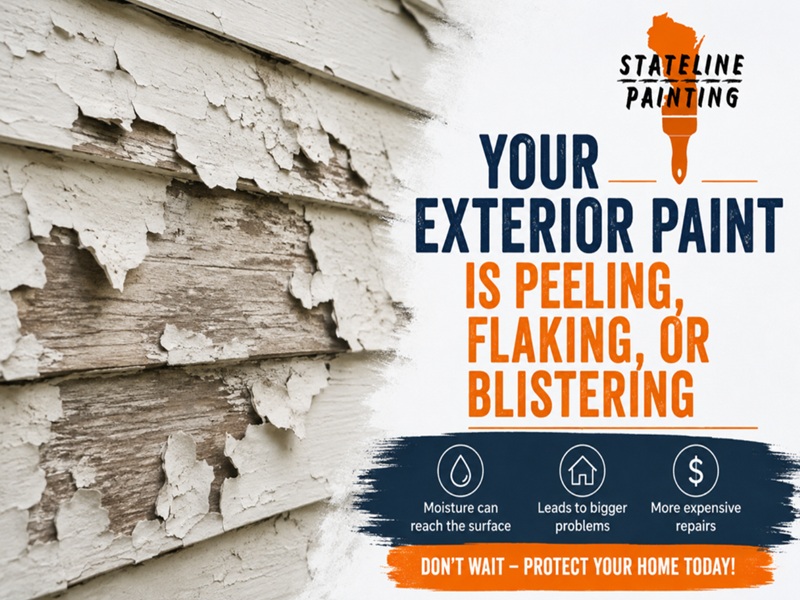
- Peeling or flaking pain
- Cracking
- Fading
- Blistering
- Exposed wood
- Failed caulking
- Mildew or staining
- Areas where the previous coating has worn thin
Sherwin-Williams identifies moisture intrusion, worn caulking and painting damp surfaces among causes associated with exterior paint peeling. (Sherwin-Williams)
That means peeling paint shouldn't simply be viewed as a cosmetic issue.
It can be a signal that the exterior needs closer inspection.
How Long Does Exterior House Paint Usually Last?
A reasonable starting point is 7 to 10 years, but that should not be treated as a fixed expiration date.
The lifespan of an exterior coating depends on several variables:
Surface Material
Wood siding, fiber cement, vinyl, metal and masonry don't behave exactly the same way.
The condition of the existing substrate also matters.
Previous Preparation
A new coat applied over dirt, loose paint or an unstable surface is unlikely to perform as well as a coating installed over a properly prepared substrate.
Benjamin Moore recommends addressing peeling paint, smoothing affected areas and preparing the surface before priming and painting. (Benjamin Moore)
Paint Quality
The coating needs to be appropriate for exterior conditions and the specific surface being painted.
Weather Exposure
A home's exposure to sun, rain and moisture can affect how quickly an exterior finish deteriorates.
Maintenance
Small problems can become larger problems when they are ignored for several seasons.
For these reasons, homeowners should use the 7 to 10 year range as a general reference, not a rule that says every Wisconsin home needs to be painted exactly every seven or ten years.
7 Signs Your Wisconsin Home May Need Exterior Painting
Instead of waiting for a specific year, inspect the condition of the exterior.
1. Paint Is Peeling or Flaking
Peeling paint is one of the clearest signs that the existing coating has deteriorated.
But simply painting over peeling areas isn't the solution.
The cause needs to be understood and the loose coating properly removed.
Moisture can contribute to peeling, while poor surface preparation and adhesion problems can also play a role. (Sherwin-Williams)
2. You Can See Bare Wood
If painted wood siding or trim is exposed, the coating is no longer providing the same level of surface protection.
Bare areas should be evaluated before repainting because the appropriate preparation and primer may depend on the condition of the substrate.
Sherwin-Williams recommends priming exposed or previously unpainted areas when appropriate before applying the finish coat. (Sherwin-Williams)
3. The Color Has Significantly Faded
Fading doesn't necessarily mean the paint has completely failed.
However, significant fading can indicate prolonged exposure to sunlight and weather.
It can also make siding, trim and architectural details look inconsistent.
For homeowners considering a new color, this can be an opportunity to address both appearance and the condition of the existing coating.
4. Caulking Around Windows and Trim Is Failing
Look closely around:
- Windows
- Doors
- Trim
- Exterior joints
- Other areas where different materials meet
Cracked or deteriorated caulking can allow moisture to enter areas that should remain protected.
Benjamin Moore recommends using quality paintable caulk for appropriate exterior gaps and joints during preparation. (Benjamin Moore)
5. You Notice Cracks or Blistering
Cracking and blistering shouldn't simply be covered with another coat of paint.
The underlying cause should be investigated first.
Temperature, moisture, substrate condition and application conditions can all affect coating performance.
Benjamin Moore notes that unsuitable temperature conditions can contribute to problems including peeling, blistering and poor film formation. (Benjamin Moore)
6. Mildew or Persistent Staining Appears
Dark staining or mildew growth deserves attention before painting.
Cleaning the surface and determining why moisture is accumulating can be more important than simply applying a new color.
Paint can help protect a properly prepared surface, but it isn't a substitute for correcting an underlying moisture problem.
7. The Exterior Looks Worn Even After Cleaning
Sometimes the problem isn't dirt.
If cleaning doesn't restore the appearance and you are seeing widespread fading, chalking, peeling or uneven color, the existing coating may simply be approaching the end of its useful service life.
That's when an exterior painting assessment makes sense.
Why Exterior Painting Preparation Matters in Wisconsin
The quality of an exterior painting project isn't determined only by the paint applied at the end.
Preparation is where much of the long-term performance begins.
Sherwin-Williams recommends cleaning exterior surfaces, removing loose or peeling paint, repairing imperfections, sanding where necessary and priming exposed areas before painting. (Sherwin-Williams)
For a professional exterior painting project, the process may include:
Surface Cleaning
Dirt, mildew, loose material and other contaminants need to be removed.
Scraping
Loose and failing paint needs to be removed rather than sealed underneath the new coating.
Sanding
Rough transitions and deteriorated areas may need to be smoothed.
Repairs
Damaged siding, trim or other substrate problems should be addressed before painting.
Caulking
Appropriate gaps around windows, doors and trim can require new exterior-grade caulking.
Priming
Exposed or repaired surfaces may require primer to establish proper adhesion and coverage.
Finish Coating
Only after the surface is properly prepared should the finish coats be applied.
This sequence is important because new paint cannot compensate for an unstable surface underneath it.
Wisconsin Weather Makes Timing Important
Exterior painting isn't simply a matter of choosing a weekend that looks sunny.
Temperature, moisture and drying conditions matter.
Sherwin-Williams recommends following the individual coating manufacturer's application requirements and notes that cold temperatures and moisture can interfere with proper film formation and adhesion. (Sherwin-Williams)
That is particularly relevant in Wisconsin, where the practical exterior painting season is constrained by weather.
A professional contractor should evaluate:
- Surface temperature
- Air temperature
- Humidity
- Rain forecast
- Surface moisture
- Overnight temperatures
- Product-specific application requirements
The objective isn't simply to finish the job quickly.
It's to apply the coating under conditions that allow it to perform as intended.
Should You Paint Before or After Winter?
For Wisconsin homeowners, spring and summer often bring attention back to exterior maintenance.
If winter has left behind:
- Peeling paint
- Cracked caulking
- Exposed wood
- Faded siding
- Moisture staining
- Damaged trim
it's worth assessing those areas before deciding whether the entire exterior needs repainting.
A professional inspection can help determine whether the property needs:
Touch-ups → Repairs → Preparation → Full Exterior Repainting
That distinction can prevent homeowners from either repainting too early or waiting until the exterior has deteriorated further.
Exterior Painting Is About More Than Curb Appeal
A fresh exterior certainly changes the appearance of a property.
But the bigger consideration is the condition of the coating underneath.
A properly planned exterior painting project can address both:
Appearance
- Updated color
- Cleaner trim
- More consistent finish
- Improved curb appeal
Protection
- Properly prepared surfaces
- Repaired problem areas
- Renewed coating
- Better protection against everyday weather exposure
This is why choosing an exterior painter based only on the lowest price can be misleading.
Two estimates may appear similar on paper while involving very different levels of preparation.
What Should Be Included in an Exterior Painting Estimate?
Before hiring an exterior painting contractor, ask what is actually included.
A detailed estimate should make it reasonably clear:
- Which surfaces will be painted
- What preparation is included
- Whether power washing is included
- How peeling paint will be handled
- Whether minor repairs are included
- Where primer will be used
- What type of coating is proposed
- How many coats are planned
- How trim and doors will be handled
- What property protection is provided
- How cleanup will be completed
This is particularly important when comparing exterior painting contractors in Waukesha or elsewhere in Southeastern Wisconsin.
A lower estimate isn't necessarily less expensive if significant preparation or repairs are excluded.
Why Local Experience Matters for Exterior Painting
Exterior painting isn't performed in a climate vacuum.
A contractor working in Southeastern Wisconsin needs to understand the practical conditions local homes experience throughout the year.
Stateline Painting is based in Waukesha and provides residential and commercial painting services throughout the area, including exterior painting for siding, trim and decks. The company's exterior painting process emphasizes cleaning, scraping, sanding, caulking, priming, painting and final inspection. (Stateline Painting)
For homeowners, that preparation-focused approach matters because the goal isn't simply to make the house look freshly painted on completion day.
The objective is to create a finish that is properly prepared for the conditions it will face afterward.
When Should You Schedule an Exterior Painting Project?
If you're noticing several signs at once, don't wait until the exterior has widespread peeling or exposed substrate.
A good time to have the property assessed is when you notice:
Fading + peeling + failed caulking + exposed areas + surface deterioration
Even if the entire house doesn't need immediate repainting, identifying problems early can help you plan repairs and painting before the condition becomes more extensive.
For homeowners in Waukesha, Brookfield, Pewaukee, Delafield and surrounding communities, Stateline Painting provides exterior painting services designed around surface preparation, appropriate coatings and professional application. (Stateline Painting)
Frequently Asked Questions
How often should a house be painted in Wisconsin?
Exterior paint commonly lasts around 7 to 10 years, but the actual interval depends on surface material, weather exposure, paint quality and preparation. Inspect the condition of the exterior rather than relying only on age. (Sherwin-Williams)
What are the first signs that a house needs painting?
Common warning signs include peeling, cracking, fading, exposed substrate, deteriorated caulking, blistering and persistent staining.
Can you paint over peeling exterior paint?
Loose and peeling paint should generally be removed and the underlying surface properly prepared before repainting. Simply covering unstable paint can lead to continued adhesion problems. (Sherwin-Williams)
What temperature is best for exterior painting?
There isn't one temperature that applies to every product. Follow the coating manufacturer's technical requirements. Sherwin-Williams notes that temperature and moisture conditions can affect drying, film formation and adhesion. (Sherwin-Williams)
Does exterior painting protect siding?
A properly prepared and applied exterior coating can help protect suitable siding and other surfaces from weather exposure. However, painting does not replace necessary repairs or resolve underlying moisture problems.
Protect Your Home Before the Exterior Shows Bigger Problems
Exterior painting should not be treated as a simple color change.
For Wisconsin homes, it's an opportunity to address deteriorating paint, prepare exposed surfaces, repair minor problems and renew the protective coating before exterior damage becomes more extensive.
If your home's siding or trim is showing peeling, fading, cracking, exposed wood or failing caulking, it may be time to have the exterior evaluated.
Stateline Painting provides professional exterior painting services in Waukesha and surrounding Southeastern Wisconsin communities.
Related Posts