HRA Exemption Calculator Guide for Salaried Employees: How to Compute and Maximise HRA
-

- Published Updated
- 295 views
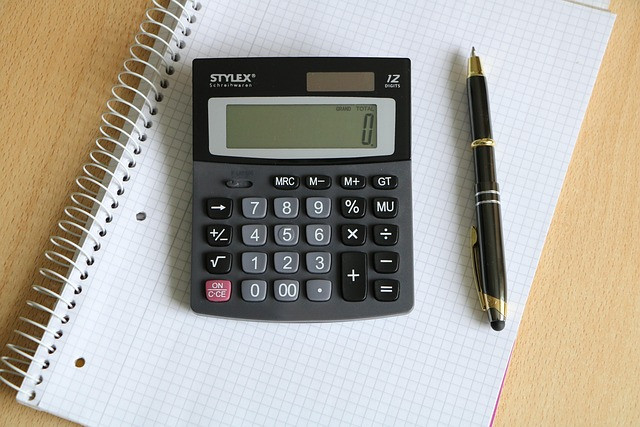
An HRA exemption calculator helps salaried taxpayers estimate the tax-exempt portion of House Rent Allowance based on salary, rent paid, and city of residence. Use an HRA exemption calculator when planning withholding, filing returns, or verifying payroll entries to confirm the taxable HRA portion and potential savings.
- HRA exemption equals the minimum of three values: actual HRA received; rent paid minus 10% of salary; or 50% of salary for metros / 40% for non-metros.
- Salary for HRA purposes is generally basic pay plus dearness allowance (if part of salary).
- Keep rent receipts, rent agreement, and landlord details to claim HRA; alternate rules apply if living with parents or landlord not registered.
- Use the HRA-CLAIM checklist and the HRA-4 Step Framework below to calculate and document claims accurately.
How to use an HRA exemption calculator
Start with basic inputs: basic salary, dearness allowance included in salary, actual HRA received, rent paid, and city classification (metro or non-metro). The HRA exemption calculator applies the legal test that chooses the minimum of three computed values and returns the exempt amount.
HRA-4 Step Framework: a practical calculation method
Follow four steps to compute exemption without a digital calculator.
Step 1 — Define salary base
Salary for HRA calculation generally means basic salary plus dearness allowance (DA) if DA is part of salary. Exclude allowances not forming part of salary for this purpose.
Step 2 — Compute the three comparison values
- Actual HRA received from employer.
- Rent paid minus 10% of salary base (rent paid - 0.10 × salary).
- Percentage of salary: 50% of salary if living in a metro city (New Delhi, Mumbai, Kolkata, Chennai) or 40% if in a non-metro.
Step 3 — Apply the rule
The exempt HRA amount is the smallest of the three values computed above. The remainder of HRA received is taxable as part of income.
Step 4 — Document and report
Retain rent receipts, a copy of the rent agreement, and landlord PAN if rent to a non-relative exceeds statutory thresholds. Report the exempt figure in payroll and Form 16 and declare consistent figures in the income tax return.
HRA-CLAIM checklist
Use this named checklist to prepare a claim:
- Confirm salary components (basic + DA).
- Locate rent receipts and bank transfer proofs for rent paid.
- Assess city classification (metro vs non-metro).
- Identify actual HRA paid by employer from payslips.
- Match amounts across payslip, rent receipts and Form 16 before filing.
Real-world example
Scenario: A salaried employee with basic salary of ₹40,000 per month, DA included ₹0, receives HRA ₹15,000 per month and pays rent ₹18,000 per month in a metro city.
- Actual HRA received = ₹15,000
- Rent paid minus 10% of salary = ₹18,000 - (10% of ₹40,000) = ₹18,000 - ₹4,000 = ₹14,000
- 50% of salary (metro) = 50% of ₹40,000 = ₹20,000
Exempt HRA = minimum(15,000; 14,000; 20,000) = ₹14,000 per month. Annual exempt HRA = ₹168,000. Remaining HRA ₹12,000 per year is taxable.
Practical tips to calculate and claim HRA
- Enter consistent amounts: use the same salary base that payroll uses (basic + DA if applicable) when using a calculator or worksheet.
- Keep digital proof: bank transfers, stamped rent receipts and screenshots of online rent payments speed up verification.
- If living with parents, include a signed rent agreement and receipts; consider landlord PAN requirements if payments exceed thresholds.
- Reconcile payslip HRA and Form 16 figures before filing returns to avoid mismatches during assessment.
Common mistakes and trade-offs
Common mistakes
- Using gross salary instead of basic salary + DA — this inflates 10% of salary and distorts the rent-minus-10% comparison.
- Not maintaining proof of rent payments; cash-only receipts without bank proof increase scrutiny risk.
- Assuming HRA applies when living in employer-provided accommodation or paying rent to close relatives without following special rules.
Trade-offs
Claiming maximum legal exemption requires documentation and accurate payroll entries; aggressive assumptions without proof increase audit risk. Choosing convenience (informal cash receipts) may save time short-term but can lead to disputes or disallowance later.
Where to check official rules
For official guidance on allowances and income tax provisions, refer to the Income Tax Department website: Income Tax Department.
Checklist before filing
- Verify basic salary and DA used by payroll.
- Sum annual rent paid and confirm with bank/transaction proof.
- Calculate the three comparison values and take the minimum.
- Attach rent receipts and rent agreement copy when required by employer or returns process.
Frequently asked questions (FAQ)
How does an HRA exemption calculator determine exempt amount?
An HRA exemption calculator computes three values—actual HRA received; rent paid minus 10% of salary; and 50%/40% of salary depending on city—then returns the smallest value as the exempt portion. Salary normally means basic pay plus dearness allowance if DA is treated as salary.
Can rent paid to parents be claimed for HRA?
Yes, rent paid to parents can be claimed if a rent agreement exists and rent is actually paid. Maintain receipts and bank transfer proof. If payments are in cash, additional scrutiny can occur.
What if the employer doesn’t ask for rent receipts?
Keep receipts and proofs even if not requested; the exemption must be supported if the return is selected for scrutiny. Employers may require receipts to process the exemption in payroll.
Does HRA exemption apply when living in a company-provided house?
HRA exemption applies only to HRA actually received and when rent is paid to a landlord. If accommodation is provided by the employer with a rent-like charge, different valuation rules apply and the charge may be taxable per rules on perquisites.
How to report HRA exemption in the income tax return?
Report the exempt amount under the HRA section of the income tax return and ensure Form 16 matches the exempt and taxable HRA amounts claimed. Maintain supporting documents for at least the statutory period in case of inquiry.