Hydrogen-Powered Aircraft Market Forecast: Growth, Drivers & Opportunities
-
- May 01st, 2026
- 5,823 views

FREE SEO Topical Map Generator: Find Your Next Content Ideas
Market Overview
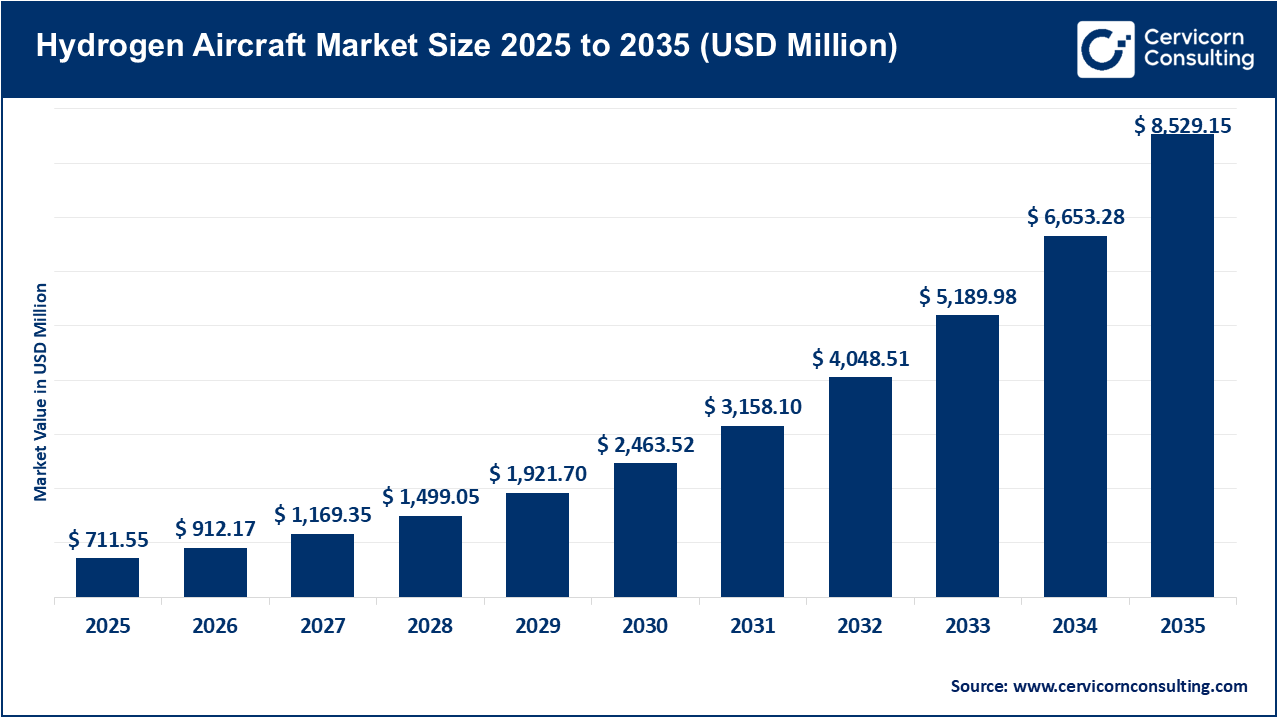
According to insights from Cervicorn Consulting, the hydrogen aircraft market was valued at approximately USD 711.55 million in 2025 and is projected to reach nearly USD 8,529.15 million by 2035, expanding at a strong CAGR of around 28.2%. This remarkable growth reflects the increasing global urgency to reduce aviation-related emissions and transition toward cleaner, more sustainable energy sources. As environmental concerns intensify and governments enforce stricter carbon regulations, hydrogen is emerging as a promising alternative to conventional aviation fuels.Hydrogen-powered aircraft use hydrogen as their primary energy source, either through combustion in specially modified engines or via fuel cells that convert hydrogen into electricity for propulsion. Unlike traditional fossil fuels, hydrogen produces zero or near-zero carbon emissions, with water vapor as the main byproduct. This makes hydrogen aircraft a critical component in the future of sustainable aviation, offering a pathway to significantly lower the environmental impact of air travel.
Key Market Drivers
1. Increasing Focus on Decarbonization
The aviation industry is a notable contributor to global greenhouse gas emissions, prompting governments and international organizations to introduce stricter environmental regulations. With growing pressure to meet net-zero targets, hydrogen aircraft present a viable and scalable solution. Their ability to drastically reduce emissions aligns well with global climate commitments, making them an attractive option for future aviation strategies.
2. Advancements in Hydrogen Propulsion Technologies
Continuous innovation in hydrogen technologies is playing a crucial role in market growth. Developments in hydrogen fuel cells, cryogenic storage systems, and hybrid propulsion mechanisms are improving efficiency, safety, and operational feasibility. Companies are actively working on hydrogen-electric propulsion systems capable of supporting both short-haul regional flights and long-haul journeys, thereby expanding the potential applications of hydrogen-powered aviation.
3. Growing Government Support and Investments
Governments across the globe are taking proactive steps to promote hydrogen adoption through subsidies, grants, and supportive regulatory frameworks. Significant investments are being made in hydrogen production facilities and refueling infrastructure, which are essential for large-scale deployment. These initiatives are not only accelerating technological advancements but also reducing barriers to market entry for industry players.
4. Rising Interest from Airlines and OEMs
Major aerospace manufacturers and airlines are increasingly investing in hydrogen aircraft development programs. Strategic collaborations, partnerships, and demonstration projects are becoming more common, helping to validate the technology and build industry confidence. Successful prototype testing and pilot flights are further accelerating the commercialization timeline, signaling strong future demand.
👉 Get a Free Sample: https://www.cervicornconsulting.com/sample/2944
Market Segmentation
The hydrogen aircraft market can be segmented based on technology, platform, and application.
By Technology, the market includes hydrogen combustion aircraft and hydrogen fuel cell aircraft. Among these, fuel cell technology is gaining greater traction due to its higher efficiency and true zero-emission performance compared to combustion-based systems.
By Platform, the market covers commercial aircraft, unmanned aerial vehicles (UAVs), and air taxis or urban air mobility solutions. The growing interest in advanced air mobility is further driving innovation in hydrogen-powered systems.
By Application, the market is divided into passenger transport and cargo & logistics. Both segments are expected to benefit from the long-term cost efficiency and environmental advantages offered by hydrogen propulsion.
Regional Insights
North America is expected to dominate the hydrogen aircraft market, supported by strong investments in research and development, the presence of leading aerospace companies, and favorable government policies.
Europe is a key hub for hydrogen aviation innovation, driven by aggressive climate targets and initiatives aimed at achieving carbon neutrality. The region is witnessing significant collaborations between governments and private players to accelerate hydrogen adoption.
Asia-Pacific is projected to witness the fastest growth during the forecast period. Rapid expansion of the aviation sector, increasing government initiatives, and rising demand for sustainable transportation solutions are key factors driving growth in this region.
Competitive Landscape
The hydrogen aircraft market is highly competitive, with several prominent players leading innovation and development. Key companies include Airbus SE, Boeing Company, ZeroAvia Inc., H2FLY GmbH, and Plug Power Inc. These organizations are focusing on strategic partnerships, technological advancements, and large-scale investments to strengthen their market position and accelerate product commercialization.Challenges
Despite its strong growth potential, the hydrogen aircraft market faces several challenges. High development and infrastructure costs remain a significant barrier, along with limited hydrogen production and supply chain capabilities. Additionally, technical challenges related to hydrogen storage, safety concerns, and stringent regulatory and certification requirements must be addressed. Overcoming these obstacles will be critical to achieving widespread adoption.Future Outlook
The future of the hydrogen aircraft market appears highly promising. As technological advancements continue and infrastructure expands, hydrogen-powered aircraft are expected to become commercially viable, particularly for short- and medium-haul routes. The transition toward hydrogen aviation represents a transformative step in building a cleaner and more sustainable aerospace industry.Conclusion
In conclusion, the hydrogen aircraft market is poised for rapid expansion, driven by sustainability goals, technological innovation, and increasing global investments. As the aviation industry shifts toward environmentally friendly alternatives, hydrogen-powered aircraft are set to play a pivotal role in shaping the future of air transportation.👉 To Get Detailed Overview, Contact Us: https://www.cervicornconsulting.com/contact-us