Rivet Gun Market Competition Analysis: Innovation, Product Differentiation, Distribution, and Competitive Positioning
-

- Published Updated
- 3,630 views
Introduction
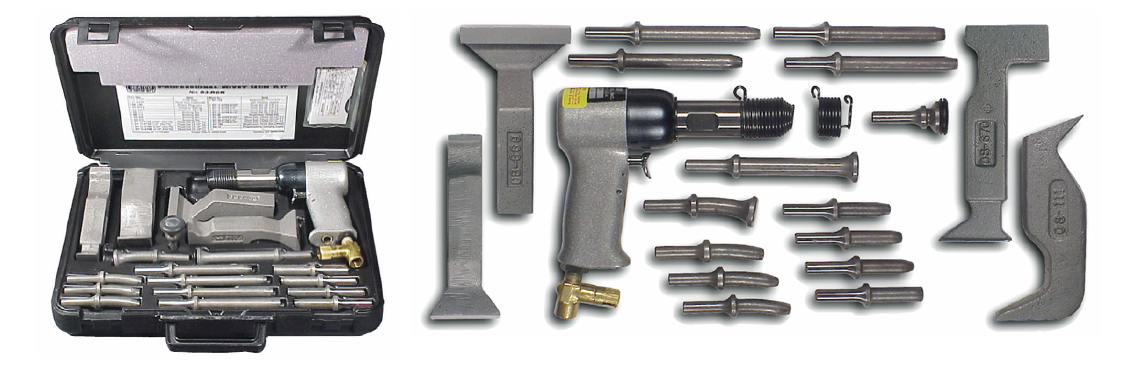
The rivet gun industry includes manufacturers serving automotive, aerospace, construction, metal fabrication, machinery, marine, transportation, and industrial maintenance applications. Competition is shaped by tool performance, durability, ergonomics, pricing, product availability, technology, application expertise, and after-sales support.
The rivet gun market competition analysis indicates that competitive positioning is moving beyond basic fastening capability. Customers increasingly evaluate complete ownership value, including battery performance, productivity, maintenance requirements, accessory compatibility, service availability, and suitability for specialized applications.
Manufacturers are therefore investing in product innovation, cordless platforms, automation compatibility, digital capabilities, and stronger distribution networks to distinguish their offerings.
Competition Across Product Categories
The competitive environment varies across manual, pneumatic, electric, cordless, and automated riveting equipment.
Manual rivet guns generally compete on affordability, simplicity, portability, and ease of maintenance. They remain relevant for workshops, repairs, small fabrication tasks, and occasional users.
Pneumatic models compete on productivity, reliability, and suitability for repetitive professional applications. Their performance is particularly valuable where compressed-air infrastructure is already available.
Cordless products compete through mobility, battery runtime, power, ergonomics, and platform compatibility.
Automated riveting systems compete at a more advanced level, with manufacturers emphasizing precision, integration, repeatability, and production efficiency.
Product Innovation as a Competitive Factor
Innovation is one of the strongest areas of competition.
Manufacturers are improving motor efficiency, tool weight, battery systems, controls, fastening speed, and component durability.
Compact designs can help users work in restricted areas, while high-capacity equipment can address demanding industrial applications.
Companies that consistently introduce useful improvements can strengthen brand recognition and reduce dependence on price-based competition.
Cordless Technology Competition
Battery-powered rivet guns have become an important area of differentiation.
Customers increasingly value freedom from air hoses, particularly in field service, construction, maintenance, and mobile repair applications.
Competition focuses on battery capacity, runtime, charging speed, tool weight, power delivery, and battery-platform compatibility.
Manufacturers with established cordless ecosystems can benefit because customers may already own compatible batteries and chargers.
This can encourage repeat purchases across multiple professional tool categories.
Ergonomics and User Experience
Ergonomics is another competitive consideration.
Professional users may operate rivet guns repeatedly throughout a workday. Excessive weight, vibration, or poor balance can affect comfort and productivity.
Manufacturers are therefore developing tools with improved grips, balanced construction, reduced vibration, and easier controls.
A strong user experience can help companies differentiate products even when competing tools offer similar technical performance.
Automation and Advanced Manufacturing
Automation creates a specialized competitive segment.
Large factories increasingly use automated assembly processes to improve speed and consistency.
Manufacturers capable of integrating riveting tools into robotic production systems can access high-value industrial applications.
Competition in this segment is influenced by precision, cycle control, programming flexibility, integration capabilities, and technical support.
Companies with strong engineering capabilities may have an advantage when customers require customized automated solutions.
Pricing and Value Proposition
Price remains an important competitive factor, particularly among smaller workshops and cost-sensitive users.
However, industrial buyers may evaluate equipment using total cost of ownership rather than initial purchase price alone.
Durability, maintenance requirements, battery life, productivity, downtime, spare-parts availability, and warranty coverage can all influence the overall economic value of a tool.
Manufacturers that clearly demonstrate lifecycle benefits can justify premium pricing.
Distribution Network Strength
Distribution is critical because professional users often need tools and replacement components quickly.
Manufacturers compete through industrial distributors, specialist tool dealers, hardware retailers, online marketplaces, and direct sales.
A broad distribution network can improve product availability and strengthen regional market coverage.
Regional inventory and efficient logistics can also provide an advantage when customers require rapid delivery.
Digital Sales and Marketing
Online purchasing is influencing competition.
Customers increasingly research specifications, compare products, watch demonstrations, and review compatibility information before making decisions.
Manufacturers can improve their position by offering detailed digital product information, application guides, instructional videos, manuals, and comparison resources.
A strong digital presence can increase visibility and help companies reach customers beyond traditional distribution networks.
After-Sales Service
Service quality can distinguish competing brands.
Industrial customers may require repairs, spare parts, technical support, warranties, maintenance, and training.
Manufacturers with responsive service networks can reduce customer downtime and strengthen loyalty.
Availability of replacement parts is particularly important for professional users who depend on equipment for continuous production.
Service capabilities can therefore become a significant competitive advantage.
Application-Specific Differentiation
Companies are increasingly targeting specific industries rather than offering generic tools.
Automotive, aerospace, construction, marine, transportation, and industrial fabrication each have different fastening requirements.
Application-specific products can include specialized nosepieces, fastening controls, ergonomic configurations, and performance characteristics.
Technical expertise in a particular industry can also help manufacturers develop stronger customer relationships.
Strategic Partnerships
Partnerships can influence competitive positioning.
Tool manufacturers may work with automotive producers, aerospace companies, automation specialists, distributors, engineering firms, and material suppliers.
Collaborative relationships can provide access to technical knowledge and help companies identify changing fastening requirements.
Partnerships can also support customized product development and entry into specialized applications.
Supply-Chain Competitiveness
Reliable supply is becoming increasingly important.
Manufacturers depend on components such as motors, batteries, electronic controls, metal parts, plastics, and precision assemblies.
Companies with diversified suppliers and efficient inventory management can reduce the risk of shortages and production delays.
Supply-chain resilience can therefore support consistent product availability and improve customer confidence.
Sustainability as a Differentiator
Sustainability is gradually becoming part of industrial purchasing decisions.
Manufacturers can differentiate through durable products, repairable designs, efficient production processes, reduced packaging, and responsible battery management.
Longer tool lifespans can reduce replacement requirements while improving customer value.
Environmental considerations may become more important in procurement programs operated by large industrial organizations.
Future Competitive Landscape
Competition is expected to become increasingly technology-driven.
Basic performance will remain essential, but manufacturers will need to differentiate through productivity, mobility, ergonomics, automation compatibility, digital capabilities, service quality, and lifecycle value.
Cordless platforms may continue to gain importance, while automated solutions can expand within high-volume production environments.
Emerging sectors such as electric vehicle manufacturing, lightweight transportation, renewable energy equipment, and advanced fabrication can also introduce new competitive opportunities.
Conclusion
The rivet gun market competition analysis shows an industry where competitive advantage increasingly depends on more than tool availability and price.
Manufacturers are competing through cordless technology, ergonomic design, automation, application-specific engineering, distribution strength, digital engagement, and after-sales support.
Companies that provide reliable equipment while addressing productivity, maintenance, lifecycle economics, and customer service can establish stronger market positions.
As fastening requirements become more specialized, the most successful competitors are likely to be those that combine product innovation with technical expertise, responsive distribution, and comprehensive customer support.
Written as -https://www.pristinemarketinsights.com/rivet-gun-market-report