Hydrogen Bikes Market Trends, Opportunities, and Future Outlook 2035
-
- May 14th, 2026
- 5,716 views

FREE SEO Topical Map Generator: Find Your Next Content Ideas
Hydrogen Bikes Market Size
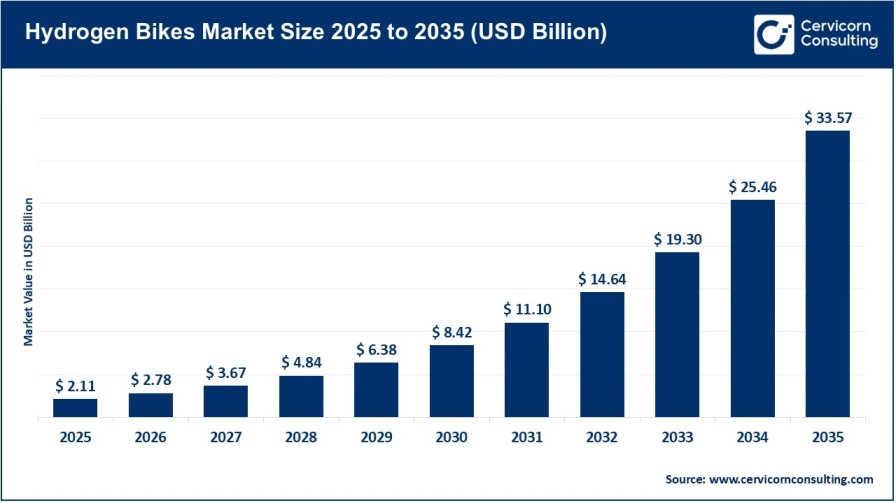
The worldwide hydrogen bikes market was valued at nearly USD 2.11 billion in 2025 and is forecasted to surpass USD 33.57 billion by 2035, expanding at an impressive CAGR of 31.9% between 2026 and 2035.
Understanding the Hydrogen Bikes Market
The hydrogen bikes market includes the global ecosystem involved in the manufacturing, development, commercialization, and adoption of hydrogen fuel-cell powered bicycles and two-wheelers. In contrast to conventional electric bikes that rely solely on rechargeable batteries, hydrogen bikes generate electricity through a fuel-cell process where hydrogen reacts with oxygen, producing clean energy with water vapor as the only emission.
Hydrogen-powered bicycles offer several advantages over standard battery-operated e-bikes, including:
- Quick refueling compared to lengthy battery charging times
- Extended travel range and improved operational performance
- Lower dependence on large lithium-ion battery packs
- Reduced environmental footprint when powered by green hydrogen
- Better suitability for urban mobility and commercial transportation use cases
The increasing global focus on reducing carbon emissions and improving air quality is significantly accelerating interest in hydrogen-powered transportation technologies.
Get a Free Sample: Cervicorn Consulting Sample Request
Key Factors Driving Hydrogen Bikes Market Expansion
Growing Preference for Eco-Friendly Transportation
Governments worldwide are implementing stricter emission policies and promoting sustainable transportation alternatives. Hydrogen bikes align with global decarbonization initiatives, especially in densely populated cities where pollution and traffic congestion remain major concerns.
Countries throughout Europe and Asia-Pacific are investing substantially in hydrogen mobility infrastructure, encouraging companies to accelerate innovation in hydrogen-powered bicycles and lightweight transportation systems.
Advancements in Hydrogen Fuel-Cell Technology
Continuous progress in hydrogen fuel-cell efficiency, compact architecture, and storage technologies is improving the practicality and affordability of hydrogen bikes. Modern fuel cells are becoming lighter, more efficient, and increasingly cost-effective, making them suitable for broader personal mobility applications.
At the same time, innovations in hydrogen production technologies and electrolyzer systems are supporting overall market development.
Expansion of Green Hydrogen Infrastructure
The rapid growth of green hydrogen production facilities and hydrogen refueling networks is creating strong growth opportunities for hydrogen mobility solutions. Governments and private organizations are increasing investments in renewable hydrogen ecosystems to support transportation, industrial, and energy-related applications.
As hydrogen accessibility improves, the barriers associated with hydrogen bike adoption are expected to reduce significantly over the next decade.
Increasing Adoption of Smart Urban Mobility
Urban consumers are increasingly searching for transportation solutions that combine sustainability, convenience, and efficiency. Hydrogen bikes provide an eco-friendly and low-maintenance option for modern city commuting.
The expansion of smart city projects and shared mobility platforms is further expected to strengthen hydrogen bike deployment in urban transportation systems.
Emerging Trends in the Hydrogen Bikes Market
Lightweight Fuel-Cell Integration
Manufacturers are concentrating on designing compact and lightweight hydrogen fuel-cell systems to improve bike portability, comfort, and performance. Advanced engineering and lightweight materials are enabling more practical hydrogen-powered bicycle designs.
Rise of Hybrid Hydrogen-Electric Bikes
Hybrid models that combine hydrogen fuel cells with rechargeable battery systems are becoming increasingly popular. These solutions improve energy efficiency while providing additional backup power storage.
Growing Adoption in Delivery and Logistics Services
Hydrogen bikes are witnessing increasing use in last-mile delivery and logistics operations because of their longer range and fast refueling capabilities. Companies are exploring hydrogen-powered cargo bikes as sustainable alternatives for commercial transportation fleets.
Strategic Collaborations Across Industries
Mobility companies, hydrogen technology developers, and energy providers are forming strategic partnerships to accelerate advancements in hydrogen transportation. These collaborations are expected to strengthen infrastructure development, scalability, and market penetration.
Regional Outlook
Europe
Europe is expected to maintain a leading position in the hydrogen bikes market due to ambitious carbon-neutrality targets, strong renewable energy investments, and favorable government regulations. Nations such as Germany, France, and the Netherlands are actively supporting hydrogen mobility initiatives.
Asia-Pacific
Asia-Pacific is witnessing rapid adoption of hydrogen technologies, particularly in countries like Japan, China, and South Korea. Government-backed hydrogen economy programs and sustainable transportation initiatives are fueling strong regional growth.
North America
North America is steadily increasing investments in hydrogen infrastructure and clean transportation technologies. Rising environmental awareness and technological advancements in hydrogen production are anticipated to support long-term market expansion.
Challenges in the Hydrogen Bikes Market
Despite its promising outlook, the hydrogen bikes market still faces several challenges, including:
- Limited hydrogen refueling infrastructure
- High fuel-cell manufacturing costs
- Complexities in hydrogen storage and transportation
- Strong competition from battery-electric bikes
- Safety concerns associated with hydrogen usage and handling
However, continuous innovation and rising investments in renewable hydrogen ecosystems are expected to address these challenges over time.
Competitive Landscape
The hydrogen bikes market is becoming increasingly competitive as startups, mobility manufacturers, and hydrogen technology providers enter the industry. Companies are primarily focusing on:
- Improving fuel-cell efficiency
- Developing lightweight bike designs
- Expanding strategic partnerships
- Building hydrogen infrastructure
- Increasing commercial mobility applications
The broader expansion of hydrogen fuel-cell technologies across transportation sectors is also driving innovation in hydrogen-powered bicycles.
Future Outlook
The hydrogen bikes market is expected to witness substantial growth in the coming years as demand for sustainable transportation solutions continues to rise globally. Increased investments in hydrogen production, ongoing technological advancements, and supportive environmental regulations are projected to fuel long-term market development.
Hydrogen bikes are likely to play an important role in future smart mobility ecosystems, particularly in urban regions focused on lowering emissions and improving transportation efficiency. As infrastructure expands and production costs decline, hydrogen-powered bikes are expected to become increasingly accessible for both consumers and commercial users.
For detailed market insights and comprehensive industry analysis, visit Cervicorn Consulting Official Website: https://www.cervicornconsulting.com/contact-us