IIT JAM Chemistry 2027: Smart Preparation Strategies for Aspirants
-

- Published Updated
- 53 views
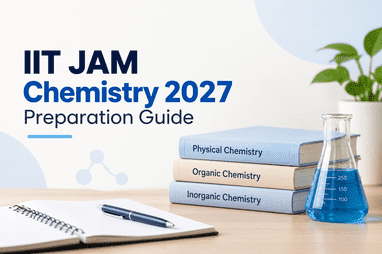
Preparing for IIT JAM Chemistry 2027 requires a structured study plan, consistent practice, and a clear understanding of the concepts included in the examination syllabus. Students aspiring to pursue postgraduate studies in Chemistry can improve their preparation by organizing topics, practicing different question types, and revising important concepts regularly.
A well-planned strategy helps candidates manage their study time effectively while identifying areas that require additional attention. Rather than relying entirely on memorization, aspirants should focus on conceptual clarity, problem-solving skills, and continuous assessment of their progress.
Explore the syllabus here- https://ifasonline.com/iit-jam/chemistry-syllabus/6433b92c6f88433b504b4340/65119350f8239b25dcce7056
1. Begin with a Clear Understanding of the Syllabus
The first step in examination preparation is understanding the syllabus. Knowing which topics need to be covered helps candidates create a realistic timetable and distribute their study time more efficiently.
Divide the syllabus into smaller sections and prepare a checklist for each topic. Mark completed chapters, identify difficult concepts, and maintain a separate list of topics that require further revision.
Avoid starting several chapters simultaneously without completing the fundamentals. A topic-wise approach makes it easier to track progress and ensures that preparation follows a clear direction.
Candidates should also review their preparation checklist regularly to ensure that important topics are not neglected while focusing on familiar or easier chapters.
2. Develop Strong Fundamentals in Physical Chemistry
Physical Chemistry requires conceptual understanding, numerical accuracy, and regular problem-solving practice. Students should understand the principles behind formulas instead of memorizing equations without knowing how to apply them.
Start each topic by reviewing the fundamental concepts and relationships between important quantities. Once the basics are clear, solve numerical problems of increasing difficulty.
Maintain a notebook containing important formulas, calculation methods, and common mistakes. Revisiting these notes during revision can help reinforce concepts and improve familiarity with problem-solving techniques.
When solving questions, pay attention to units, calculations, assumptions, and the interpretation of results. If a problem seems difficult, return to the underlying concept and identify which part of the solution is unclear.
Consistent practice helps students recognize familiar problem patterns and apply the appropriate methods more confidently.
3. Prepare Organic Chemistry Through Conceptual Learning
Organic Chemistry preparation becomes more manageable when students understand reaction mechanisms and the relationships between different chemical transformations.
Instead of memorizing reactions individually, focus on understanding why a reaction occurs, the role of reagents, and how reaction conditions influence the outcome. Group related reactions together to make revision more systematic.
Prepare concise notes covering important reactions, reagents, mechanisms, and distinguishing features. Reaction maps and flowcharts can help organize information and make connections between concepts easier to recognize.
Practice questions after completing each topic. Review incorrect answers carefully to determine whether the problem arose from confusion between reactions, incomplete understanding of a mechanism, or insufficient revision.
Regular practice and revision help strengthen conceptual understanding and improve the ability to apply learned principles to unfamiliar questions.
4. Strengthen Your Understanding of Inorganic Chemistry
Inorganic Chemistry requires systematic learning, conceptual clarity, and regular revision. Students should organize their preparation around the topics listed in the examination syllabus.
Begin with fundamental concepts and gradually move toward more detailed material. Prepare concise notes containing important properties, definitions, trends, and relationships between related concepts.
Tables can be useful for comparing similar concepts and identifying differences that might otherwise be overlooked. Review these notes periodically instead of leaving the entire revision process until the final weeks.
After studying each topic, solve related questions to test your understanding. This helps identify information that needs further clarification and prevents revision from becoming a purely passive activity.
A consistent revision schedule can make it easier to retain important information throughout the preparation period.
5. Create a Realistic Study Timetable
An effective timetable should reflect your available study hours, current preparation level, and individual learning requirements.
Divide your study time among four activities: learning new concepts, solving practice questions, revising completed topics, and evaluating your progress.
Set daily and weekly targets that are achievable. For example, you might aim to complete a specific concept, solve related questions, and revise an earlier topic in the same study session.
At the end of each week, review your progress. Identify the chapters you have completed, the concepts that remain difficult, and the topics that need additional practice. Use this information to plan the following week.
Avoid creating an excessively demanding timetable that becomes difficult to maintain. A consistent and flexible routine is more useful than an ambitious schedule that is repeatedly abandoned.
6. Practice Previous Years' Question Papers
Previous years' question papers provide an opportunity to understand question formats, evaluate conceptual knowledge, and identify areas that require additional preparation.
Begin with topic-wise questions after completing individual chapters. This allows you to apply newly learned concepts while the material is still familiar.
As your preparation advances, introduce mixed-topic practice sets and full-length mock tests. These activities help you apply knowledge across different areas and become more comfortable solving questions under time constraints.
After every practice session, analyze incorrect answers and questions that you could not solve. Maintain a mistake log that records conceptual errors, calculation mistakes, and topics requiring further revision.
Review this log regularly to determine whether the same mistakes are occurring repeatedly. Correcting these weaknesses can make subsequent practice sessions more productive.
7. Use Mock Tests to Evaluate Your Progress
Mock tests can help candidates assess their preparation, practice time management, and identify topics that require further attention.
Begin incorporating timed tests after developing a reasonable understanding of the syllabus. Increase the frequency of full-length tests as your preparation progresses.
After each test, review your performance carefully. Identify whether incorrect answers resulted from incomplete knowledge, calculation errors, misunderstanding of concepts, or difficulty managing time.
Use these findings to plan your next revision sessions. If a particular topic repeatedly causes difficulty, revisit its fundamentals and solve additional practice questions before testing yourself again.
Remember that a mock-test score is only one measure of preparation. Understanding mistakes and improving your problem-solving approach are equally important.
8. Make Revision a Regular Habit
Revision should be included in your preparation schedule from the beginning. Waiting until the final weeks to revisit completed chapters can make it harder to recall important concepts.
Prepare concise notes containing formulas, reactions, definitions, difficult concepts, and common mistakes. Organize them so that important information can be located quickly.
Schedule regular revision sessions and test your understanding by solving questions without referring to your notes. Revisit difficult topics more frequently while continuing to review the areas you already understand well.
During the final stage of preparation, concentrate on strengthening existing knowledge, reviewing mistakes, and practicing questions. Avoid repeatedly changing study materials without a clear reason.
9. Stay Consistent and Monitor Your Progress
Long-term examination preparation requires discipline and realistic expectations. Some topics may take longer to understand than others, so your study plan should allow room for adjustments.
Set small milestones and track your progress as you complete chapters and practice questions. If you fall behind schedule, identify the reason and modify your plan rather than abandoning it entirely.
Take appropriate breaks and maintain a regular routine. Focus on improving your own understanding instead of comparing your progress with other candidates.
Conclusion
Preparing for IIT JAM Chemistry 2027 involves syllabus-based planning, strong conceptual foundations, regular problem-solving, and systematic revision. Students should organize their study schedules, practice previous years' questions, evaluate their performance through mock tests, and work consistently on weaker areas.
Start by creating a topic-wise checklist and setting realistic weekly targets. Track mistakes, revise important concepts regularly, and adjust your preparation strategy according to your progress.
A structured and consistent approach can make examination preparation more manageable and help aspirants work toward their postgraduate admission goals with greater confidence.