Why Inconel 800 Bolts Are the Preferred Fastening Solution
-

- Published Updated
- 1,584 views
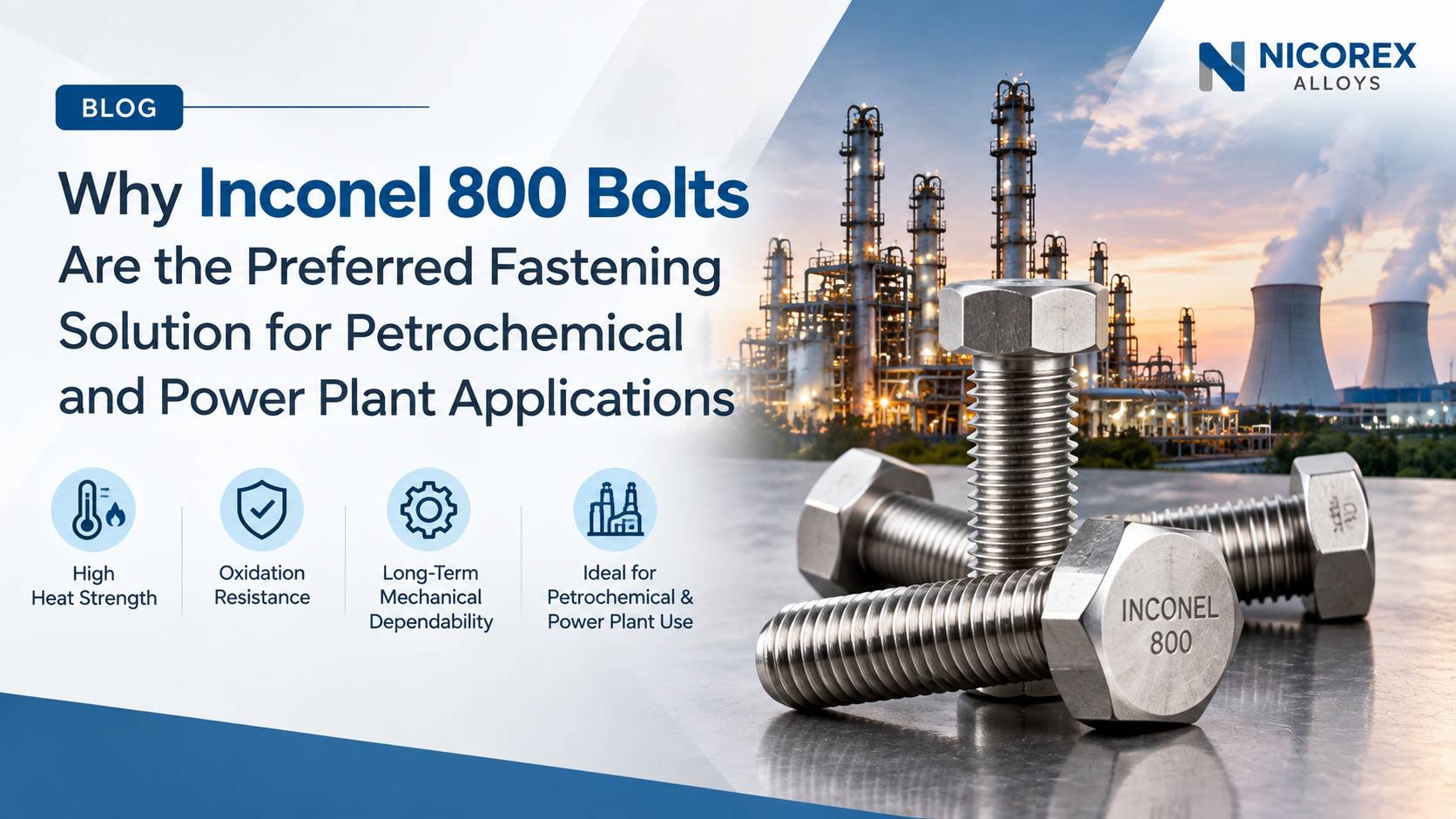
Inconel 800 bolts are widely used in demanding industrial environments where fasteners must withstand elevated temperatures, oxidation, corrosion, and continuous mechanical stress. Petrochemical and power plants operate with equipment exposed to high heat, pressure, chemicals, vibration, and repeated thermal cycling. In such conditions, the performance of bolts is important for maintaining secure connections between pipes, heat exchangers, boilers, pressure vessels, and other critical equipment.
Inconel 800 is a nickel-iron-chromium alloy developed for high-temperature applications. Its combination of heat resistance, oxidation resistance, and mechanical strength makes it suitable for fastening applications where conventional materials may experience degradation during prolonged service.
What Are Inconel 800 Bolts?
Inconel 800 bolts are fasteners manufactured from Inconel 800, a nickel-iron-chromium alloy designed to retain useful mechanical properties at elevated temperatures. The alloy offers resistance to oxidation, carburization, and corrosion in many industrial environments.
These bolts are available in different sizes, dimensions, thread configurations, and specifications to suit various equipment and assembly requirements. The appropriate bolt grade, dimensions, and standards should be selected according to the operating conditions and engineering requirements of the application.
Why Is Fastener Selection Critical in Petrochemical and Power Plants?
Fasteners used in petrochemical and power plants are exposed to conditions that can affect their mechanical performance. High temperatures can reduce the strength of unsuitable materials, while chemicals and moisture can contribute to corrosion. Vibration and repeated thermal expansion can also place additional stress on bolted joints.
Selecting a suitable fastener material helps maintain the integrity of these connections. Factors such as operating temperature, pressure, chemical exposure, mechanical loading, bolt dimensions, and applicable standards should therefore be considered during fastener selection.
Why Inconel 800 Bolts Are Used in Petrochemical and Power Plants
Excellent High-Temperature Strength
Inconel 800 retains useful mechanical strength when exposed to elevated temperatures. This makes the alloy suitable for fastening applications around boilers, heat exchangers, furnaces, steam systems, and other high-temperature equipment. Its performance at elevated temperatures helps bolted connections remain mechanically stable during operation.
Resistance to Oxidation and Corrosion
Oxidation and corrosion can affect the service life of fasteners, particularly in processing environments involving heat, chemicals, and moisture. Inconel 800 provides resistance to oxidation and corrosion, helping protect fasteners from deterioration under suitable operating conditions. This property is particularly relevant for components exposed to high-temperature gases and processing environments.
Reliable Performance During Thermal Cycling
Petrochemical and power plant equipment may experience repeated heating and cooling during startup, shutdown, and normal operation. These temperature changes cause components to expand and contract.
Inconel 800 bolts can accommodate demanding thermal conditions while maintaining their mechanical properties. Appropriate material selection can therefore help reduce the risk of fastening problems associated with repeated thermal cycling.
Good Mechanical Strength Under Heavy Loads
Bolted joints can experience continuous mechanical loads, vibration, and pressure variations during plant operation. Inconel 800 offers good mechanical strength for demanding fastening applications. When correctly specified and installed, these bolts can help maintain secure connections between industrial components.
Long Service Life
Resistance to high temperatures, oxidation, and corrosion can contribute to the service life of Inconel 800 fasteners. Longer service intervals may reduce the frequency of bolt replacement in suitable applications. However, actual service life depends on operating temperature, chemical exposure, loading conditions, installation practices, and maintenance.
Suitable for Demanding Industrial Environments
Petrochemical and power plants can involve steam, hydrocarbons, high-temperature gases, and other demanding operating conditions. Inconel 800 bolts are used in applications where these environmental factors require a high-temperature alloy fastening material.
Different Sizes and Configurations
Inconel 800 bolts can be manufactured in different dimensions, thread types, and configurations. This allows engineers to specify fasteners according to equipment design and joint requirements. The selected fastener should match the required dimensions, mechanical properties, and applicable ASTM or ASME specifications.
Common Applications of Inconel 800 Bolts
Inconel 800 bolts are used in a range of high-temperature industrial applications, including:
- Petrochemical processing plants and refineries
- Power generation facilities
- Boilers and heat exchangers
- Pressure vessels and steam systems
- Industrial furnaces and reactors
- Chemical processing equipment
- High-temperature piping systems
These applications require fasteners capable of maintaining their properties under specific combinations of temperature, pressure, mechanical loading, and environmental exposure.
Key Benefits of Inconel 800 Bolts
The main benefits of Inconel 800 bolts include:
- Good strength at elevated temperatures
- Resistance to oxidation and carburization
- Resistance to corrosion in suitable environments
- Reliable performance during thermal cycling
- Good mechanical strength under operating loads
- Suitability for demanding industrial applications
- Availability in different dimensions and thread configurations
Factors to Consider When Selecting Inconel 800 Bolts
The correct fastener should be selected based on the actual requirements of the application. Important factors include:
- Operating temperature and pressure
- Type and concentration of chemical exposure
- Mechanical and tensile loading
- Vibration and thermal cycling
- Bolt diameter, length, and thread configuration
- Required ASTM or ASME specifications
- Equipment design and joint requirements
Correct installation and tightening are also important because even a suitable alloy can perform poorly if the fastener is incorrectly installed.
Industries That Use Inconel 800 Bolts
Inconel 800 bolts are used in industries where high-temperature and corrosion-resistant fastening materials are required. These include petrochemical processing, oil and gas, power generation, chemical processing, refineries, fertilizer production, heat treatment, and other energy-related industrial applications.
Conclusion
Inconel 800 bolts are suitable for fastening applications that involve elevated temperatures, oxidation, corrosion, mechanical loading, and thermal cycling. Their nickel-iron-chromium composition provides a combination of properties that makes them useful for boilers, heat exchangers, furnaces, pressure vessels, piping systems, and other industrial equipment.
For petrochemical and power plant applications, fastener selection should be based on operating temperature, pressure, environmental exposure, mechanical loads, dimensions, and applicable technical standards. Selecting the appropriate fastener material and specification can help maintain the reliability of bolted connections and support safe equipment operation.
Nicorex Alloys supplies Inconel 800 bolts for industrial applications requiring fastening solutions for demanding operating conditions.
Related Articles