International Students in Australia: Emerging Study Trends Toward 2026
-

- Published Updated
- 8,805 views
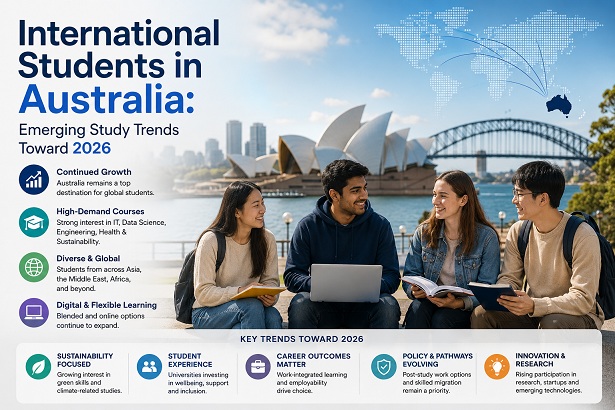
Australia has long been one of the world’s most attractive destinations for international students. With globally ranked universities, strong career opportunities, and post-study work benefits, the country continues to attract students from across Asia, Africa, the Middle East, and beyond. However, the landscape of international education is changing rapidly.
The effects of COVID-19, economic uncertainty, migration policy reforms, rising tuition fees, and increasing competition from regional education hubs are reshaping the future of higher education in Australia. By 2026, universities will need to adapt not only to new student expectations but also to global economic and social pressures.
The Changing Landscape of International Education in Australia
International education contributes billions of dollars to the Australian economy every year. Universities heavily depend on international student tuition fees, making this sector one of Australia’s largest export industries. Students researching global education systems and academic support often explore resources related to Economics Assignment Help to better understand international market trends and policy impacts. However, recent years have exposed the risks of over-dependence on international enrolments.
During the COVID-19 pandemic, international student numbers dropped sharply because of travel restrictions and border closures. Although enrolments started recovering between 2021 and 2023, the long-term impact on universities and students remains significant.
Many universities faced financial pressure, staffing cuts, and operational challenges. At the same time, students experienced uncertainty related to visas, accommodation, employment, and online learning quality. These experiences have changed how students evaluate study destinations today.
Diversification of Student Source Countries
For many years, China and India have remained the two largest source countries for international students in Australia. This trend continues, but important shifts are emerging.
Research shows that student demand from North-East Asian countries is gradually slowing down, while enrolments from Southern and Central Asia, Africa, and the Middle East are increasing steadily.
This diversification reflects broader global mobility changes. Students are now considering multiple factors before choosing a country, including:
- Affordability
- Safety
- Visa approval rates
- Career opportunities
- Post-study migration pathways
- Cost of living
- Cultural inclusiveness
Australia still remains highly attractive, especially for Indian students who value post-study work rights and employment opportunities in skill-shortage sectors.
However, students now have more choices than ever before.
Rising Competition from Regional Education Hubs
One major trend shaping 2026 is the rise of regional education hubs across Asia and the Middle East. Countries like Singapore, Malaysia, the UAE, and even parts of Europe are increasingly attracting students who once viewed Australia as their primary destination.
Several reasons explain this shift:
Lower Education Costs
Regional universities often offer internationally recognized degrees at lower tuition fees and living expenses compared to Australia.
Geographic Convenience
Many students prefer studying closer to home due to family connections, travel convenience, and reduced financial burden.
Flexible Learning Models
Hybrid education, online programs, and international branch campuses are giving students more accessible learning options.
As a result, Australia can no longer rely solely on reputation and migration opportunities. Universities must now compete based on educational quality, student wellbeing, employability, and long-term career outcomes.
Why Students Still Choose Australia
Despite growing competition, Australia continues to hold strong global appeal. Several “push-pull” factors continue influencing international students’ decisions.
Academic Reputation
Australian universities maintain strong international rankings and research recognition. Degrees from Australian institutions are respected globally across industries such as engineering, healthcare, business, IT, and science.
English-Language Environment
For many students, studying in an English-speaking country improves communication skills and enhances global employability.
Post-Study Work Opportunities
Australia’s migration and work policies remain one of the strongest attractions for international students. Extended post-study work rights in skill-shortage sectors are particularly appealing for Indian students.
Flexible Entry Pathways
Foundation programs, pathway colleges, and diploma transfers make Australian education accessible to a wider range of students.
Safety and Quality of Life
After COVID-19, safety, healthcare systems, and social stability became much more important in students’ decision-making processes. Australia continues to perform relatively well in these areas.
Affordability Is Becoming a Major Concern
Although Australia offers excellent educational opportunities, affordability is becoming one of the biggest challenges for international students.
The rising cost of:
- Tuition fees
- Accommodation
- Transport
- Healthcare
- Daily living expenses
is placing enormous financial pressure on students and families.
Research indicates that the ability to pay remains one of the strongest predictors of participation in Australian international education.
This creates serious equity concerns because talented students from lower-income regions often struggle to access Australian education opportunities.
Unequal Access Across Regions
The research highlights major regional disparities in participation rates.
- Students from the Indian subcontinent show some of the highest enrolment rates.
- Students from Sub-Saharan Africa experience significantly lower participation due to financial barriers and limited access.
This imbalance suggests that economic privilege continues to shape global education mobility.
Student Experience Challenges Continue
While universities focus heavily on recruitment, many international students continue facing serious academic and social challenges after arrival.
These include:
Academic Adjustment
Different teaching methods, independent learning expectations, and unfamiliar assessment systems can create stress for students transitioning into Australian universities.
Language Barriers
Even students with strong English test scores often struggle with academic writing, presentations, and classroom communication.
Social Isolation
Research shows that international students frequently experience limited social integration and difficulty building meaningful local connections.
Financial Stress
Many students work part-time while managing demanding academic schedules. Rising living costs have intensified this pressure significantly.
Mental Health Concerns
Loneliness, homesickness, academic pressure, and uncertainty about future career pathways contribute to growing mental health concerns among international students.
Unfortunately, studies suggest that these issues have shown little improvement over the past two decades.
The Future of Australian Universities Toward 2026
To remain globally competitive, Australian universities must rethink their international education strategies.
Simply attracting students through migration incentives and marketing campaigns may no longer be enough.
Universities Need Stronger Student Support Systems
Future success will depend on:
- Better academic support
- Career guidance
- Internship opportunities
- Mental health services
- Social inclusion initiatives
- Affordable housing support
Students increasingly expect a complete educational experience rather than just a degree.
Focus on Employability
Career outcomes are becoming a major deciding factor for students choosing universities.
Institutions that build stronger industry partnerships and practical learning opportunities will likely attract more international applicants in the future.
Sustainable Education Models
Researchers argue that universities should reduce excessive reliance on international tuition revenue and move toward more sustainable, equitable models.
This may include:
- Expanding scholarship programs
- Increasing regional partnerships
- Supporting disadvantaged student groups
- Improving long-term educational accessibility
What Can International Students Expect by 2026?
By 2026, Australia will likely remain one of the leading global education destinations. However, the international student environment will become more competitive, student-focused, and economically challenging.
Students can expect:
- Greater diversity in international student populations
- More emphasis on employability and career outcomes
- Increased focus on migration-linked education pathways
- Higher expectations around student support and wellbeing
- Stronger competition between global education destinations
At the same time, universities will need to balance financial sustainability with educational quality and student welfare.
The institutions that succeed will be those that prioritize inclusion, support, affordability, and genuine student experience rather than viewing international students purely as revenue sources.
Conclusion
Australia’s international education sector is entering a transformative period. While the country remains highly attractive to global students, changing mobility patterns, rising competition, affordability pressures, and student wellbeing concerns are reshaping the future of higher education.
The years leading to 2026 will test how effectively Australian universities can adapt to these evolving realities. Institutions that focus on equity, academic quality, employability, and meaningful student experiences will be better positioned to thrive in the next era of global education.
For international students, Australia still offers world-class opportunities — but success will increasingly depend on choosing institutions that genuinely support academic growth, career development, and personal wellbeing.