Why the Internet Still Needs Human-Curated Directory Platforms
-

- Published Updated
- 8,880 views
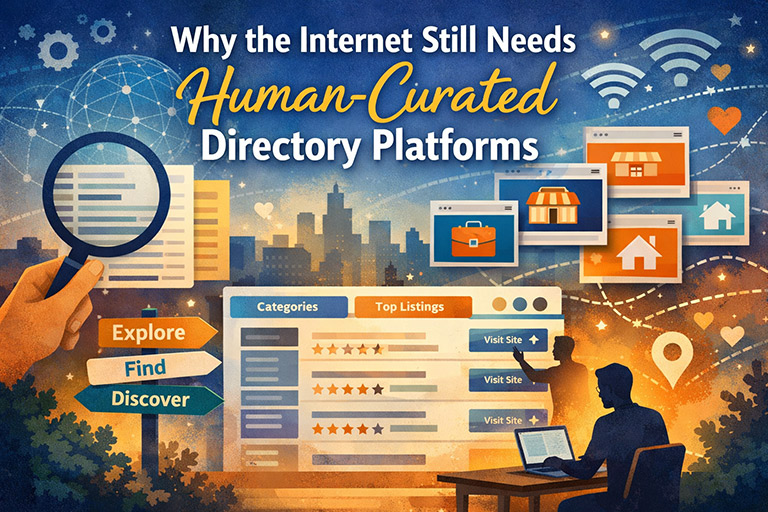
There was a time when finding a useful website online felt a little more intentional. People did not only depend on search engines. They also discovered businesses, resources, and niche websites through curated lists, trusted portals, and specialized directories. That is part of the reason Directories.Best still matters today. In a web that is noisier, more crowded, and more automated than ever, carefully organized directories offer something many users and site owners still value: clarity.
Search Is Powerful, but It Is Not Always Enough
The modern internet gives the impression that everything can be found instantly. In theory, that sounds perfect. In practice, it often means users are overwhelmed with repetitive results, low-quality pages, paid placements, thin affiliate content, and endless copies of the same information. Search is powerful, but it is not always efficient. Sometimes what people need is not more results. They need better paths.
That is where curated directories continue to prove their worth.
A good directory does more than collect links. It creates structure. It helps users move through categories with purpose. It groups related businesses, services, or websites in ways that make browsing easier. It can help someone discover a company they would never have found through a casual search. It can also help businesses appear in places where people are already looking with some level of intent.
This matters because discovery on the internet is no longer as simple as ranking on page one and winning. People search in different ways now. Some search by keyword. Some search through maps. Some browse social platforms. Some compare options inside industry-specific websites. Some prefer directories because directories reduce friction. Instead of jumping from one random search result to another, they can review multiple relevant listings in one place.
Why Directory Listings Still Help Businesses
For business owners, this creates an important opportunity.
When a business is listed in a relevant, well-organized directory, it gains another point of presence online. That presence can support visibility, strengthen trust, and make it easier for potential customers to come across the business outside of its own website. A listing can also serve as a concise introduction. In many cases, people do not want to dig through a full website just to understand what a company does. They want a quick snapshot, a category match, and a clear route to learn more.
Directories also play a useful role in a web that increasingly feels temporary. Social posts disappear into feeds. Algorithm changes can shift visibility overnight. Trends come and go. A quality directory listing, by contrast, tends to be more stable. It sits in a relevant category, remains accessible over time, and continues to serve people who are browsing with intent.
Human Curation Still Has Real Value
There is also a human side to this that often gets ignored.
The best directories feel less like raw databases and more like editorial systems. Someone made decisions. Someone thought about categories, quality, relevance, and usability. That human touch matters because the internet has become saturated with pages built for machines first and people second. Curation pushes in the opposite direction. It says that not every page deserves equal prominence and not every result should be treated as equally helpful.
That does not mean every directory is valuable. Many are outdated, neglected, or built without any real standards. But that is exactly why thoughtful directory platforms stand out when they are done properly. Users can feel the difference between a cluttered list of random links and a platform that has been designed to help people discover worthwhile destinations.
Another reason directories remain useful is that they support niche exploration. Search engines are excellent when you know exactly what you want. Directories become especially useful when you are still exploring options, comparing businesses, or browsing within a topic. That style of discovery is more natural than many people realize. Sometimes users do not begin with a precise keyword. They begin with a need, a category, or simple curiosity.
Organized Discovery Still Matters
This is why directories should not be seen as relics from an earlier web. They are better understood as complementary tools. They do not replace search. They improve the wider discovery ecosystem by offering an alternative way to navigate it. In some cases, they even restore a sense of order that search alone cannot provide.
For website owners and publishers, there is another lesson here: being discoverable is not only about producing more content. It is also about showing up in the right places. A strong web presence is often built from multiple signals across multiple platforms. Relevant directory listings can support that broader visibility while also connecting a site with audiences who are specifically browsing for what it offers.
The internet has grown larger, faster, and more algorithmic. Yet the need for useful organization has not disappeared. If anything, it has become more important. People still need trusted pathways. Businesses still need meaningful exposure. And users still appreciate platforms that make discovery feel less chaotic.
That is why curated directory platforms still deserve attention. In an age of overload, organization is not old-fashioned. It is valuable.