IPTV Performance Benchmarking: How Modern IPTV Platforms Are Evaluated in 2026
-

- Published Updated
- 8,871 views

Evaluating IPTV platforms in 2026 requires sophisticated technical analysis that goes far beyond marketing claims about channel counts or subscription prices. The real differentiation between IPTV services lies in measurable engineering metrics: server uptime under load, latency consistency during peak events, codec efficiency at varying bandwidths, and the resilience of content delivery networks across geographic regions. This technical guide examines how IPTV platforms are properly benchmarked and what separates engineering-focused IPTV providers from the rest of the market.
This article focuses entirely on the technical metrics, measurement methodologies, and engineering practices that define quality IPTV infrastructure. Whether you are a network engineer evaluating IPTV systems for professional deployment, a technology student studying streaming architectures, or simply a curious viewer interested in what makes some IPTV services dramatically more reliable than others, the technical foundations covered here provide the framework for meaningful evaluation.
Throughout this analysis, we will reference real-world IPTV implementations to illustrate technical concepts. Platforms like FreeGoTV, TereaTV, VinomTV, and ViewTVY have published technical documentation that demonstrates how leading IPTV operators approach infrastructure engineering. Understanding the technical decisions these IPTV platforms have made provides valuable context for evaluating any IPTV service against engineering benchmarks.
The Core IPTV Performance Metrics That Actually Matter
IPTV platforms can be measured across dozens of technical dimensions, but several metrics consistently correlate with viewer experience quality. Understanding these core IPTV metrics provides the foundation for any meaningful platform evaluation.
Uptime percentage represents the most fundamental IPTV reliability metric. A platform reporting 99.99 percent uptime experiences approximately 52 minutes of downtime annually, while 99.9 percent uptime translates to roughly 8.76 hours of annual downtime. The difference between these tiers becomes critical for IPTV viewers who depend on the service for live events. Leading IPTV platforms like FreeGoTV publish uptime statistics that can be independently verified through third-party monitoring services, providing transparency that less technical IPTV operations cannot match.
Time-to-first-frame measures how quickly an IPTV stream begins playback after a viewer selects a channel. Modern IPTV platforms target sub-2-second TTFF for live channels and sub-3-second TTFF for on-demand content. The IPTV technical infrastructure required to achieve these targets includes edge caching, pre-buffered manifests, and intelligent CDN routing. Platforms like VinomTV have specifically optimized their Fire TV Stick and Android TV integration to deliver consistent TTFF performance across these popular IPTV devices.
Rebuffering ratio quantifies how often IPTV playback stalls due to insufficient data delivery. Quality IPTV platforms maintain rebuffering ratios below 0.5 percent across all stream qualities, with the best IPTV operations achieving below 0.2 percent. The IPTV engineering investment required to consistently hit these targets includes redundant server infrastructure, adaptive bitrate sophistication, and aggressive edge caching. TereaTV has built strong rebuffering performance particularly for European viewers through their regional server deployment strategy.
Stream quality consistency measures how well IPTV platforms maintain advertised resolutions during real-world viewing conditions. A platform advertising 4K Ultra HD content but frequently dropping to 1080p under load is delivering significantly less value than one maintaining genuine 4K throughout extended viewing sessions. The IPTV technical capacity to sustain advertised quality levels reveals the true infrastructure investment behind a streaming service.
How IPTV Uptime Is Actually Measured
Uptime measurement for IPTV platforms requires more sophistication than simply checking whether servers respond to ping requests. Real IPTV availability monitoring captures whether end-to-end playback actually works for viewers, which involves multiple system components functioning correctly in sequence.
Synthetic monitoring deploys automated test systems that continuously verify IPTV channel availability from multiple geographic locations. These IPTV monitoring systems request channels, verify successful authentication, confirm stream initiation, and measure playback quality across representative samples of the channel library. When synthetic monitoring detects issues, IPTV operations teams receive immediate alerts before significant viewer impact occurs. Sophisticated IPTV platforms like FreeGoTV operate synthetic monitoring across dozens of geographic regions, providing comprehensive visibility into service health.
Real User Monitoring complements synthetic testing by collecting performance data directly from IPTV viewer devices. RUM data captures actual experience quality across the full range of network conditions, device types, and geographic locations that real IPTV users experience. The combination of synthetic and real-user monitoring creates comprehensive IPTV reliability visibility that neither approach achieves alone. Modern IPTV platforms typically aggregate RUM data across millions of viewing sessions to identify patterns invisible at smaller scales.
Status page transparency reveals how seriously IPTV platforms take reliability commitments. Quality IPTV operators maintain public status pages that document both ongoing incidents and historical performance. This transparency creates accountability and helps potential subscribers evaluate IPTV reliability claims against actual track records. Platforms reluctant to provide uptime transparency typically have something to hide regarding their actual IPTV performance history.
Service level agreements formalize IPTV uptime commitments with specific consequences for failures. Premium IPTV platforms increasingly offer SLAs that guarantee minimum uptime levels backed by service credits or refunds when targets are missed. ViewTVY has implemented SLA-backed reliability commitments particularly for their sports IPTV streams, where reliability during major events directly impacts viewer satisfaction.
Latency Optimization in Modern IPTV Systems
Latency in IPTV systems refers to the delay between when content is generated at its source and when it reaches viewer screens. Different types of IPTV content have different latency requirements, and IPTV platforms optimize their infrastructure based on which content types matter most to their target audience.
Live IPTV broadcasts traditionally operate with 20 to 45 seconds of latency between source and viewer, which is acceptable for most content types but problematic for live sports where social media spoilers can ruin the viewing experience. Modern IPTV platforms have implemented low-latency streaming protocols that reduce this delay to 3 to 8 seconds, dramatically improving the live sports experience. This IPTV latency reduction requires sophisticated protocol implementation and infrastructure investment that not all platforms have made.
Channel-change latency measures how long IPTV viewers wait when switching between channels. Older IPTV systems often required 5 to 10 seconds for channel changes, creating frustrating user experiences. Modern IPTV platforms target sub-2-second channel changes through aggressive prefetching, optimized manifest delivery, and intelligent caching. VinomTV has specifically optimized channel-change performance on Fire TV Stick devices, achieving consistently fast IPTV channel switching that rivals traditional cable boxes.
Interactive IPTV latency requirements push even further toward zero delay. Features like multi-camera angle switching, real-time polling, and interactive sports overlays require sub-second IPTV latency to feel responsive. Achieving these latency targets requires the most advanced IPTV infrastructure, typically built around WebRTC or specialized low-latency protocols that bypass traditional buffering approaches.
Network path optimization significantly impacts IPTV latency regardless of platform-level engineering. Quality IPTV providers invest in peering relationships with major internet service providers, reducing the network hops between IPTV servers and viewer connections. These peering arrangements often determine whether viewers experience excellent or mediocre IPTV performance regardless of other engineering investments.
Codec Efficiency Analysis for IPTV Platforms
The video codec choices that IPTV platforms make have profound implications for bandwidth efficiency, device compatibility, and viewer experience quality. Modern IPTV codec analysis reveals how platforms balance these competing priorities.
H.264 remains the IPTV codec workhorse despite being over twenty years old. Its universal device support makes it the safe default for mass-market IPTV channels where compatibility matters more than bandwidth efficiency. Most IPTV platforms maintain H.264 versions of their content library to ensure all viewer devices can access all channels. The bandwidth overhead compared to newer codecs is real but manageable for HD content delivery.
H.265 has become the practical standard for 4K IPTV channels. Its approximately 50 percent better compression than H.264 makes 4K IPTV distribution economically viable at scale. Platforms like FreeGoTV and ViewTVY use H.265 extensively for their premium IPTV content, taking advantage of the codec's efficiency to deliver high-quality 4K streams to viewers with reasonable bandwidth. The H.265 licensing landscape adds complexity for IPTV operators, but most premium platforms have absorbed these costs to deliver better viewer experiences.
AV1 represents the future direction for IPTV codec strategy, offering 30 percent better compression than H.265 while remaining royalty-free. Major IPTV platforms have begun rolling out AV1 support for next-generation 4K and 8K content, with adoption accelerating through 2026 as device hardware decoders become more common. The IPTV transition to AV1 will likely take several years, mirroring the gradual H.264 to H.265 transition that defined the late 2010s and early 2020s.
Multi-codec delivery strategies allow IPTV platforms to serve different codec versions to different viewer devices based on their capabilities. This approach increases storage and encoding costs but maximizes both quality and compatibility across the IPTV viewer base. TereaTV has implemented sophisticated multi-codec delivery that automatically selects optimal codecs based on detected device capabilities, providing better viewer experiences without manual configuration.
Content Delivery Network Architecture in IPTV
The content delivery network architecture underlying any IPTV platform fundamentally determines viewer experience quality. Understanding CDN sophistication helps evaluate IPTV platforms beyond surface-level marketing claims.
Geographic server distribution determines latency and reliability for viewers in different regions. IPTV platforms operating servers in only one or two regions inevitably deliver poor experiences to viewers far from those locations. Quality IPTV platforms operate servers across multiple continents, with strategic placement based on actual viewer distribution. FreeGoTV reportedly maintains over 50 premium servers distributed across North America, Europe, the Middle East, and Asia, providing geographic coverage that minimizes latency for global IPTV audiences.
Edge caching strategies determine how quickly IPTV content reaches viewers. Sophisticated CDN implementations cache popular IPTV content on servers closest to where demand exists, dramatically reducing the bandwidth and latency penalties of fetching content from origin servers. The IPTV edge caching sophistication often determines whether a platform feels responsive or sluggish during peak usage periods.
Load balancing algorithms determine how IPTV traffic distributes across available server capacity. Round-robin distribution treats all servers identically, while more sophisticated approaches consider server load, geographic proximity, and connection quality when routing IPTV requests. The most advanced IPTV platforms use machine learning to optimize routing decisions in real time, achieving better viewer experiences than rule-based approaches can deliver.
Failover capabilities determine how IPTV platforms respond when individual servers experience issues. Quality IPTV operations implement automatic failover that routes traffic away from impaired servers within seconds, often before viewers notice any disruption. ViewTVY has built particularly robust failover systems for their sports IPTV streams, where reliability during major events directly impacts the value proposition. Platforms without sophisticated failover often experience extended outages when single servers fail.
Device Compatibility Engineering for IPTV
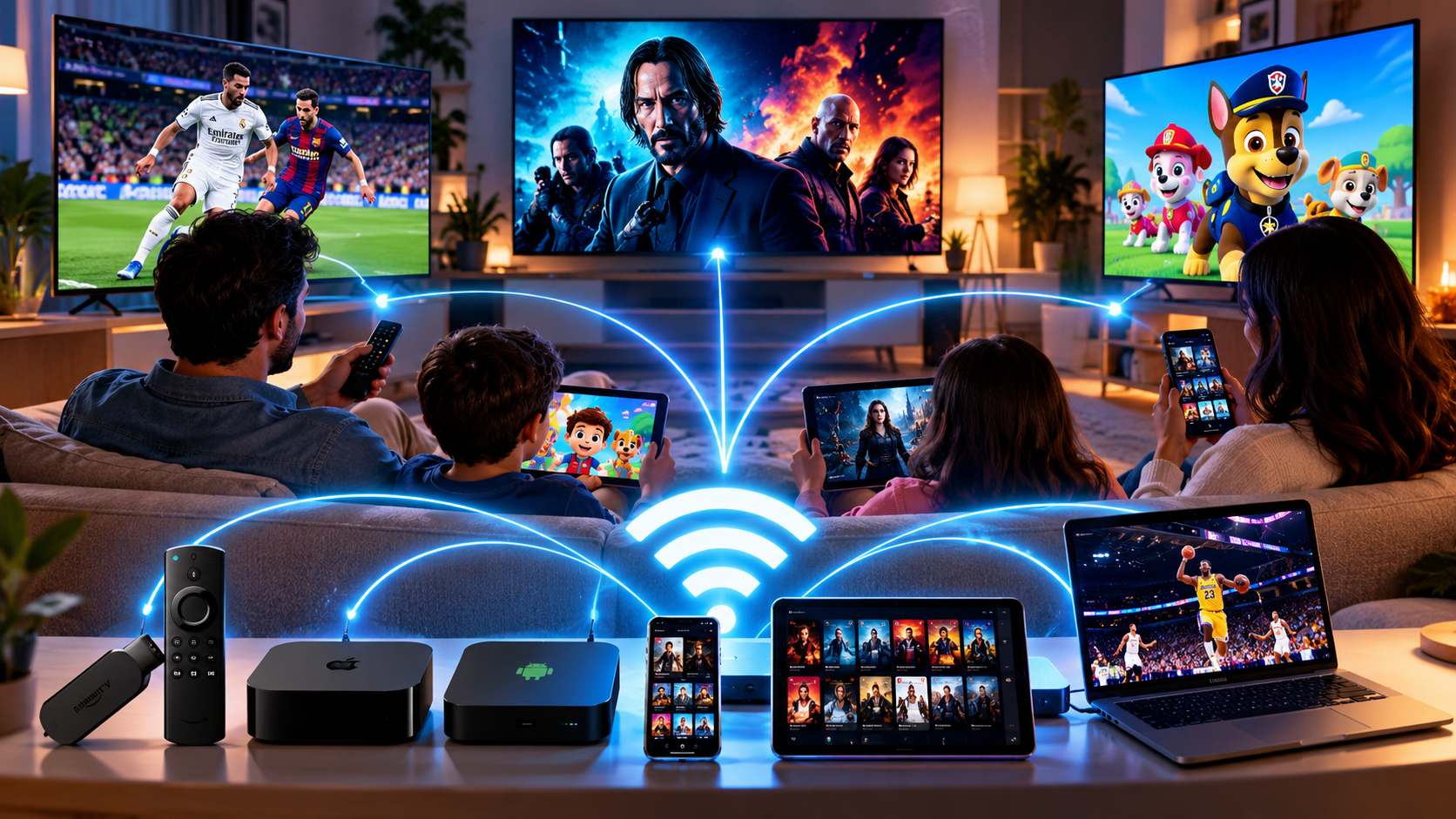
The breadth and quality of IPTV device support reveals significant engineering investment differences between platforms. Modern IPTV viewers expect their service to work seamlessly across multiple device categories, each with specific technical requirements.
Amazon Fire TV Stick has become the most popular IPTV viewing device worldwide, with over 150 million units sold globally. Quality IPTV platforms invest heavily in Fire TV optimization, achieving channel-switching speeds under 2 seconds and reliable 4K playback even on older Fire TV Stick generations. VinomTV has built particular expertise in Fire TV IPTV optimization, with their player applications delivering measurably better performance than generic IPTV apps on Amazon devices.
Smart TV integration requires IPTV platforms to develop applications compatible with Samsung Tizen, LG WebOS, Sony Android TV, and other proprietary smart TV operating systems. Each platform has specific technical requirements, performance characteristics, and certification processes. IPTV platforms that maintain quality applications across all major smart TV platforms demonstrate substantially greater engineering investment than those supporting only one or two operating systems.
Android TV systems including Nvidia Shield, Mi Box, and Chromecast with Google TV provide flexible IPTV platforms that power users prefer for their customization options. Quality IPTV platforms ensure their services work well with popular Android TV player applications like TiviMate Premium and IPTV Smarters Pro, which serve as universal frontends for IPTV content from various sources. FreeGoTV has documented extensive compatibility testing across Android TV hardware to ensure consistent IPTV performance.
Mobile device support requires different engineering investment than living-room IPTV viewing. Modern smartphones and tablets handle IPTV streaming differently than dedicated streaming devices, with variable network conditions and screen size constraints requiring specific optimization. Quality IPTV platforms invest in iOS and Android applications that handle mobile-specific challenges including cellular network transitions and orientation changes seamlessly.
Stream Quality Measurement Methodologies
Measuring IPTV stream quality requires more than checking advertised resolution claims. Sophisticated IPTV quality analysis examines multiple dimensions of the viewer experience to determine actual delivered quality versus marketing promises.
Actual resolution verification involves capturing IPTV streams and analyzing their actual pixel dimensions. A platform advertising 4K Ultra HD content but actually delivering 1080p upscaled to 4K resolution is providing fundamentally less value than one delivering genuine 4K content. Independent IPTV quality testing using video analysis tools reveals which platforms deliver authentic premium quality and which rely on misleading marketing claims.
Bitrate sustainability measures whether IPTV streams maintain advertised bitrates throughout extended viewing sessions. Platforms may begin sessions at advertised quality levels but degrade as network conditions vary or server capacity comes under pressure. Quality IPTV platforms maintain stable bitrates throughout viewing sessions, with adaptive bitrate streaming smoothly handling temporary network issues rather than persistent quality reductions.
HDR implementation quality varies dramatically across IPTV platforms claiming high dynamic range support. True HDR delivery requires proper metadata transmission, color space accuracy, and content encoding that preserves dynamic range information through the entire IPTV delivery pipeline. Many platforms claiming HDR support actually deliver content that loses HDR metadata somewhere in their processing pipeline, providing limited actual benefit despite marketing claims.
Audio fidelity often receives less attention than video quality but significantly impacts IPTV viewing experiences. Premium IPTV platforms deliver multichannel surround sound using AC-3 or E-AC-3 codecs, with the most advanced platforms supporting immersive audio formats like Dolby Atmos. TereaTV has invested in audio quality particularly for their European IPTV channels where multilingual broadcasts require sophisticated audio handling across multiple language tracks.
Security Architecture in Modern IPTV Platforms
IPTV security architecture protects valuable content from unauthorized access while preserving legitimate viewer experiences. Modern IPTV security combines multiple technologies to address different threat categories.
Content encryption protects IPTV video streams from unauthorized interception. Most premium IPTV services encrypt streams using AES-128 or stronger algorithms applied to each video segment. Encryption keys rotate regularly to prevent compromise even if individual keys are exposed. The IPTV encryption sophistication affects both content protection effectiveness and the computational overhead required for legitimate playback.
Digital Rights Management systems control how IPTV viewers can use streaming content. DRM technologies including Widevine, FairPlay, and PlayReady restrict content to authorized devices and prevent unauthorized copying or redistribution. These IPTV DRM systems integrate with hardware security features in modern devices to provide robust protection against extraction attempts. Premium IPTV platforms typically support multiple DRM systems to ensure compatibility across different viewer devices.
Authentication systems verify IPTV viewer identities before granting access to content libraries. Modern IPTV platforms implement combinations of username, password, device identification, and behavioral analysis to prevent unauthorized access. Some IPTV providers also detect account sharing patterns that violate terms of service, balancing security with reasonable use accommodation. ViewTVY has implemented sophisticated authentication that handles the complex requirements of premium sports IPTV content licensing.
Privacy protection has grown increasingly important for IPTV viewers concerned about surveillance and data collection. Quality IPTV platforms implement privacy-preserving architectures that minimize personal data collection and retention. Encryption between viewer devices and IPTV servers prevents network observers from determining what content individuals are watching. Platforms with strong privacy practices typically publish detailed privacy policies that explain exactly what data is collected and how it is used.
The Economics of IPTV Infrastructure Investment
The technical capabilities of IPTV platforms ultimately depend on infrastructure investment decisions. Understanding the economics behind IPTV infrastructure helps evaluate which platforms have made the investments necessary for sustained quality.
Bandwidth costs represent the largest ongoing expense for IPTV operations. At scale, every additional gigabyte delivered to viewers translates to measurable cost increases. IPTV platforms must balance content quality against bandwidth efficiency, with newer codecs like H.265 and AV1 helping reduce costs while maintaining or improving quality. The IPTV providers willing to invest in newer codec deployment typically deliver better economics for both their business and their viewers.
Server infrastructure represents the second major IPTV cost category. Quality IPTV platforms operate dozens or hundreds of servers across multiple geographic regions, with redundant capacity to handle peak loads. The infrastructure cost difference between minimal IPTV deployments and properly engineered ones can exceed an order of magnitude, which inevitably affects viewer experiences. Platforms like FreeGoTV that operate extensive server infrastructure provide consistently better IPTV experiences than budget alternatives running on minimal hardware.
Content licensing costs vary dramatically based on the type of IPTV content offered. Premium sports rights cost significantly more than general entertainment content, which is why specialized IPTV sports platforms typically charge higher subscription prices than general entertainment services. ViewTVY has invested heavily in sports content licensing alongside their technical infrastructure, creating a value proposition centered on premium sports IPTV delivery.
Engineering team investment determines whether IPTV platforms can continuously improve their services. Quality IPTV operations employ substantial engineering teams responsible for ongoing infrastructure optimization, new feature development, and incident response. Platforms with minimal engineering investment typically deliver stagnant IPTV experiences that gradually fall behind competitors making continuous improvements. The IPTV market increasingly rewards platforms that treat their service as an ongoing engineering discipline rather than a static product.
The Future of IPTV Performance Engineering
Several technical trends will shape IPTV performance evolution through the remainder of the decade. Understanding these emerging directions helps both viewers and IPTV professionals prepare for continuing industry transformation.
Artificial intelligence integration is expanding rapidly across IPTV platforms. AI-powered recommendation engines, automated quality optimization, and predictive caching are becoming standard features in major IPTV services. These systems learn from viewing patterns to deliver more personalized experiences while optimizing infrastructure usage. Advanced IPTV platforms use AI to predict regional demand spikes hours in advance, pre-positioning content at edge servers before viewers actually request it.
8K Ultra HD content delivery is moving from experimental to mainstream as 8K displays become more affordable. The bandwidth and codec requirements for 8K IPTV streams require continued infrastructure investment, but several streaming providers have begun rolling out 8K-capable channels for early adopters. The transition to 8K IPTV will likely take several years, paralleling the gradual rollout pattern that 4K followed throughout the late 2010s and early 2020s.
Quantum-resistant cryptography development is preparing IPTV systems for eventual quantum computing capabilities that could compromise current encryption methods. While practical quantum threats remain years away, forward-looking IPTV platforms are beginning research into post-quantum cryptographic approaches that will protect content and viewer data in the long term. This investment ensures IPTV security remains robust even as computing capabilities evolve.
Sustainability considerations are increasingly influencing IPTV infrastructure decisions. The energy consumption of streaming video at global scale has become significant enough to attract environmental scrutiny. Quality IPTV platforms are investing in efficiency improvements, renewable energy sourcing for data centers, and codec optimization that reduces total bandwidth requirements. These IPTV sustainability efforts reduce both environmental impact and long-term operating costs simultaneously.
Conclusion: Evaluating IPTV Platforms Through Engineering Excellence
The IPTV market in 2026 contains hundreds of platforms ranging from genuinely engineering-focused operations to fly-by-night services with minimal infrastructure investment. The technical metrics and methodologies described in this article provide a framework for distinguishing serious IPTV platforms from amateur alternatives that cannot sustain quality experiences.
Quality IPTV platforms invest in measurable engineering excellence across multiple dimensions: uptime that holds during peak events, latency that enables responsive viewing experiences, codec efficiency that maximizes quality per delivered bit, CDN sophistication that minimizes geographic disadvantages, and security architectures that protect both content and viewer privacy. Platforms like FreeGoTV, TereaTV, VinomTV, and ViewTVY have publicly documented their engineering investments across these dimensions, providing transparency that allows technical evaluation against documented standards.
The IPTV evaluation process for any potential viewer should examine these technical foundations rather than relying on marketing claims about channel counts or subscription prices. A platform offering 10,000 channels at low prices but unable to maintain stable 4K playback during peak hours delivers substantially less value than one offering fewer channels with rock-solid engineering supporting consistent quality experiences. The IPTV technical foundations covered in this article provide the framework for making these evaluations effectively.
As IPTV continues its evolution toward becoming the dominant television delivery method globally, the gap between engineering-focused IPTV platforms and budget alternatives will likely widen. Technologies like AI personalization, 8K content delivery, ultra-low-latency streaming, and quantum-resistant security require infrastructure investments that smaller IPTV services cannot match. Understanding these technical foundations equips viewers to make informed decisions and recognize quality IPTV engineering when they encounter it. The IPTV revolution continues at an accelerating pace, with technical excellence increasingly determining which platforms thrive and which fade into obscurity.