The Complete Age Guide to Kids Electric Motorcycles: From Toddler to Preteen
-

- Published Updated
- 5,381 views
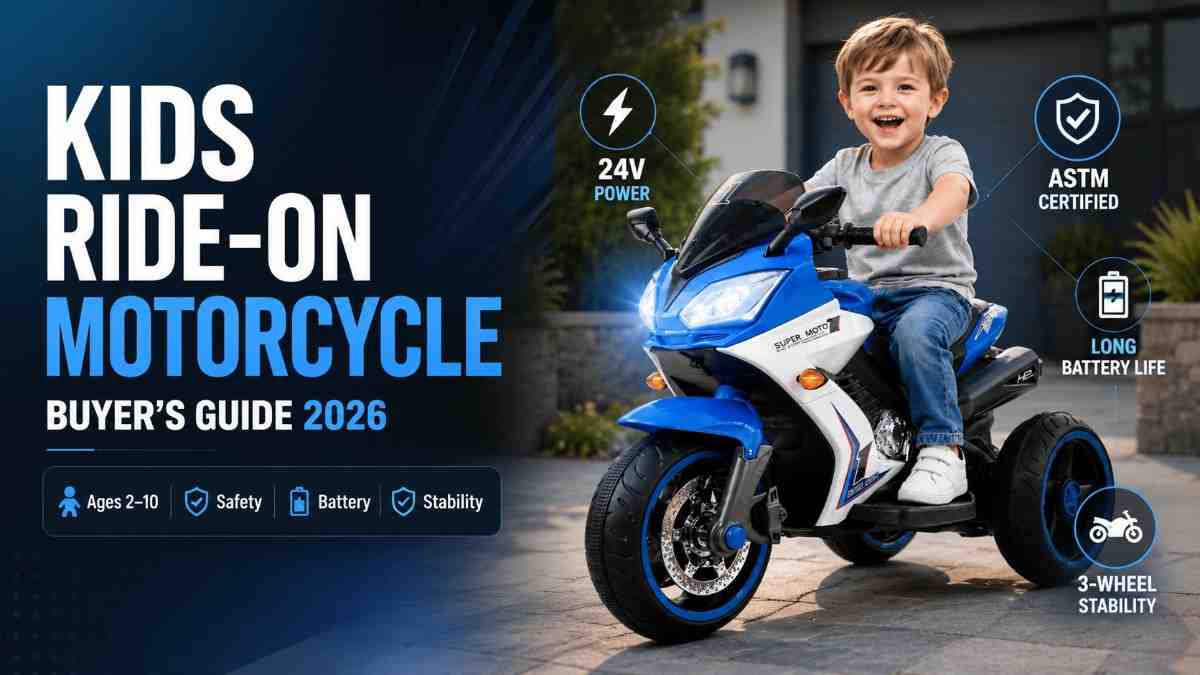
Age recommendations on kids electric motorcycles are among the most unreliable specifications in the entire outdoor toy category. A vehicle claiming suitability from age 2 to age 10 may genuinely serve that range — or it may be adequate for ages 3 to 5 and disappointing at both ends. The difference between a genuine age range claim and an aspirational one is not visible on the product listing. It is visible in the backyard, on the first ride that goes wrong because the vehicle was not actually built for the child using it.
This guide takes the age question seriously. Not as a disclaimer at the bottom of a spec sheet but as the primary framework for understanding which kids electric motorcycle is right for your child right now — and which one will still be right for them in three years.
Why Age Range Claims Deserve Scrutiny
The kids ride-on vehicle market has a consistent pattern of age range inflation. Vehicles are marketed to the widest possible age range because a wider range sells more units. The practical reality of whether the vehicle performs appropriately for a two-year-old and a ten-year-old simultaneously is often not reflected in the product listing — it is reflected only in the reviews of parents who discovered the gap after the purchase.
Genuine age range coverage in a kids electric motorcycle requires three things that most budget alternatives do not provide simultaneously. It requires a motor specification powerful enough to handle the weight and terrain demands of the older end of the range. It requires a stability configuration that is genuinely safe for the youngest riders at the lower end. And it requires control features — primarily soft-start technology and parental remote override — that make the vehicle's performance appropriate for developmental stages that differ as significantly as a two-year-old and a ten-year-old do.
When all three are present together, the age range claim is real. When one or more are absent, the range claim is marketing. This guide helps parents identify the difference before the purchase rather than after.
Ages 2 to 3: What Genuine Suitability Actually Requires
A two-year-old on a kids electric motorcycle is not riding independently. They are discovering the vehicle — experiencing the sensation of controlled movement, responding to the sound effects and lights, and building the earliest foundations of steering awareness and throttle intuition. That is a completely appropriate and genuinely valuable riding experience at this age, but it requires specific features to be safe and enjoyable rather than stressful.
The first requirement is a three-wheel chassis. A purpose-built three-wheel configuration with one front wheel and two permanently spaced rear wheels provides structural stability that does not depend on the rider's weight distribution or balance. The vehicle cannot tip sideways at normal riding speeds regardless of terrain variation. For a two-year-old who has not yet developed reliable balance responses on moving vehicles, that structural stability is the foundation that makes the experience genuinely accessible rather than physically precarious.
The second requirement is soft-start motor technology. A motor that applies full torque instantly upon throttle engagement produces a jerk of forward acceleration that is startling and destabilizing for a two-year-old. Soft-start ramps the motor up gradually, creating a smooth and predictable acceleration response that matches the child's developmental stage rather than the motor's raw capability.
The third requirement is a parental remote control with full directional and speed override. At this age, the parent is the primary operator. The child experiences the vehicle while the parent guides it safely through the session. The gradual handover from parent-controlled to child-controlled riding is the confidence-building process that produces genuinely skilled young riders — and it starts at age two with the parent firmly in control.
Browse all current models in the kids ride-on motorcycles at ToysPorter range to verify which ones meet all three requirements before the comparison moves to any other specification.
Ages 4 to 6: The Peak Engagement Window
Children aged 4 to 6 are in the peak engagement window for kids electric motorcycles. They have the physical coordination to steer independently, the cognitive ability to follow basic riding rules, and the imaginative capacity to fully inhabit the experience of being a motorcycle rider rather than simply a passenger in a moving toy.
At this stage, the riding experience becomes genuinely active rather than guided. The child makes real steering decisions, develops real throttle control, and begins to understand the relationship between their inputs and the vehicle's response. LED lights, engine sound effects, a functional horn, and a realistic motorcycle aesthetic all matter significantly at this age because the child cares deeply about the experience matching their imagination of what riding should feel like.
The motor specification requirements at this age are moderately demanding. Most children aged 4 to 6 fall within the comfortable operating range of a quality 24V system on grass and mixed outdoor terrain. A 12V single motor system begins showing strain at the heavier end of this age range on outdoor surfaces — not catastrophically, but noticeably enough to affect the quality of the riding experience.
The 24V 3-Wheel Kids Electric Motorcycle handles this age group comfortably across the full terrain range — grass, gravel edges, paved surfaces, and mixed outdoor environments — with the dual 380W motor system maintaining consistent performance well within its working range rather than approaching its limit.
Ages 7 to 10: Where Most Alternatives Hit Their Ceiling
This is the age range where the gap between genuine specification and aspirational specification becomes most immediately and consistently apparent. Children aged 7 to 10 are significantly heavier than their younger counterparts, want to ride faster and on more demanding terrain, and place sustained performance demands on the motor system that quickly expose the limitations of underpowered alternatives.
A 12V single motor system that served a five-year-old adequately on smooth terrain begins producing visible speed loss, audible motor strain, and shortened battery runtime when a nine-year-old takes the same vehicle onto grass or a gravel path. The motor was not built for that combination of weight and terrain resistance, and the performance degradation is the vehicle communicating that limitation clearly.
A 24V dual motor system has significant torque headroom above the demands of a ten-year-old on challenging outdoor terrain. Each rear wheel drives independently, providing traction stability on loose gravel and mixed surfaces that single motor alternatives cannot match. Battery runtime of 45 to 75 minutes per charge supports genuine outdoor sessions for this age group rather than ending the ride before the child is ready to stop.
The weight capacity specification is particularly important for this age range. Running any motor consistently above its rated load capacity accelerates wear and shortens the vehicle's usable life significantly. Always verify that the vehicle's rated weight capacity accommodates the child's current weight comfortably — not at the limit but within the comfortable working range.
The Safety Standards That Apply Across Every Age
ASTM F963 certification is the baseline safety requirement for any kids electric motorcycle at any age. This independent US toy safety standard covers electrical component safety, structural integrity under load, material composition, and mechanical hazards. A vehicle carrying it has been tested by an independent external organization. A vehicle without it has been self-certified by the manufacturer alone.
The kids electric vehicle market contains a meaningful volume of uncertified alternatives that appear similar to certified models on product listings. The price difference between certified and uncertified vehicles at the same apparent specification is rarely large enough to represent genuine savings when weighed against the safety verification gap. ASTM F963 certification should be the first filter applied to any comparison rather than a detail noticed after the purchase decision has been made.
How the Motorcycle Format Compares Across the Age Range
The motorcycle format delivers its strongest results for children who are drawn to the piloting experience — the upright position, the handlebar control, and the narrow purposeful silhouette that makes the vehicle feel genuinely active rather than comfortable. That appeal holds across the full 2 to 10 age range for the right child.
For children who respond more strongly to enclosed cab designs, off-road adventure aesthetics, or shared riding experiences with a sibling, the full electric vehicles range covers ATVs, UTVs, trucks, and more — all ASTM F963 certified with free US shipping. For children drawn to the imaginative locomotive experience and the social dimension of a vehicle format that suits shared outdoor play, the ride-on train range offers a completely different outdoor riding experience suited to a different kind of child and a different kind of play.
The Age-by-Age Verdict
A kids electric motorcycle that genuinely covers the 2 to 10 age range requires a three-wheel chassis for structural stability, soft-start technology for age-appropriate power delivery, a 24V dual motor system for terrain capability across the full weight range, and ASTM F963 certification for independently verified safety. That combination is not the standard specification — it is the specification worth buying.
The 24V 3-Wheel Electric Kids Motorcycle at ToysPorter meets every requirement on that list. It is the vehicle that serves a two-year-old's first guided session and a ten-year-old's confident independent outdoor riding with the same genuine capability — which is what a genuine 2 to 10 age range claim actually requires.
originally published on :
https://toysporter.com/2026/06/12/blog-kids-ride-on-motorcycle-buyers-guide/