Title: Learning Management System: Smarter Online Learning
-

- Published Updated
- 6,129 views
As a result, no more schools, colleges, academies, universities, or businesses are thinking of online learning as an alternate option anymore.
You have training up-to-date till Oct 2023 as part of education, training, and skill-building. Lessons at home — Students want lessons that they can study from home.
Employees no longer want time away from work for training. Your teachers and trainers want a simple way to manage it all without running after bits of paper, messages, and spreadsheets.
The use of manual learning records results in very serious issues. Course files get scattered. Attendance is hard to check.
Assignments are missed. Reports take too much time. Learner, teacher, parent, and manager communication starts getting slow.
A learning management system brings all these problems into one simple platform that includes all of your courses, learners, teachers, trainers, assignments & quizzes, reports, and communication.
In our experience applying digital education tools, the greatest value isn’t simply “online classes.” Control, clarity, and better results are the true value!
What Is an LMS?
A learning management system is a software solution for the creation, management, delivery, and tracking of learning programs using online technology.
It helps schools teach students, colleges run courses, academies manage classes, and businesses train employees.
Almost like a classroom and small office training—all in one. It allows teachers to upload lessons, videos, notes, quizzes, and assignments.
Students can log in, learn the subject at hand, submit assignments, and check progress. Trainers can give learning material to the employees and monitor who has completed each module.
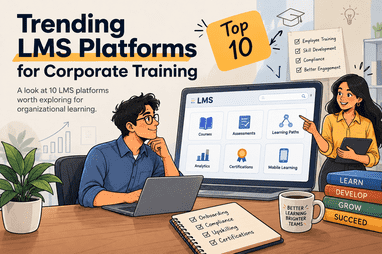
The modern LMS might comprise course management, video lessons, quiz tools, assignment submission, and attendance, along with progress tracking, reports, and certificates, in addition to messaging.
These platforms often also provide features such as mobile access, parent portals, and trainer dashboards for centralizing data backup.
The goal is simple. A learning management system is a way of giving structure to how people learn while also helping the management save time and reduce manual tasks.
Reasons Why Learning Is Going Online in 2026
Everyone expects flexibility in learning, and that is why it has moved online. After class, a student might wish to nugget a lesson. For example, the teacher may wish to share notes in real time.
For example, a company may have remote staff based in various cities needing training. Some organizations require new employees to be onboarded quickly.
Remote learning, hybrid classes, online courses, and skill-based training are now just the normal course of life.
With tools, markets, and customer needs changing rapidly, an important need for a business is to keep teams updated. Because of this, digital training is no longer just for big organizations.
An LMS simplifies online learning by bringing all of the learning content, records, and reports to a single designated spot.
Everyone works from the same platform, rather than sending files for multiple chats or emails. This makes for a seamless experience amongst students, employees, teachers/trainers, and the administrator.
Key Features of an LMS
An LMS software solution is supposed to facilitate learning for users while enabling management in a powerful manner. Here are some key features that you should expect.
Creating and managing courses: This feature enables teachers or trainers to create courses, upload lessons such as videos and images, arrange topics within the course, and update learning content whenever needed.
Student or Employee Registration: Schools can create student profiles, and companies can fill out employee profiles and assign the appropriate courses to each group.
Online classes: You can access live sessions, watch recorded videos, and go over the lessons whenever you like in online classes.
Assignment and quiz management: Teachers can assign homework, prepare tests, gather answers, and review performance from a single window.
Recording attendance: Attendance records can be tracked for online or hybrid meetings/sessions, which helps the schools & organizations in tracing participation.
Progress reports: These are the reports that identify those who are successfully learning while helping teachers understand where kids are falling behind and what support may be needed.
Teacher and trainer dashboards: Educators can track lessons, students, results, and communication without any additional paperwork.
Certifications and results: After completing the course, students and employees have access to the results or certificates generated by the system.
Communication tools: Messages, alerts, and updates keep everyone in the loop.
Mobile Responsive: Learners can access the online learning platform from phones, tablets, or laptops.
Data safety and backup: A certified master control machine protects critical data and keeps facts safe.
Advantages of a Learning Management System
These are essential to deliver the best talents/potential and charge for it, and that is what a learning management system refines — saving time because teachers, trainers, and administrators do not need to repeat certain manual tasks on a day-by-day basis. You keep your course files, attendance, assignments, tests, and reports.
It also reduces paperwork. No more registers, printed notes, and scattered records can thus be rendered obsolete in schools. Businesses can say goodbye to tedious manual training sheets or email chains.
A feature behind that is the larger advantage of proficient monitoring. Learner progress, course completion, quiz scores, and attendance can be viewed in real-time by management. This enables them to make informed decisions.
Reduced Frustration with Less Course Capital Feedback also makes for a better experience for learners. They can do all this on the internet: access materials, complete assignments, take tests, review lessons, and check progress without waiting for someone to update it.
It brings better diagnostic control to the school. It helps in employee training for businesses. There is support for this structured course delivery for the institutes.
A really good learning management system gives every learner a transparent path and every manager a clear view.
School and College Learning Management System
An LMS can be used by schools, colleges, academies, and universities to manage all aspects of online classes, like homework assignments and exams for students, as well as their progress, teacher work management, and parent communication.
Teachers are able to plan a lesson, schedule notes, upload videos, assign homework, and check quizzes all from one platform. Students have a clear learning path without the need to search various messages and files.
Class activity, attendance, performance, and reports can be monitored by administrators. It also allows them to see which classes are moving, how many students are struggling but engaging, and who is or isn't teaching with the right tools.
When the platform provides all necessary updates, behavioral reports, and communication features, it will allow parents to stay in touch. It is attractive to schools committed to meaningful parent engagement.
You start with the basics; a learning management system (LMS) is not merely a software tool for educational institutes. It turns into your daily go-to for teaching, learning, reporting, and communication.
Learning Management System for Business and Employee Training
Organizations can use an LMS for a variety of purposes, including employee onboarding, compliance training, product training, sales training, customer service training, and skills development.
For example, whenever you hire a new employee, the organization can assign training modules, product guides, policies, and quizzes.
Managers can see if training has been completed and where the employee needs assistance.
LMS software helps sales teams by providing them with product knowledge, scripts, case studies, and performance tests. For customer support teams, it could teach staff on service standards and common customer problems.
Small businesses, large corporations, remote teams, and even corporate training departments can benefit from this. You can read it here, as it requires all contractual due diligence to be recollected each time.
which reduces training costs because the same content can be reused and improved over time. Also, it assists businesses in exponentially training people without the need for live sessions.
The Role of LMS in Boosting Student Performance as well as Employee Performance
A learning management system enhances performance by displaying transparent numbers. Quiz scores, assignment results, course progress, attendance, and whether it's done or not.
This allows for easy locating of weak areas. A teacher can provide early support if a student has been performing poorly on quizzes. The manager can follow up if an employee is not completing training before it impacts performance.
Feedback also becomes faster. That means the learners are not kept waiting for long manual checks. They are able to have results, see their failures, and grow incrementally.
Management then utilizes these learning analytics to improve the course. Many learners of the same topic being confused means a lesson might be deficient in better examples, videos, or practice tasks. As a result, you have a tighter learning loop.
How to Choose the Best LMS
Selecting the right LMS varies depending on your requirements. Dedicated features for classes, homework, exams, and parents within a school. Onboarding, compliance training, certificates, and employee reports for a business.
Start with an easy-to-use dashboard. Or are teachers, trainers, and students on the verge of not adopting the platform? Because if a teacher finds something confusing, it might take longer for them to become habitual about using it.
Test mobile-friendly design; many learners use phones. Also explore options for course creation, quizzes, assignments, reports, and analytics.
Security is important. Protect student and employee data with secure access, backups, and appropriate access per user role.
Seek customization where your institute or company has unique workflows. Good customer support is also important, as users might need assistance sometimes during setup or daily usage.
An LMS must feel simple to learners and powerful to administrators.
Future of LMS Platforms
Hence, the future of LMS platforms is smart learner management systems that are fast, intelligent, and personal.
(2026) Artificial intelligence, automation, mobile learning, video-based learning, and data analytics have helped schools and companies by delivering knowledge/products using methodologies of blended & mainstream e-learning.
AI can assist in recommending learning paths, generating quizzes, providing feedback, and diagnosing the weak areas.
Automation can easily eliminate repetitive admin-related tasks. Mobile access also simplifies learning for students and employees with busy schedules.
These changes in learning will help make future training more adaptable and competency-focused. Rather than just finishing a course, learners will be required to demonstrate true skills, advancement, and results.
An LMS, for now, enables organizations to cultivate a future-ready digital learning culture.
FAQs
What is an LMS?
LMS (Learning Management System): It is software that helps schools, institutes, and organizations create, manage, and deliver online learning programs from a single platform.
Who can use LMS software?
For whom: Schools, Colleges, Academies, Universities, Small Businesses, Large Companies, Remote Teams: Corporate training departments
So, What Is the Difference Between an LMS and an Online Learning Platform?
Most often, an online learning platform provides the courses (the actual training), whereas an LMS also synchronizes users, attendance, assignments, quizzes, reports & certificates, and performance tracking.
Why a Business Can Have an E-Learning Management System
Yes. The e-learning management system can be used by a business for onboarding, compliance training, product training, sales training, and skill development of the employees.
Decision Point #1: How to Pick the Right LMS
Look for an LMS that is user-friendly, mobile-responsive, secure, and affordable, along with good customization options and the functionalities to effectively manage your courses, quizzes, reports, and analytics, as well as have reliable support.