Why Online Credentials Are Reshaping US Universities
-

- Published Updated
- 5,861 views
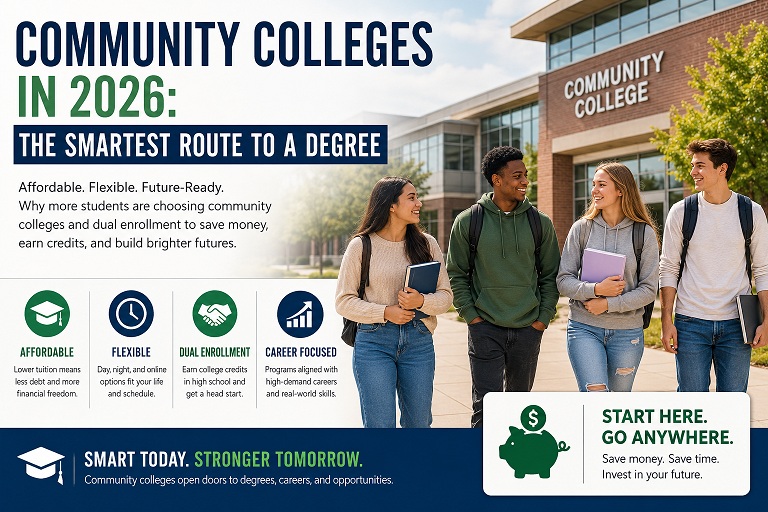
Higher education is changing faster than many university leaders expected. Across the United States, institutions are investing heavily in online learning, micro-credentials, and short-term certificate programs that promise faster career outcomes and greater flexibility. What once looked like a supplemental part of higher education has become a central growth strategy.
The rise of online credentials reflects a simple reality. Students want education that fits around work, family, and financial commitments, while employers increasingly want proof of specific skills. Universities are responding by creating programs that sit between traditional degrees and workplace training, giving learners more ways to gain qualifications without committing to lengthy academic pathways.
The Shift Toward Career-Focused Learning
Universities are no longer designing every program around the traditional four-year degree model. Instead, many are building credentials that directly address workforce needs and professional advancement.
Research shows that institutions increasingly view micro-credentials as practical tools for employability rather than academic add-ons. Employers are paying attention as well. Hiring managers often see certificates, digital badges, and specialized credentials as evidence that a candidate has invested in developing relevant skills.
This change mirrors what happened in the technology industry years ago. A software developer who earns a cloud computing certification can often demonstrate job-ready expertise faster than someone who relies solely on a broad academic background. Universities have recognized that many students now want similar opportunities across business, healthcare, analytics, marketing, and other growing fields.
The result is a learning model built around measurable outcomes. Students can acquire targeted knowledge, demonstrate competency, and immediately apply those skills in the workplace.
Why Students Prefer Flexible Credentials
Student expectations have evolved significantly. Many learners now evaluate education based on cost, speed, and career impact.
Online certificates and short-term programs appeal to working professionals who cannot pause their careers to return to campus full time. They also attract recent graduates looking to strengthen specific skills without enrolling in another degree program.
Flexibility plays a major role. Online learning removes geographic barriers and allows students to study at their own pace. Instead of relocating or adjusting their entire lifestyle, learners can fit coursework into existing schedules.
Another advantage is the rise of stackable credentials. A student might begin with a project management certificate, add a business analytics credential later, and eventually apply those achievements toward a larger qualification. This approach creates multiple milestones instead of forcing students to wait years before earning a recognizable credential.
As online education grows, students often need additional academic support to manage accelerated schedules and digital coursework. Platforms like Expertsmind.com that connect students with subject experts and academic guidance have become relevant resources for learners balancing assignments, research projects, and professional responsibilities alongside their studies.
Online Education Has Become Mainstream
A decade ago, many students worried that online credentials might carry less value than traditional campus-based education. That perception has changed dramatically.
Leading universities now offer extensive online programs, and employers increasingly recognize the quality of virtual learning experiences. Digital education has moved from the margins of higher education into the mainstream.
Technology has played a major role in this transition. Modern learning platforms allow universities to deliver lectures, assessments, discussions, and collaborative projects through integrated digital environments. Students can access materials from anywhere while maintaining interaction with instructors and classmates.
The scalability of online education also makes it attractive to institutions. Universities can reach learners beyond their local regions and serve working adults, international students, and career changers more efficiently.
This broader reach creates opportunities that traditional campus models often struggle to provide. Instead of relying solely on recent high school graduates, universities can engage learners throughout their careers.
The Business Case for Universities
Student demand is only part of the story. Universities are also investing in short-term credentials because they provide new opportunities for institutional growth.
Traditional enrollment patterns have become less predictable. Demographic shifts, rising tuition concerns, and increased competition have pushed universities to diversify their offerings. Short-term programs help institutions attract audiences that may never pursue a conventional degree.
Adult learners represent a particularly important market. Many professionals want focused training that can improve career prospects without requiring a multi-year commitment. Universities can meet that demand through online certificates and workforce-aligned credentials.
These programs can also launch more quickly than full degree offerings. A university may introduce a certificate in digital marketing or cybersecurity within months, allowing it to respond rapidly to labor market trends.
The strategy creates a pipeline as well. Learners who begin with a short credential often continue into larger programs later, generating long-term engagement for institutions.
Challenges Still Need Solutions
Growth does not automatically guarantee success. Many universities face operational challenges as they expand online education and credential offerings.
Technology systems often remain fragmented. Different departments may manage separate programs, creating inconsistent student experiences and administrative inefficiencies.
Staffing is another concern. Expanding online learning requires instructional designers, support personnel, faculty training, and technology specialists. Universities cannot simply move courses online and expect identical outcomes.
Quality assurance remains essential. Students and employers expect online credentials to deliver meaningful learning experiences, not just digital certificates. Institutions must maintain academic standards while scaling programs quickly.
The universities making the strongest progress are those treating online credentials as part of a broader educational strategy rather than isolated experiments.
The direction of higher education is becoming increasingly clear. Online learning, micro-credentials, and stackable certificates are no longer niche offerings. They represent a new framework for how students acquire skills and how universities serve modern learners. Institutions that successfully combine flexibility, academic quality, and workforce relevance will be best positioned to thrive in the next era of higher education.