Smarter Lifting Choices on Australian Sites
-

- Published Updated
- 156 views
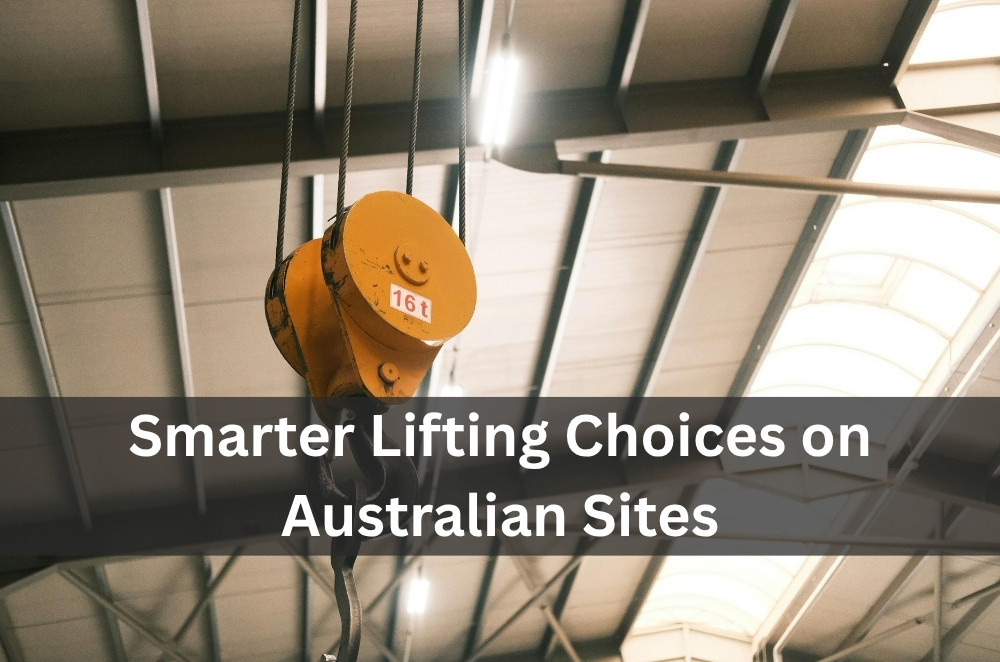
Every year the height of new builds climbs and the pressure on schedules tightens. A single hoist failure can stall the entire program, so project managers look for gear that earns its keep from day one. Before signing off the purchase order, run through the core checks below; they could spell the difference between a smooth concrete pour and an expensive stand-down.
Start With Certified Capacity, Not Guesswork
An over-stretched chain block or sling is an accident in slow motion. Before anything else, look at the safe working load (SWL) stamped on the tag and match it to the heaviest pick you expect on site. If the figures still live in a dusty folder or an engineer’s inbox, update them now. Even a small underestimate stacks the odds against you once dynamic forces kick in.
Early planning is also when most companies lock in suppliers. Browsing a quality lifting gear range up front lets the site engineer settle on rated shackles, spreader beams, and clamps that already carry the paperwork you will need for the principal contractor’s pre-start review.
Materials and Build Quality Still Matter
In the push for faster lead times, it is tempting to shave dollars by dropping to lower-grade alloys. The catch shows up later as premature stretch, surface corrosion, or hooks that refuse to latch cleanly after a fortnight of rain. Australian builders who have shifted to heat-treated Grade 100 chain and galvanised components report fewer mid-project replacements, which means less scrambling to find loan gear and less hold-up at the crane.
A quick test is to run your fingers along the casting seams. Rough edges, painted-over pits, or inconsistent galvanising hint at a rushed production run. High-end lifting manufacturers take the time to shot-blast and proof-test every length of chain; it shows in the finish.
Match the Gear to the Task, Not the Catalogue Photo
No two lifts look the same once riggers start compensating for offset centres of gravity or restricted headroom. That is why even seasoned supervisors still sketch a lifting plan on the whiteboard before a major pick. For example, precast panels often benefit from adjustable spreader beams that shift the lifting points without rewelding lugs. Glass curtain walls favour vacuum lifters with dual circuits to keep the pane secure if one pump drops pressure.
Running through these scenarios exposes any gaps in the kit list. The extra half-hour spent comparing swivel hoist rings versus standard eye bolts on an in-depth hoisting safety article can prevent the Friday scramble when the panel truck is already reversing down the driveway.
Table 1 – Common Loads and Suitable Attachments
Load Type |
Typical Weight |
Preferred Attachment |
Why It Works |
Structural steel beam |
2–5 t |
Chain sling with shortening clutches |
Adjusts leg length to keep the beam level |
HVAC rooftop unit |
1–3 t |
Spreader bar with four leg slings |
Spreads weight, avoids crushing panels |
Precast concrete panel |
4–8 t |
Adjustable lifting clutches |
Locks into cast-in ferrules, fast set-up |
Glass façade panel |
200–400 kg |
Dual-circuit vacuum lifter |
Redundant grip, no surface damage |
Service Histories Are Worth Reading
A perfectly built shackle is still only as safe as its last inspection. Legitimate suppliers include a maintenance log or digital certificate with each hire or sale. Scan for skipped six-monthly checks and verify that any repairs list the technician’s licence number. Missing pages raise red flags during audits and can void insurance if something goes wrong.
Independent testers who visit your depot can back up internal records, especially on remote projects where hiring replacement gear is slow. Their stamp also reassures head contractors who insist on third-party proof loads above certain capacities.
Support After Delivery Keeps Projects Moving
Even the toughest lifting spreader can take a hard knock from a swinging load or an over-eager telehandler. When damage happens, the clock starts ticking on site productivity. Suppliers that hold spare parts locally and offer rapid re-certification minimise downtime; the alternative is air-freighting components or rushing an untested weld repair.
Industry chatter in 2026 suggests the sweet spot is a service lead time under 48 hours. Anything longer and crews start borrowing gear across jobs, which complicates tracking. Clear up front where a vendor’s closest repair centre sits and whether they hold stock for the exact model you are buying.
Two paragraphs separate above from earlier link, so we can include external link here? Wait second link used in middle, now third must appear final third. So safe: we already placed second link earlier (internal blog). Next third link later.
Proceed.
When Regulations Shift, Documentation Shields You
Australia’s model Work Health and Safety Regulations set baseline inspection intervals, but state amendments keep evolving. Queensland’s current version, for instance, tightens documentation requirements for lifting accessories used near the public. Staying ahead means allocating someone to track updates and adjust site folders before inspectors arrive.
Safe Work Australia publishes consolidated codes and explanatory notes, making it easier to cross-check your procedures with official wording. A bookmarked guide beats hunting through PDFs under pressure.
Official guidance on hazardous manual tasks also clarifies definitions that creep into lift plans—handy when debating whether a short pick counts as a suspended load under the hierarchy of controls.
Spot-Check Your Current Fleet
Grab a whiteboard and list every sling, shackle, beam, and clamp on site. Note its SWL, last inspection date, and next due service. You will quickly spot patterns: maybe webbing slings pass every time while budget screw pin shackles rack up failures. That snapshot steers procurement toward gear with a proven run on your actual jobs, not just catalogue promises.
Bringing It All Together
Reliable lifts rely on more than a compliant crane ticket. They stem from decisions made weeks before steel turns up: checking capacity tags, reading service histories, choosing materials that survive real weather, and confirming parts backup. Treat those steps as non-negotiable and the hoist seldom steals the spotlight from the rest of the build.
A final review of the points above turns what feels like a complex matrix of standards and brands into a short checklist that keeps people safe and programs on track.
FAQs
How often should lifting slings be replaced?
Replacement depends on inspection results rather than a fixed timeframe. Many companies retire webbing slings at the first sign of abrasion or UV damage, while chain slings can serve for years if inspections stay current.
Can painted shackles still pass inspection?
Paint often hides corrosion or deformation, making accurate assessment difficult. Inspectors may reject painted shackles unless the coating is removed from critical areas first.
Do I need third-party proof testing for new gear?
Most reputable brands supply factory test certificates. However, some principal contractors or state works require on-site proof loads before the first lift; check project specifications.
What is the difference between Grade 80 and Grade 100 chain?
Grade 100 chain offers roughly 25 percent higher working load for the same diameter compared with Grade 80, allowing lighter rigging without sacrificing capacity. Always confirm compatibility of components within the system.