10 Best LMS Platforms for Corporate Training in India
-

- Published Updated
- 62 views
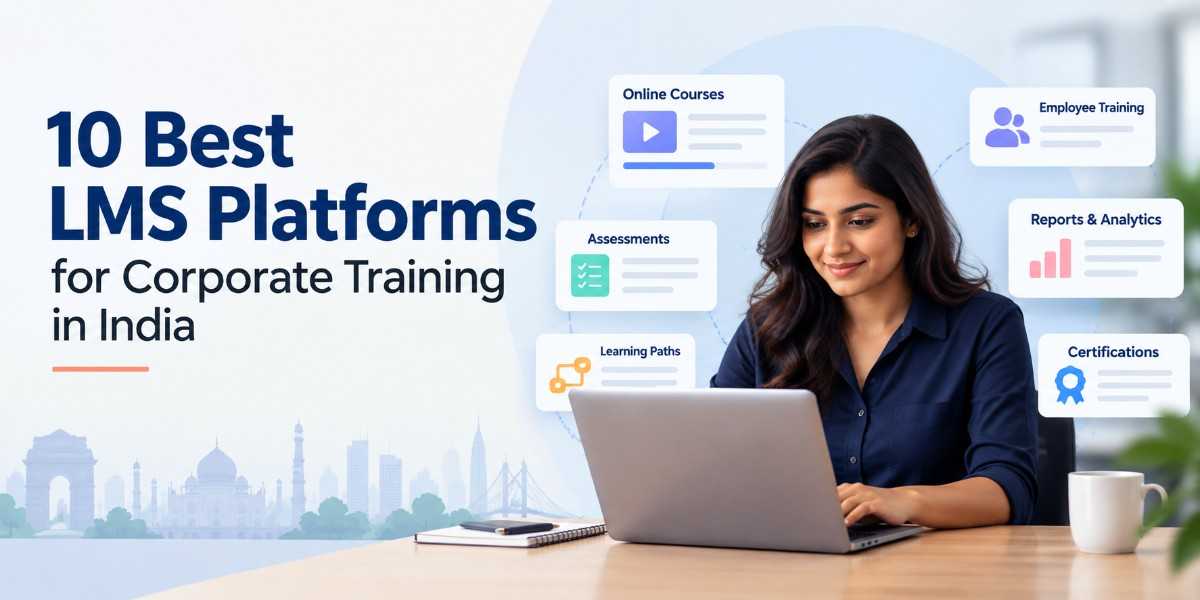
Choosing an LMS for corporate training is rarely just about uploading courses and tracking completions. For most organisations, the platform needs to handle employee onboarding, compliance training, skill development, assessments, reporting, and learning across different teams and locations.
The right choice also depends on the size of the organisation, training requirements, integrations, content formats, and the level of automation required.
Here are 10 LMS platforms worth considering for corporate training in India.
1. Stratbeans
Stratbeans is an Indian learning technology provider offering an LMS designed around corporate learning and employee development. Its platform brings together course management, assessments, learning paths, reporting, gamification, and personalised learning features.
One area where Stratbeans stands out is its focus on different corporate learning formats. Organisations can use features such as microlearning, WhatsApp-based learning, gamification, and AI-supported learning to make training more accessible to employees.
The LMS can be used for employee onboarding, product training, compliance programmes, sales training, leadership development, and ongoing skill-building.
2. SAP SuccessFactors Learning
SAP SuccessFactors Learning is part of SAP's broader human capital management ecosystem. It is particularly relevant for organisations already using SAP products and looking to connect employee learning with other HR processes.
The platform supports instructor-led training, online courses, assessments, compliance training, and learning administration. Its enterprise orientation makes it more suitable for organisations with established HR technology environments.
3. Moodle
Moodle is an open-source learning platform used by organisations across different industries. Its flexibility makes it suitable for companies that want considerable control over how their learning environment is configured.
Businesses can create courses, assessments, learning paths, discussion areas, and certification workflows. Its large ecosystem of plugins also allows organisations to extend the platform for specific requirements.
However, organisations choosing Moodle may need technical expertise for hosting, customisation, maintenance, and administration.
4. Cornerstone
Cornerstone is an enterprise learning and talent management platform designed for large organisations. Its capabilities extend beyond basic course delivery into areas such as skills management, compliance, performance, and workforce development.
For companies with large employee populations and complex training structures, its reporting and administrative capabilities can be particularly relevant.
5. Docebo
Docebo is a cloud-based learning platform aimed at businesses that need to manage learning across employees, customers, partners, or other audiences.
Its feature set includes course management, reporting, automation, assessments, and AI-enabled learning capabilities. The platform can be useful for organisations where training extends beyond internal employees.
6. TalentLMS
TalentLMS focuses on keeping LMS administration relatively straightforward. It provides tools for creating courses, managing learners, conducting assessments, and tracking training progress.
Its interface and cloud-based model make it an option for companies that don't want an overly complicated learning environment. It can work well for smaller teams and organisations starting to formalise their training programmes.
7. Absorb LMS
Absorb LMS is an enterprise-focused learning platform that supports employee development as well as external training programmes. It provides course management, reporting, assessments, automation, and integrations.
Its broader learning capabilities make it suitable for organisations that need to serve multiple learner groups rather than maintaining a basic internal training portal.
8. iSpring Learn
iSpring Learn is an LMS closely associated with the iSpring authoring ecosystem. This makes it particularly useful for organisations already creating training content using iSpring tools.
The platform supports course delivery, assessments, learning paths, reporting, and employee training management. Its combination with content-authoring capabilities can simplify the process of creating and deploying digital learning.
9. Litmos
Litmos is a corporate learning platform built around employee training and learning administration. It supports online courses, assessments, reporting, compliance programmes, and other common workplace learning requirements.
For organisations that need to roll out standardised training across distributed teams, a cloud LMS such as Litmos can provide centralised administration and progress tracking.
10. LearnUpon
LearnUpon is a cloud-based LMS designed for organisations that need to train employees as well as external audiences. Its capabilities cover course management, learner administration, assessments, reporting, and different learning portals.
The ability to manage separate learner audiences makes it relevant for businesses running employee education alongside customer, partner, or reseller training.
Conclusion
There is no single LMS that is the right fit for every company. A growing business may prioritise ease of administration, while a large enterprise may need extensive integrations, reporting, automation, and multi-audience learning capabilities.
For organisations evaluating LMS platforms in India, Stratbeans, Moodle, Cornerstone, SAP SuccessFactors Learning, Docebo, TalentLMS, Absorb LMS, iSpring Learn, Litmos, and LearnUpon offer different approaches to corporate learning.
The most practical way to shortlist them is to map each platform against your training objectives, learner base, existing technology stack, reporting needs, and budget. A feature-heavy LMS isn't automatically the better choice; the useful one is the platform your L&D team can actually deploy, manage, and get employees to use.