Signs You Need a Loft Conversion Instead of Moving House
-

- Published Updated
- 3,422 views
Feeling like your home has shrunk around you? You're not imagining it. As families grow, work-from-home setups become permanent, and belongings pile up, that once-spacious house can start to feel cramped fast. The instinctive reaction for most homeowners is to start scrolling property listings. But before you call the estate agent, it's worth asking a different question: could a loft conversion solve the problem instead?
For many homeowners across Sussex, converting an underused attic turns out to be the smarter, cheaper, and far less stressful route to more space. Moving house comes with a long list of hidden costs and headaches — stamp duty, estate agent fees, solicitor bills, removals, and the emotional toll of leaving a neighbourhood you love. A loft conversion, on the other hand, lets you stay put, keep your postcode, and gain a genuinely useful new room.
So how do you know which option is right for you? Below, we've broken down the clearest signs that a loft conversion — not a house move — is the answer you're looking for.
1. You're Running Out of Bedrooms
This is the number one reason homeowners start thinking about moving. A growing family, a new baby on the way, or older children who need their own space can quickly make a three-bedroom house feel like a squeeze.
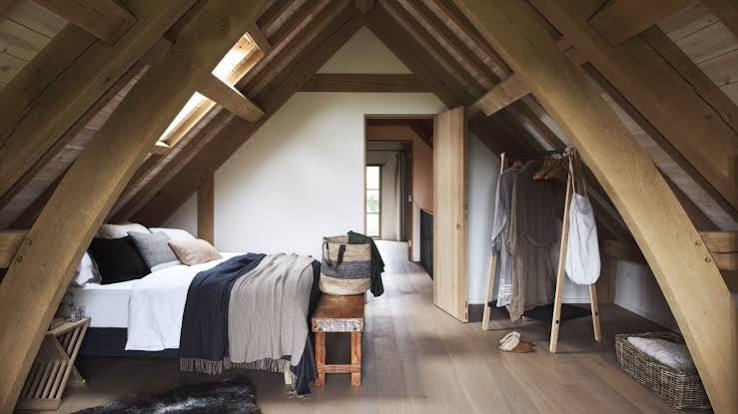
Before you assume you need a bigger house altogether, take a proper look upstairs. Most UK homes with a pitched roof and at least 2.2 metres of head height have enough room for a comfortable loft bedroom, often with an en-suite. An extra bedroom loft conversion is one of the most popular projects we carry out, and it typically works out significantly cheaper than upsizing to a home with an additional room built in.
2. You Need a Dedicated Home Office
Hybrid and remote working are here to stay, and the kitchen table simply doesn't cut it as a long-term workspace. If you're finding it hard to concentrate, take video calls, or switch off at the end of the day because your "office" is also your dining room, that's a strong signal.
A loft conversion gives you a quiet, separate space away from the noise of daily household life — ideal for a home office, studio, or creative space. It's also a smart long-term investment, since a dedicated workspace is increasingly something buyers look for too.
3. You Love Your House, Just Not Its Size
Sometimes the issue isn't the house at all — it's the square footage. If you're happy with your location, your neighbours, your children's school, and your commute, but simply need more room, moving can feel like throwing the baby out with the bathwater.
Relocating means starting again: new area, new routines, new everything. If everything about your current home works except the size, a loft conversion lets you keep what you love and simply add what's missing.
4. You've Priced Up the Cost of Moving House — and Winced
The cost of moving house in the UK adds up faster than most people expect. Between stamp duty, estate agent commission, solicitor and conveyancing fees, survey costs, and removals, moving can easily cost tens of thousands of pounds before you've even accounted for the price difference between your old home and your new one.
Compare that to the average loft conversion cost in the UK, and the numbers often speak for themselves. A well-planned loft conversion is a one-off investment that adds usable square footage without the stamp duty bill, the chain-related stress, or the risk of a sale falling through at the last minute.
5. Bigger Houses in Your Area Are Out of Reach
In many parts of Sussex, house prices have climbed steeply, and the gap between your current home and the next size up can be substantial. If moving to a bigger property means a much larger mortgage, a longer commute, or compromising on the area you actually want to live in, a loft conversion becomes an increasingly attractive alternative.
Rather than stretching your finances to buy more space elsewhere, you can invest that money into transforming space you already own.
6. Your Loft Is Currently Dead Space
Take a moment to think about what's actually happening in your loft right now. For most homeowners, the answer is: not much. Old boxes, a rarely-used Christmas tree, and things you "might need one day" are usually all that's up there.
That's a lot of untapped potential sitting directly above your head. Converting that dead space into a functional room is one of the most efficient ways to add value to your home without extending its footprint or sacrificing garden space.
7. You Want to Increase Your Property's Value Before Selling
Even if you're planning to sell eventually, that doesn't necessarily mean moving is your next step. A professionally completed loft conversion can increase a home's market value by as much as 15–20%, making it one of the most effective ways to boost your asking price when the time does come to sell.
Many homeowners choose to convert first and sell later, enjoying the extra space themselves for a few years while also setting themselves up for a stronger sale price down the line.
8. You Keep Saying "If Only We Had One More Room"
This is often the simplest sign of all. If you find yourself dreaming about a guest bedroom, a playroom, a gym, or a snug — but picture it happening in a completely different house — pause and reconsider. That extra room might already be sitting above you, waiting to be unlocked.
9. You're Worried About the Disruption and Stress of Moving
Moving house is consistently ranked among life's most stressful events, right up there with divorce and bereavement. Packing up an entire household, coordinating removals, dealing with a property chain, and adjusting to a new home all take a significant emotional and physical toll.
A loft conversion, by contrast, is disruptive for a matter of weeks rather than months, and in most cases you won't even need to move out during construction. It's a far gentler way to solve a space problem.
10. You've Already Extended — and There's No Room Left to Build Out
If you've already added a rear extension, converted the garage, or built into the garden, going upwards may be your only remaining option for extra space. Loft conversions are particularly well suited to homes that have maximised their ground-floor footprint but still have an underused roof void above.
Loft Conversion vs Moving House: The Bigger Picture
When you weigh it all up, the loft conversion vs moving house decision often comes down to disruption, cost, and what you actually need. Moving solves a space problem by uprooting your entire life. A loft conversion solves the same problem by making better use of what you already have.
Of course, moving is the right choice for some households — particularly if you need to relocate for work, schools, or simply want a completely fresh start in a new area. But if your main motivation is "we need more space," it's always worth exploring what's possible within your existing four walls first.
What Type of Loft Conversion Is Right for You?
Not every loft is the same, and the right conversion depends on your roof structure, available height, and what you want the space to do. Common options include:
- Velux or rooflight conversions – the simplest and most cost-effective option, ideal where planning constraints apply.
- Dormer conversions – add extra headroom and floor space, perfect for a full-sized bedroom or office.
- Hip-to-gable conversions – transform a hipped roof into a gable end for significantly more usable space.
- Mansard conversions – maximise space by altering the roof slope, ideal for larger, more ambitious projects.
A proper assessment of your loft's height, pitch, and structure will determine which option suits your home best — and an experienced team can talk you through the trade-offs of each.
Why Homeowners Across Sussex Choose to Convert Rather Than Move
At Sussex County Construction, we've helped homeowners across Worthing, Brighton, Lancing, Chichester, and the surrounding areas turn unused attic space into bedrooms, offices, and living areas that transform how their homes function — without the upheaval of moving. Our team manages the entire process, from initial design through to planning compliance and final handover, so the whole experience is as smooth as possible.
If any of the signs above sound familiar, it's worth finding out what your loft could actually become. You can learn more about how we approach every project, and the type of team you'd be working with, on our About Us page.
Ready to Explore Your Options?
If you've recognised your own situation in this list, the next step doesn't have to be a house move. Get in touch with our team today to arrange a free consultation, and we'll help you assess whether your loft has the potential to give you the space you need — without ever putting your house on the market. Contact us to book your free site visit and take the first step toward a home that finally fits your life.