Infrastructure and Development: Why India Needs Skilled Management Professionals
-

- September 22nd, 2026
- 55 views
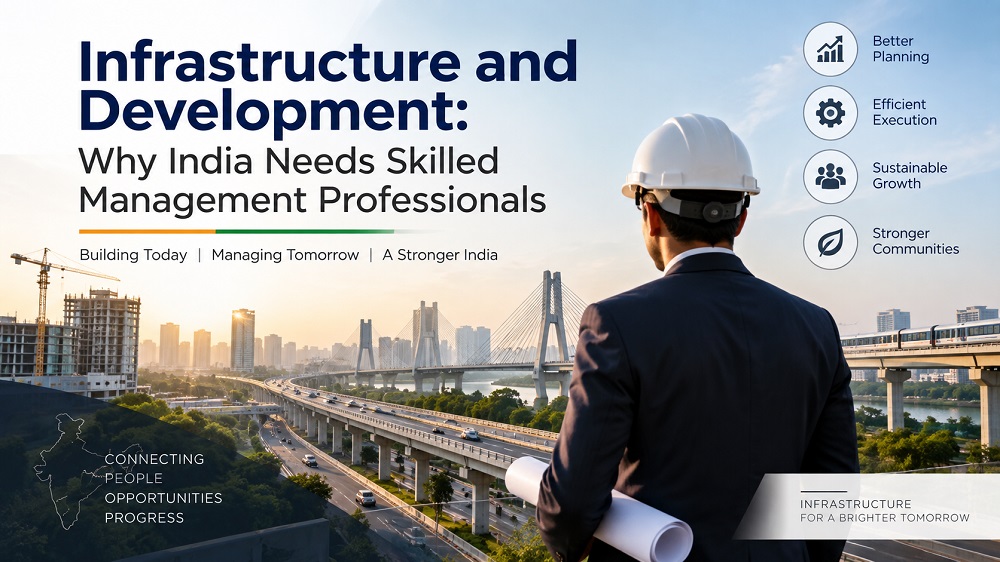
India needs skilled infrastructure management professionals to plan projects, manage investments, coordinate stakeholders and control risks. As cities, transportation networks, energy systems and industrial facilities expand, infrastructure projects require technical expertise as well as strong business management.
The growing focus on infrastructure and development has increased the need for professionals who understand project planning, finance, operations and strategic decision-making. These skills can help organisations manage complex projects from initial planning to execution and long-term operations.
Why Does India Need Skilled Infrastructure Management Professionals?
Infrastructure projects often involve large investments, multiple stakeholders and long implementation timelines. Poor planning or coordination can result in delays, higher costs and operational challenges. This makes effective management an important part of successful infrastructure development.
Skilled managers help organisations address these challenges through project planning, budgeting, risk management, procurement and stakeholder coordination. They may work with engineers, consultants, contractors, financial institutions and government bodies to ensure different aspects of a project remain aligned.
As infrastructure projects become larger and more complex, professionals also need to understand how financial, regulatory and operational decisions affect project outcomes.
What Skills Are Required for Infrastructure Management?
Infrastructure managers need a combination of business, analytical, communication and project management skills. Important areas include:
Project planning and execution
Infrastructure finance
Risk assessment and management
Contract and procurement management
Operations management
Stakeholder coordination
Strategic decision-making
Regulatory awareness
Data-based decision-making
Sustainability considerations
An infrastructure management program can help students develop these capabilities while understanding the business aspects of major projects. Specialised management education can introduce students to how infrastructure projects are evaluated, financed, implemented and operated throughout their life cycle.
This sector-specific understanding is important because infrastructure projects often have long timelines and involve significant financial commitments. Managers must balance commercial objectives with operational requirements while coordinating with different stakeholders.
How Do Infrastructure Managers Contribute to Projects?
Infrastructure managers connect business objectives with project execution. Their responsibilities can vary based on the sector, organisation and type of project.
For example, project managers may monitor schedules, resources, budgets and milestones. Finance professionals may evaluate project costs, funding requirements and financial feasibility. Professionals working in operations can focus on efficiency, service delivery and asset performance after a project becomes operational.
Infrastructure management is therefore multidisciplinary. It brings together finance, strategy, operations, contracts, project management and stakeholder engagement.
How Is Technology Changing Infrastructure Management?
Technology is changing the way infrastructure projects are planned and monitored. Digital project management platforms, data analytics and real-time monitoring systems can provide teams with better visibility into project progress.
Managers increasingly need to understand how data can support decisions related to costs, timelines, resource allocation and risk. Smart infrastructure and digitally connected assets are also creating new requirements for professionals who can work across management and technology-driven environments.
This makes digital awareness an important capability for future infrastructure managers.
What Career Opportunities Are Available in Infrastructure Management?
Professionals with infrastructure management knowledge can pursue opportunities across construction, transportation, energy, logistics, real estate, consulting and urban infrastructure.
Potential functional areas include project management, infrastructure consulting, business development, finance, operations, procurement, contracts and strategy. The exact role depends on a candidate's education, skills, experience and employer requirements.
India's continued focus on transportation, urban development, energy and industrial infrastructure is also increasing the complexity of projects. Professionals who understand how to manage projects within changing business and regulatory environments can contribute across different stages of development.
Why Study Infrastructure Management in Pune?
Students evaluating M.B.A. colleges in Pune should consider more than location or general management subjects. Programme structure, curriculum, faculty expertise, industry interaction and practical learning opportunities are important factors when choosing a specialised MBA.
Students interested in infrastructure can specifically examine whether a programme covers areas such as project management, infrastructure finance, contracts, risk and operations. They can also assess whether the curriculum provides opportunities to understand practical business challenges associated with the sector.
How Can Management Education Support India's Infrastructure Growth?
Management education can prepare professionals to understand the financial, operational and strategic dimensions of infrastructure projects. It can also help students strengthen problem-solving, communication, leadership and decision-making abilities.
These capabilities are particularly relevant when projects involve diverse teams and stakeholders. Managers may need to evaluate information from technical experts, financial professionals and external partners before making business decisions.
As infrastructure requirements evolve, organisations will need professionals who can combine sector knowledge with sound management practices.
Preparing for a Career in Infrastructure Management
India's infrastructure ambitions require more than engineering and construction expertise. Projects also need professionals who understand finance, strategy, operations, risk, technology and project execution.
For students interested in developing these capabilities, SCMHRD offers an MBA in Infrastructure Development and Management. The programme focuses on the managerial dimensions of the infrastructure sector and helps students understand the business considerations associated with infrastructure projects. This specialised learning can support students who want to build management careers in India's evolving infrastructure ecosystem.