Marine Loading Arm Installation Engineering for LNG and Port Infrastructure
-

- May 10th, 2026
- 7,279 views
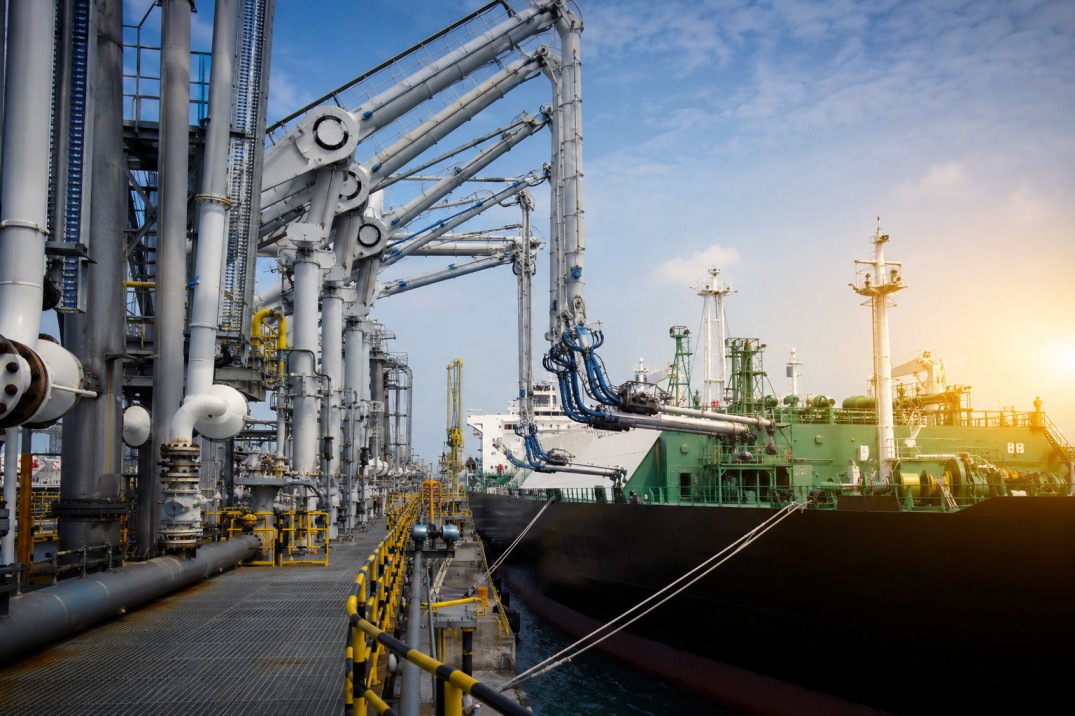
Modern ports depend on highly efficient and safe fluid transfer systems to support global energy trade, petrochemical logistics, and LNG operations. Among the most critical components in this infrastructure are Marine Loading Arms (MLAs), engineered systems designed to transfer liquids and gases between onshore facilities and marine vessels with maximum precision and operational safety.
Compared with conventional flexible hoses, marine loading arms provide significantly higher durability, better flow stability, larger transfer capacities, and improved environmental protection. Advanced MLA systems can operate at pressures exceeding 20 bar while handling transfer capacities above 5,000 m³/h for crude oil, LNG, chemicals, and refined petroleum products.
As ports worldwide expand LNG terminals, hydrogen bunkering facilities, and renewable fuel infrastructure, marine loading arm installation engineering has become increasingly important for ensuring operational efficiency, regulatory compliance, and long-term sustainability.
Material Engineering for Corrosion Resistance
Marine environments expose loading systems to aggressive conditions, including saltwater corrosion, hydrocarbon vapors, humidity, and extreme operating temperatures ranging from cryogenic LNG transfer at -196°C to high-temperature bitumen handling above 200°C. Because of this, material selection plays a major role in MLA performance and lifecycle reliability.
Engineering teams typically use:
Epoxy-coated carbon steel with coating thickness above 300 µm for structural supports
Stainless steel 316L for swivel joints because of its strong resistance to chloride-induced corrosion
PTFE and fluoropolymer-lined seals to withstand chemical exposure
Galvanic anode protection systems for submerged structural components
During project planning, engineers analyze environmental conditions such as salinity, humidity, and atmospheric chloride concentration to ensure corrosion rates remain below 0.1 mm/year. Advanced coating technologies and corrosion-monitoring systems are also integrated to extend operational life and reduce maintenance costs.
Fluid Dynamics and Flow Optimization
Efficient marine loading arm performance depends heavily on fluid dynamics engineering. Poor alignment or improper flow-path design can generate turbulence, pressure fluctuations, excessive vibration, and long-term structural fatigue.
To optimize performance, engineers use Computational Fluid Dynamics (CFD) simulations to evaluate:
Flow behavior
Pressure distribution
Turbulence zones
Thermal effects
Operational movement envelopes
In many LNG terminals, CFD analysis is used during early-stage engineering to verify arm movement limits under varying vessel conditions. Swivel joints are typically designed with less than 5 degrees of misalignment to reduce turbulence and prevent unnecessary pressure losses.
Counterbalance systems are engineered using Hooke’s Law principles, allowing spring stiffness adjustments that neutralize approximately 90–100% of arm loading forces. During installation, laser alignment systems maintain flange parallelism within less than 1 mm tolerance to minimize hydraulic shock and vibration during high-volume transfer operations.
Structural Load and Foundation Engineering
Marine loading arms are exposed to continuous dynamic forces generated by vessel movement, wind loading, tidal variation, and thermal expansion. Structural stability is therefore verified using finite element analysis (FEA) and advanced load simulations.
Key engineering considerations include:
Static arm loads between 10 and 50 tonnes
Vessel-induced dynamic loads exceeding 100 tonnes
Wind speeds up to 50 m/s
Seismic safety factors between 1.5 and 2.0 as per ASCE 7 standards
Fatigue life is typically validated using Miner’s cumulative damage rule under cyclic loading spectra derived from vessel motion data and operational cycles exceeding 10⁶ cycles at stress levels below 0.6× yield strength.
Foundation systems commonly utilize deep pile structures extending beyond 20 meters, depending on geotechnical conditions. Expansion joints are integrated to accommodate thermal expansion coefficients of steel structures, reducing stress accumulation during temperature fluctuations.
Engineers also evaluate berthing impact loads, tidal movement, and jetty vibration to ensure long-term operational stability under varying marine conditions.
Step-by-Step Marine Loading Arm Installation Process
Successful MLA installation requires coordination between civil, mechanical, electrical, instrumentation, and marine engineering teams. Depending on project complexity, installation and commissioning typically require between two and four weeks.
Site Preparation and Civil Works
Before installation begins, geotechnical investigations verify soil-bearing capacities above 200 kPa to support structural loads safely. Pipe stress analysis software such as CAESAR II is used to evaluate piping flexibility and eliminate excessive external loads on the loading arm foundation.
Proper site preparation helps prevent:
Foundation settlement
Structural misalignment
Excessive pipe stress
Long-term vibration issues
Lifting and Mechanical Assembly
Prefabricated MLA modules are transported to the jetty and assembled using tandem heavy-lift cranes with capacities above 100 tonnes. Precision assembly procedures include:
Ultrasonic bolt tension measurement
Controlled torque tightening between 500 and 1000 Nm
Laser-based alignment verification
Swivel calibration and balance testing
These procedures ensure accurate assembly and minimize future operational wear.
Hydraulic and Electrical Integration
Modern marine loading arms rely on advanced hydraulic and automation systems for safe operation. Hydraulic cylinders compliant with API 16D standards are connected through manifold systems that control arm movement and emergency response functions.
Electrical installations follow IEC 61892 and ATEX Zone 1 requirements for hazardous marine environments. Integrated PLC and SCADA systems enable:
Automated positioning
Real-time monitoring
Alarm management
Remote operational control
This level of automation improves both safety and operational efficiency in busy marine terminals.
Testing and Commissioning Procedures
Comprehensive testing is essential before marine loading arms enter service. Engineers perform multiple validation procedures to ensure leak-free operation, structural integrity, and emergency shutdown reliability.
Typical commissioning tests include:
Pneumatic pressure testing at 1.5 times design pressure
Leak detection with tolerance below 0.1 ml/min
Full operational envelope testing using load cells
Emergency Release System (ERS) simulations
In real LNG terminal operations, ERS activation is often triggered during unexpected vessel drift caused by mooring line failure or sudden tidal shifts, requiring full disconnection within 3–5 seconds to prevent hose rupture or product spillage.
Instrumentation and Predictive Monitoring Systems
Modern MLA systems increasingly rely on smart instrumentation technologies for predictive maintenance and operational diagnostics.
Common monitoring technologies include:
Strain-gauge overload protection systems with 10% safety margins
Angle encoders with ±0.5° positioning accuracy
ISO 10816 vibration monitoring systems
FFT-based wear analysis for swivel joints
Continuous monitoring allows operators to detect abnormal vibration, pressure changes, and alignment deviations before equipment failure occurs. These systems help extend swivel service life beyond 15 years while reducing unplanned downtime.
Environmental Protection and Safety Engineering
Environmental compliance and operational safety are central to modern Marine Loading Arm design.
Key protection systems include:
Vapor recovery systems capable of capturing over 95% of VOC emissions
Double-block-and-bleed isolation systems
Nitrogen-purged Emergency Release Systems
Integrated Emergency Shutdown (ESD) systems connected to vessel SCADA networks
These technologies help terminals comply with IMO environmental regulations while minimizing spill risks, emissions, and marine pollution.
Additional safety measures include:
Confined-space entry protocols
Fall-protection systems for jetty personnel
Hazardous-area electrical protection
Fire and gas detection integration
Real-World Engineering Challenges
Large-scale industrial zones such as JAFZA demonstrate the complexity of integrating marine loading arms into existing infrastructure networks. Some projects involve multi-kilometer pipeline tie-ins, dewatering operations, tidal compensation calibration, and simultaneous coordination between marine and onshore construction teams.
These projects highlight the importance of multidisciplinary engineering collaboration involving:
Civil engineers
Mechanical specialists
Marine consultants
Automation engineers
Safety professionals
Successful MLA projects depend not only on equipment quality but also on accurate installation planning, environmental analysis, and operational integration.
Future Trends in Marine Loading Arm Technology
As global energy infrastructure evolves, marine loading arm systems are becoming smarter, lighter, and more environmentally advanced.
Emerging technologies include:
Carbon-fiber composite structures reduce arm weight by up to 30%
AI-powered predictive maintenance systems
Digital twin simulation platforms
Cryogenic loading systems for hydrogen and ammonia bunkering
Smart sensor integration for remote diagnostics
By 2030, advanced automation and AI-driven monitoring are expected to significantly improve terminal reliability, operational safety, and maintenance efficiency.
Conclusion
Marine Loading Arm installation engineering combines structural analysis, fluid dynamics, material science, automation, and environmental protection into one highly specialized discipline. Every installation stage — from foundation engineering and corrosion protection to ERS calibration and predictive monitoring — plays a vital role in ensuring safe and efficient marine transfer operations.
As ports continue investing in LNG, hydrogen, and renewable energy infrastructure, advanced Marine Loading Arm systems will remain essential for supporting high-capacity, environmentally responsible maritime logistics worldwide.