How to Create Free Marriage Biodata in English (Boys & Girls 22+)
-

- Published Updated
- 70 views
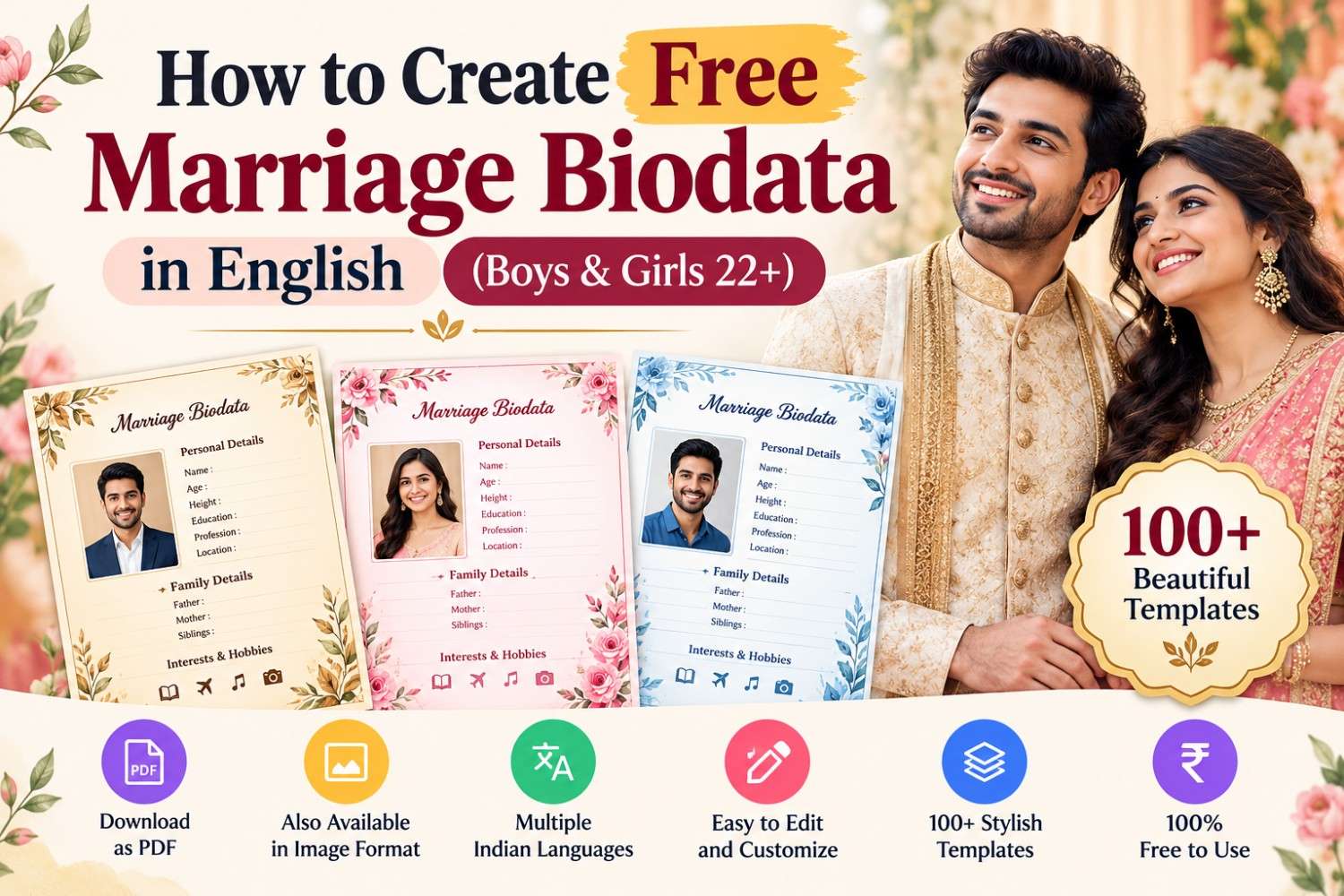
Looking to create a marriage biodata but not sure where to start? You're not alone. For most people aged 22 and above stepping into the world of arranged marriage, writing a biodata is often the very first real step — and it can feel surprisingly tricky to get right. What do you include? How formal should it sound? How do you make it stand out without overdoing it?
This guide walks you through exactly what to include, how to word it well, and how to create free marriage biodata online without the usual formatting headaches. Whether you're putting this together for yourself or helping a sibling or friend, everything you need is right here — from personal details to family background — with practical tips that actually work.
What Is a Marriage Biodata?
A marriage biodata is a structured, one-page document used to introduce yourself to prospective families during the matchmaking process. Think of it as a personal snapshot — covering your background, education, career, family, and what you're looking for in a life partner.
Unlike a resume, a marriage biodata isn't about selling skills to an employer. It's about giving families enough clear, honest information to decide if there might be a good match. It typically includes personal details, education and career background, family information, hobbies, and contact details — all organized in a clean, easy-to-scan format that anyone can read through in under a minute.
For men and women aged 22 and above, this document marks the beginning of a meaningful process. Getting it right from the start matters more than most people realize.
Why a Good Biodata Matters
A biodata is often the very first impression you make on a prospective family — and first impressions form fast. Sometimes within seconds of glancing at a page, families decide whether to read further or move on. A cluttered, poorly organized, or overly long biodata often gets set aside before anyone even reaches the important details.
A well-structured biodata does three things well. First, it makes life easier for families doing initial shortlisting, because they can quickly find the information they care about most. Second, it reduces repetitive back-and-forth questions, since the basics are already clearly answered. Third, it signals that you've approached the process with thought and sincerity — and that matters more than people tend to expect.
If you're 22 or above and just starting this journey, getting the format right from the beginning saves you from having to redo everything later.
Key Sections to Include in a Marriage Biodata
Every strong marriage biodata follows a similar structure. Here's a closer look at what each section should contain and why it matters.
Personal Details
This is where you introduce the basics. Include your full name, date of birth or age, height, complexion (optional), marital status, religion, caste or community (if relevant to your family's preferences), mother tongue, current city, and native place.
Keep this section factual and to the point. Families scan this section first, so clarity is more important than creativity here. Make sure every detail is accurate and consistent — especially your name, which should be spelled the same way throughout the entire document.
Educational & Professional Background
List your highest qualification, the institution you attended, and your current job title or profession. If you're employed, mention your company or industry sector and your work location. A brief note about your professional role gives families a realistic sense of your day-to-day life and career trajectory.
Income is optional at this stage. Many people prefer to note "as per discussion" to keep the conversation private until a later point — and that's completely acceptable.
Family Details
This section gives prospective families a picture of your home environment. Briefly describe your immediate family: your father's name and occupation, your mother's name and occupation, the number of siblings you have (and whether they're married), and your family's current location.
Keep it short — one or two lines per family member is more than enough. The goal here is to offer a warm, honest introduction to your background, not an exhaustive family tree.
Hobbies & Interests
A short list of genuine hobbies helps humanize your biodata and gives families a sense of who you are beyond your qualifications and job title. Mention two or three real interests — reading, traveling, cooking, fitness, music, or anything that genuinely reflects your personality — rather than listing every casual activity you've ever tried.
Authenticity in this section goes a long way. It often becomes a natural conversation starter during early introductions.
Partner Preferences
This is one section many people write too aggressively. A short, respectful note about the qualities you're hoping for in a life partner works far better than a detailed list of requirements. Keep the tone open and positive — something like "Looking for a kind, educated, and family-oriented partner" signals maturity and warmth without sounding demanding.
Contact Information
Include a phone number — many people prefer listing a parent's or guardian's number first for privacy — along with an email address if you'd like, and optionally a note on the best time to contact your family. Avoid sharing sensitive details like your home address or ID numbers at this stage.
Tips for Writing a Biodata in English
Writing your biodata in English doesn't mean it needs to sound stiff or overly formal. The best biodatas strike a balance between professional and personal. Here are a few practical tips to keep in mind:
- Keep sentences short and clear. You're not writing an essay. Bullet points and concise lines work best, especially in sections like personal details and family background.
- Stay consistent with spellings. Double-check that your name, city, and other key details are spelled identically throughout the document. Inconsistencies can create confusion during follow-ups.
- Avoid exaggeration. Stick to honest, straightforward descriptions. Families appreciate candor far more than a polished but misleading picture.
- Proofread before sharing. A spelling error or grammatical slip in a biodata can come across as careless. Read through the final version at least twice, or ask someone you trust to check it for you.
- Use a natural, warm tone. A line like "I am a calm, family-oriented person who enjoys reading and spending time with loved ones" feels genuine and relatable — far more effective than anything stiff or overly formal.
- Keep partner preferences realistic and respectful. A short, thoughtful line about what you're looking for is plenty. Avoid framing it as a checklist, which can come across as inflexible.
Common Mistakes to Avoid
Even well-intentioned biodatas sometimes fall short because of a few avoidable mistakes. Here's what to watch out for:
- Making it too long. One page is the standard. Going beyond that usually means you're including details that can be shared later in conversation.
- Using an outdated photo. A recent, clear photo with good lighting and a neutral background makes a noticeably better impression than a blurry or years-old image.
- Leaving sections blank without reason. If you choose to leave something out — like income — add a brief note like "as per discussion" so families know it wasn't overlooked.
- Copying a template without personalizing it. A biodata that reads like it could belong to anyone won't leave much of an impression. Add specific, genuine details that reflect who you actually are.
How to Create Free Marriage Biodata Online
If writing and formatting everything from scratch feels like more work than you have time for, you don't have to do it manually. The good news is that there are easy-to-use online tools built specifically for this purpose.
Platforms like Biodata99 (https://biodata99.com) let you create free marriage biodata online in just a few minutes. The process is straightforward: choose a template that suits your style, fill in your personal, education, family, and career details, upload a recent photo, and download a clean, print-ready PDF. No design skills are needed, and there are no watermarks on the final document.
This approach is especially useful if you want a polished, professional result without spending hours adjusting fonts and spacing in a Word document. It also makes updating your biodata simple—if your job changes or you move cities, you can edit and re-download without rebuilding the entire layout from scratch.
For anyone aged 22 and above who's just beginning this process, using a free online tool is a smart, time-efficient way to get started with confidence.
Final Thoughts
Creating a marriage biodata doesn't have to be overwhelming. When you break it down section by section, the process becomes much more manageable—and even a little clarifying. It prompts you to think clearly about who you are, what your family background looks like, and what you're genuinely hoping for in a partner.
Focus on keeping your biodata honest, well-organized, and easy to read. Whether you write it yourself in a clean English format or use an online tool to create free marriage biodata in minutes, the goal is the same: give prospective families a clear, respectful, and genuine introduction to who you are.
Take your time with it, get a second opinion from someone whose judgment you trust, and don't overthink it. A biodata that's simple, sincere, and thoughtfully put together will always represent you better than one that's over-polished but impersonal.