Top 5 Reasons Mechanical Seals Failure
-

- March 25th, 2026
- 7,404 views
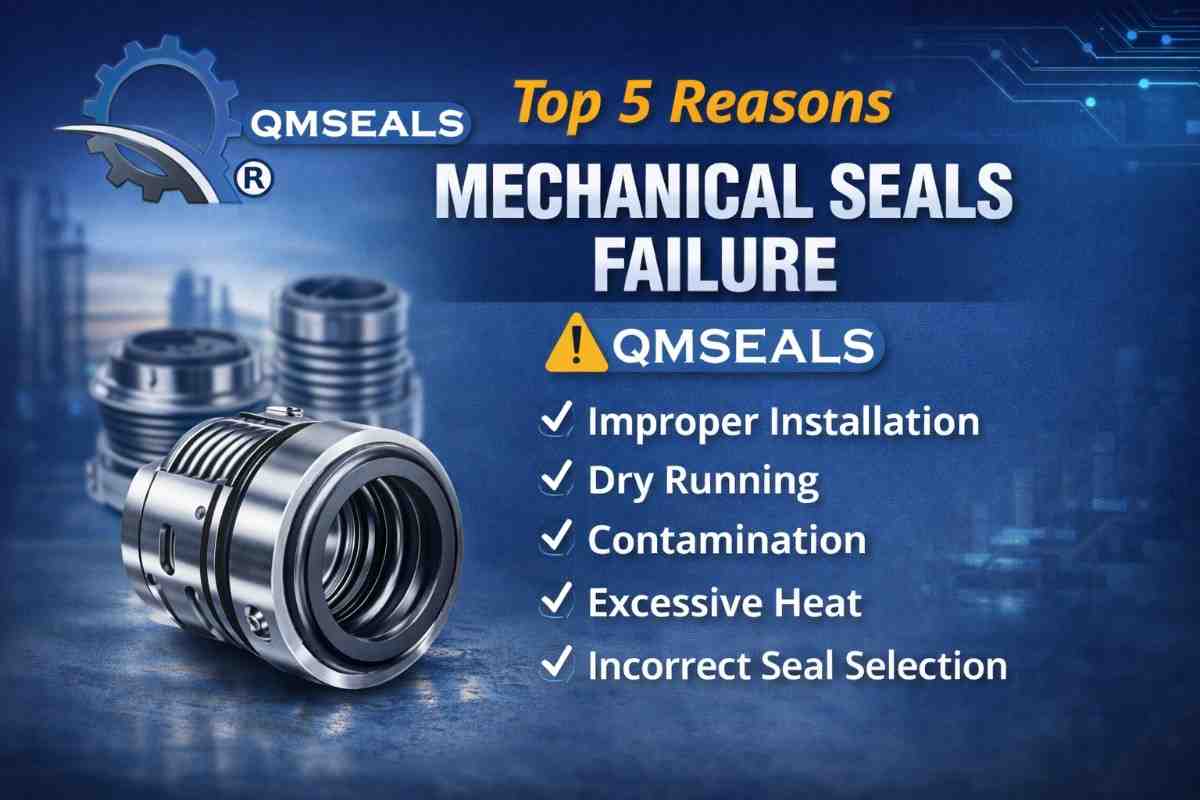
Top 5 Reasons for Mechanical Seal Failure and How to Cure Them
Mechanical seals play a critical role in industrial pumps by preventing leakage of fluids under pressure. They are widely used in industries such as oil & gas, chemical processing, pharmaceuticals, power plants, and water treatment systems.
Despite their reliability, mechanical seal failure remains one of the most common causes of pump breakdown and unplanned downtime. The good news is that most failures are preventable with proper understanding and corrective measures.
In this article, we will explore the 5 major reasons for mechanical seal failure, how to cure them, and how choosing the right manufacturer like QMSeals can make a long-term difference. If you want to know more about mechanical seals, https://www.qmseals.com/.
1. Dry Running
Reason for Failure:
Mechanical seals depend on a thin lubrication film of the pumped liquid between the seal faces. When a pump runs without sufficient fluid, the seal faces rub directly against each other, generating excessive heat and friction.
This results in:
Cracked carbon faces
Burnt elastomers
Warped seal rings
Immediate leakage
Even a few seconds of dry running can permanently damage a seal.
How to Cure:
Always ensure proper pump priming before startup
Install dry-run protection systems
Use flow sensors or pressure monitoring devices
Train operators to avoid running pumps without liquid
Selecting seals designed for higher thermal resistance also helps reduce damage during unexpected dry conditions.
2. Improper Installation
Reason for Failure:
Mechanical seals are precision-engineered components. Incorrect installation is one of the leading causes of early failure.
Common installation mistakes include:
Shaft misalignment
Over-tightening gland bolts
Damaging seal faces during handling
Installing without checking shaft runout
Not following manufacturer guidelines
Improper installation leads to uneven face contact, heat buildup, and leakage shortly after startup.
How to Cure:
Follow installation manuals strictly
Use proper alignment tools
Check shaft straightness and bearing condition
Ensure clean working conditions
Provide training for maintenance staff
Professional technical support from experienced seal manufacturers significantly reduces installation errors.
3. Shaft Misalignment and Excessive Vibration
Reason for Failure:
Mechanical seals are sensitive to shaft movement. Excessive vibration or misalignment disturbs the seal face contact and damages internal components.
Causes may include:
Worn-out bearings
Bent shaft
Improper coupling alignment
Loose foundation
Cavitation
How to Cure:
Perform regular vibration analysis
Replace damaged bearings immediately
Ensure correct coupling alignment
Maintain stable pump foundation
Avoid operating pumps outside recommended duty points
Maintaining mechanical stability directly increases seal lifespan.
4. Chemical Incompatibility
Reason for Failure:
Using incorrect materials for the application is a serious mistake. Mechanical seals consist of various materials like carbon, silicon carbide, elastomers (NBR, EPDM, Viton), and metal components.
If the pumped fluid is chemically aggressive and incompatible with these materials, rapid degradation occurs.
Effects include:
Swelling or cracking of elastomers
Corrosion of metal parts
Surface erosion
Premature leakage
How to Cure:
Analyze fluid properties before seal selection
Consider temperature and pressure conditions
Choose compatible elastomers
Consult technical experts before finalizing materials
Proper material selection ensures long-lasting performance even in harsh chemical environments.
5. Operating Beyond Design Limits
Reason for Failure:
Every mechanical seal is designed for specific operating limits of:
Pressure
Temperature
Speed
Fluid type
When pumps operate outside these limits, the seal faces experience excessive stress.
How to Cure:
Monitor operating parameters regularly
Avoid pressure surges
Use double mechanical seals for high-pressure systems
Select heavy-duty seals for abrasive fluids
Ensure correct seal chamber design
Matching the seal type to the exact application is critical for reliability.
QMSeals – Reliable Mechanical Seal Solutions
Preventing mechanical seal failure starts with choosing the right product and the right manufacturer.
QMSeals specializes in high-performance mechanical seals designed for industrial pumps across multiple sectors. With strong engineering support and quality-controlled manufacturing, QMSeals ensures:
Application-specific seal selection
High-quality materials for longer life
Reliable sealing under high pressure and temperature
Expert technical guidance
Cost-effective and durable solutions
By combining proper installation practices with premium-quality seals from QMSeals, industries can significantly reduce downtime and maintenance costs.
When seal reliability matters, partnering with an experienced manufacturer makes all the difference.
Conclusion
Mechanical seal failure is not random. In most cases, it occurs due to preventable issues such as dry running, improper installation, shaft misalignment, chemical incompatibility, or operating beyond design limits.
Understanding these five major causes and implementing corrective measures can dramatically improve pump performance and extend seal life.
Investing in quality mechanical seals and expert technical support from trusted manufacturers like QMSeals helps industries minimize leakage, reduce downtime, and achieve long-term operational efficiency.
If your goal is reliable pump performance and reduced maintenance costs, selecting the right mechanical seal is the first step toward success.
Related Posts