Ohio-Based Melmark Inc Introduces Blockchain Healthcare Services to Transform Patient Care Systems
-
- Published Updated
- 7,639 views
HEALTHCARE TECHNOLOGY SECTOR
The healthcare technology sector is witnessing another major innovation as Ohio-based healthcare organization Melmark Inc officially launches its new blockchain healthcare services initiative. The announcement is generating strong interest among healthcare professionals, technology experts, compliance specialists, and digital transformation leaders who are closely watching how blockchain technology continues reshaping the future of modern healthcare systems.
As healthcare organizations worldwide search for more secure, transparent, and efficient ways to manage sensitive patient information, the blockchain-based approach introduced by Melmark Inc is becoming a major point of discussion. According to CIO Bulletin, this development reflects the growing momentum behind decentralized healthcare technologies designed to improve data security, interoperability, operational efficiency, and patient trust.
The launch of blockchain healthcare services by Melmark Inc arrives at a time when the healthcare industry faces increasing pressure to modernize legacy systems while protecting massive volumes of sensitive patient data. Cybersecurity threats, fragmented medical records, compliance challenges, and administrative inefficiencies continue to create operational difficulties for hospitals, clinics, insurance providers, and healthcare institutions globally.
This is where blockchain technology is beginning to attract serious attention within healthcare environments. Unlike traditional centralized databases, blockchain systems use decentralized digital ledgers that securely record and verify transactions across multiple nodes. These systems are designed to improve data integrity, reduce unauthorized access risks, and create transparent audit trails that are extremely difficult to alter or manipulate.
According to insights highlighted by CIO Bulletin, Melmark Inc’s blockchain healthcare services initiative may represent a significant step toward smarter healthcare infrastructure management. Industry experts believe blockchain has the potential to transform how patient records are stored, accessed, shared, and protected across healthcare ecosystems.
One of the biggest challenges in modern healthcare involves interoperability between different healthcare systems and providers. Medical records are often spread across multiple hospitals, clinics, laboratories, pharmacies, and insurance systems, making it difficult for healthcare professionals to access accurate patient histories quickly and efficiently. Delays, duplicated records, inconsistent information, and fragmented systems can negatively impact patient outcomes and operational efficiency.
The blockchain healthcare services introduced by Melmark Inc could help address these concerns by enabling more secure and synchronized information sharing between healthcare stakeholders. With blockchain-based systems, authorized providers may gain faster access to accurate patient data while maintaining strict privacy protections and permission controls.
Healthcare cybersecurity has also become a major global concern over recent years. Hospitals and healthcare organizations have increasingly become targets for ransomware attacks, data breaches, and cybercrime due to the enormous value of healthcare information. Patient records contain highly sensitive personal, financial, and medical data, making healthcare databases particularly attractive to cybercriminals.
This growing threat environment is one reason blockchain technology is gaining traction within the healthcare sector. Because blockchain systems distribute information across decentralized networks rather than storing it in a single vulnerable database, they can potentially reduce the risks associated with centralized data breaches. The healthcare industry is now exploring whether blockchain infrastructure can provide stronger long-term protection for patient information and healthcare operations.
The initiative by Melmark Inc also reflects a broader shift toward digital healthcare transformation. Healthcare providers are increasingly adopting technologies such as artificial intelligence, cloud computing, remote patient monitoring, telemedicine, predictive analytics, and electronic health records to improve care delivery and operational efficiency. Blockchain now appears to be joining this expanding ecosystem of next-generation healthcare technologies.
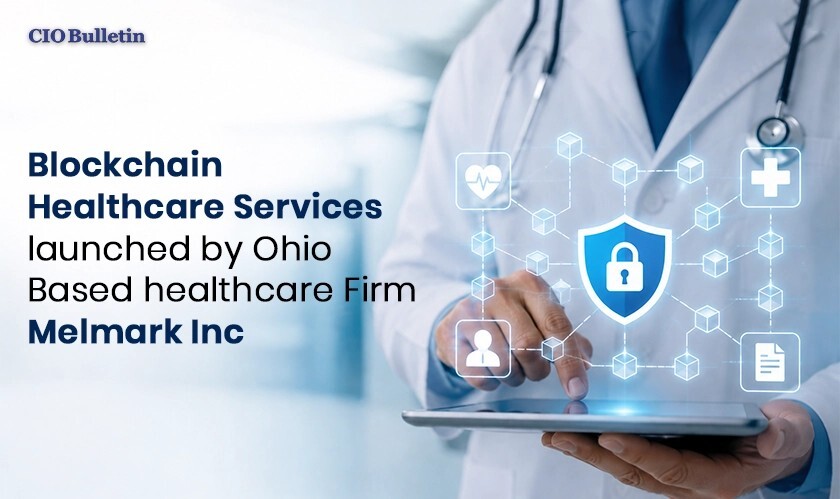
Blockchain Healthcare Service
Industry analysts believe blockchain healthcare services could have applications far beyond patient record management alone. The technology may also support healthcare billing verification, pharmaceutical supply chain transparency, insurance claims processing, clinical trial management, identity authentication, prescription tracking, and healthcare compliance monitoring.
For example, pharmaceutical supply chains have become increasingly complex and vulnerable to counterfeit medications, shipment delays, and tracking inefficiencies. Blockchain systems could potentially create transparent and tamper-resistant records that allow healthcare organizations and regulators to track medications from manufacturing to patient delivery more accurately.
Similarly, healthcare billing and insurance processing remain highly administrative and time-consuming areas within the industry. Blockchain-based smart contracts could potentially automate portions of these processes, reducing administrative overhead, improving transaction transparency, and minimizing fraud risks.
As reported by CIO Bulletin, the healthcare sector is becoming increasingly interested in technologies capable of balancing innovation with compliance. Healthcare organizations must follow strict regulatory standards related to patient privacy, security, and data management. Blockchain systems may provide stronger auditing capabilities and more reliable tracking mechanisms that support regulatory accountability and operational transparency.
The launch by Melmark Inc has also sparked conversations about patient empowerment and ownership of healthcare data. Traditional healthcare systems often leave patients with limited control over how their information is shared or accessed. Blockchain-enabled healthcare platforms may allow patients to manage permissions more directly, potentially giving individuals greater visibility and authority over their personal medical records.
This patient-centered approach aligns with broader healthcare industry trends emphasizing personalized care, digital accessibility, and improved patient engagement. As healthcare systems continue evolving, technologies that strengthen patient trust and transparency are becoming increasingly valuable.
Another reason this story is attracting attention is the rising investment interest surrounding blockchain healthcare innovation. Venture capital firms, healthcare startups, enterprise technology providers, and large healthcare organizations are investing billions of dollars into digital health infrastructure. Blockchain is now viewed by many as one of the technologies capable of supporting secure, scalable, and future-ready healthcare ecosystems.
However, experts also acknowledge that widespread blockchain adoption within healthcare still faces several challenges. Implementation costs, scalability concerns, regulatory uncertainty, technical integration complexity, and industry-wide standardization remain important considerations. Many healthcare organizations are still evaluating how blockchain systems can integrate with existing IT infrastructure while maintaining performance and compliance requirements.
Despite these challenges, momentum behind blockchain healthcare innovation continues growing steadily. The initiative introduced by Melmark Inc demonstrates how healthcare organizations are increasingly willing to explore advanced technologies capable of solving long-standing industry problems.
The broader significance of blockchain healthcare services extends beyond operational improvements alone. The technology represents part of a larger movement toward decentralized digital ecosystems where trust, transparency, and data integrity become central components of modern infrastructure. Healthcare is now emerging as one of the industries where blockchain may deliver some of its most meaningful real-world applications.
Technology leaders are particularly curious about how quickly blockchain healthcare platforms can scale and whether they can successfully improve efficiency without disrupting existing workflows. If implemented effectively, blockchain could potentially reduce administrative friction, strengthen cybersecurity, enhance patient trust, and create more connected healthcare systems.
According to CIO Bulletin, the launch by Melmark Inc highlights how healthcare innovation is increasingly being driven by the convergence of technology and patient-centric operational strategies. As organizations continue searching for smarter ways to manage healthcare delivery, blockchain infrastructure may become an increasingly important foundation for the future of digital medicine.
The healthcare industry is now entering an era where secure data exchange, real-time accessibility, compliance transparency, and operational intelligence are becoming essential priorities. Blockchain technology may provide one pathway toward achieving these goals while helping healthcare organizations adapt to rapidly changing digital demands.
The growing attention surrounding Melmark Inc’s blockchain healthcare services initiative reflects a larger reality — healthcare transformation is accelerating faster than ever before. Organizations that successfully combine advanced technology with patient-focused innovation could ultimately shape the future of global healthcare delivery.
The deeper implications of this launch are what continue generating strong curiosity across healthcare and technology sectors alike. Whether blockchain becomes a mainstream healthcare infrastructure standard or evolves alongside other emerging technologies, one thing is already becoming clear: the future of healthcare is becoming increasingly digital, connected, and decentralized.
Read the full published news here: https://ciobulletin.com/blockchain/melmark-inc-debuts-blockchain-healthcare-services-to-secure-patient-records
For more healthcare, technology, AI, and enterprise innovation updates, visit CIO Bulletin: https://ciobulletin.com/