Menopause and Sleep Problems: Causes of Insomnia and Effective Solutions
-

- Published Updated
- 5,136 views
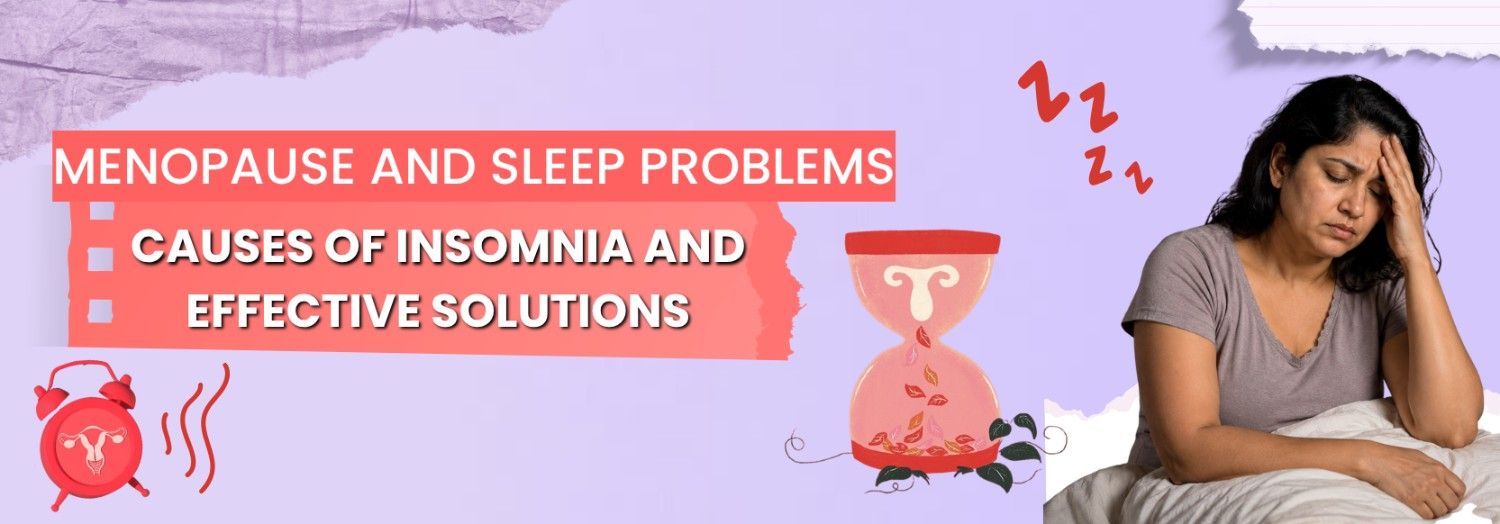
Menopause insomnia is one of the most common symptoms of menopause and one of the most frustrating parts of this life stage for every woman. Eight hours of sleep and waking up feeling like you ran a marathon! If this sounds familiar in your 40s, you’re not alone. In this blog, we will try to understand the causes, symptoms, and natural solutions for this annoying part of menopause.
Sleep, Menopause, and the Silent Connection
Sleep is not just “switching off.” Our brain moves through cycles, deep restorative stages, lighter stages and dreaming stages, all influenced by hormones working behind the scenes. Estrogen and progesterone are two of the biggest influencers of this rhythm, and menopause is essentially a slow withdrawal of both.
As ovarian hormone production starts to fall, the signals that once kept your sleep structure stable start to waver. Studies show that sleep problems during menopause affect roughly half of postmenopausal women globally, with insomnia symptoms affecting nearly 4 in 10 women during the transition.
- The Core Symptoms Behind Restless Nights
Multiple menopausal symptoms together try to steal your sleep:
Hot flushes and Night sweats: Sudden waves of heat that jolt you awake, often several times; sweating even when you’re in a cool room and waking up in the middle of the night.
Mood Swings: Rising anxiety and irritability that keep the mind awake, feeling low throughout the day for no apparent reason.
Restless legs syndrome: It’s a common but often under-discussed disruptor, showing up in a large number of postmenopausal women
Sleep apnea: Breathing pauses that become notably more frequent after menopause, partly due to hormonal effects on the airway.
Bladder changes: Needing to wake up to use the bathroom more often, as estrogen-related tissue changes take hold.
Together, these changes turn a normal night into an obstacle course.
- Night Sweats and the Cortisol Trap
Hot flushes are a full-body stress-related event. During a hot flush, the sympathetic nervous system, which is the “fight or flight response” is activated, releasing norepinephrine and disrupting the body’s calm state. This activation pushes the cortisol rhythm out of sync.
Cortisol is supposed to fall at night before you sleep and rise gently in the morning shortly before waking up. When night sweats constantly trigger this stress response, cortisol spikes at the wrong hours. This elevated night-time cortisol keeps you in a fragmented sleep stage, so even if you’re technically asleep, you’re not getting enough of the deep and restorative sleep that the body and mind need.
This is where the cycle turns vicious. Poor sleep itself raises stress hormone sensitivity the next day, which can intensify hot flashes the following night, which disrupts cortisol further, which worsens sleep again. It’s a loop that feeds itself, and it’s part of why so many women feel like their symptoms are “getting worse” the longer menopause insomnia goes untreated. This a lesser-known detail that fails to make it into normal conversations.
- When Symptoms Lead To Fatigue
When broken sleep, hormonal fluctuations, mood changes and a stress system on constant alert are all added up, the result is exhaustion that coffee cannot fix. Menopause fatigue is a physiological consequence of the body working overtime every single night.
This fatigue often affects daytime function too. Concentration falls, you are impatient and simple tasks feel challenging. Studies following women through the menopausal transition confirm that sleep disturbance and fatigue peak in the late transition phase, right when hormone fluctuations are at their most erratic.
- When Does This Actually Begin
Most women notice sleep changes during perimenopause, typically in the mid-to-late 40s, sometimes even earlier, long before periods stop entirely. Studies show sleep difficulty prevalence climbs steadily, with 33 to 46 percent experienced in the premenopausal years and gradually rising through perimenopause, and peaking at nearly 55 percent in postmenopause.
Interestingly, insomnia after 45 doesn’t always announce itself with hot flashes first. Sometimes it’s the sleep changes that show up before the classic vasomotor symptoms even begin. The transition itself is not just hormone withdrawal; it seems to disturb the whole body’s internal clock. This is why so many women are caught off guard, thinking sleepless nights are unrelated to menopause until the complete picture emerges months later.
- Finding Real Relief, the Gentle Way
Hormone replacement therapy remains one of the most effective clinical options for vasomotor symptoms and associated sleep disruption, but it isn’t the right fit for everyone, particularly women with certain cardiovascular or family history of cancer. This is exactly where menopause sleep remedies rooted in natural, plant-based support become worth exploring.
Phytoestrogens are naturally occurring plant compounds that loosely mimic estrogen’s action in the body and offer a softer approach. They don’t flood the system the way synthetic hormones can, but they can help ease the hormonal swings that trigger night sweats and the resulting cortisol spikes. This is the thinking behind WYN Menopause tablets, formulated with phytoestrogens to work alongside your body’s natural rhythm rather than overriding it, offering a more approachable starting point before considering stronger interventions.
Small, consistent habits matter too. Keeping the bedroom cool, limiting caffeine, and maintaining a steady sleep-wake schedule to support your body’s own effort for thermoregulation and hormonal support can make a huge difference.
Menopause insomnia is a signal that your body is going through one of its biggest transitions, and with the right understanding and support, sleep can find its way back to normal.