Is Interoperability Becoming the Next Major Trend in Metaverse Gaming in 2026?
-

- Published Updated
- 1,790 views
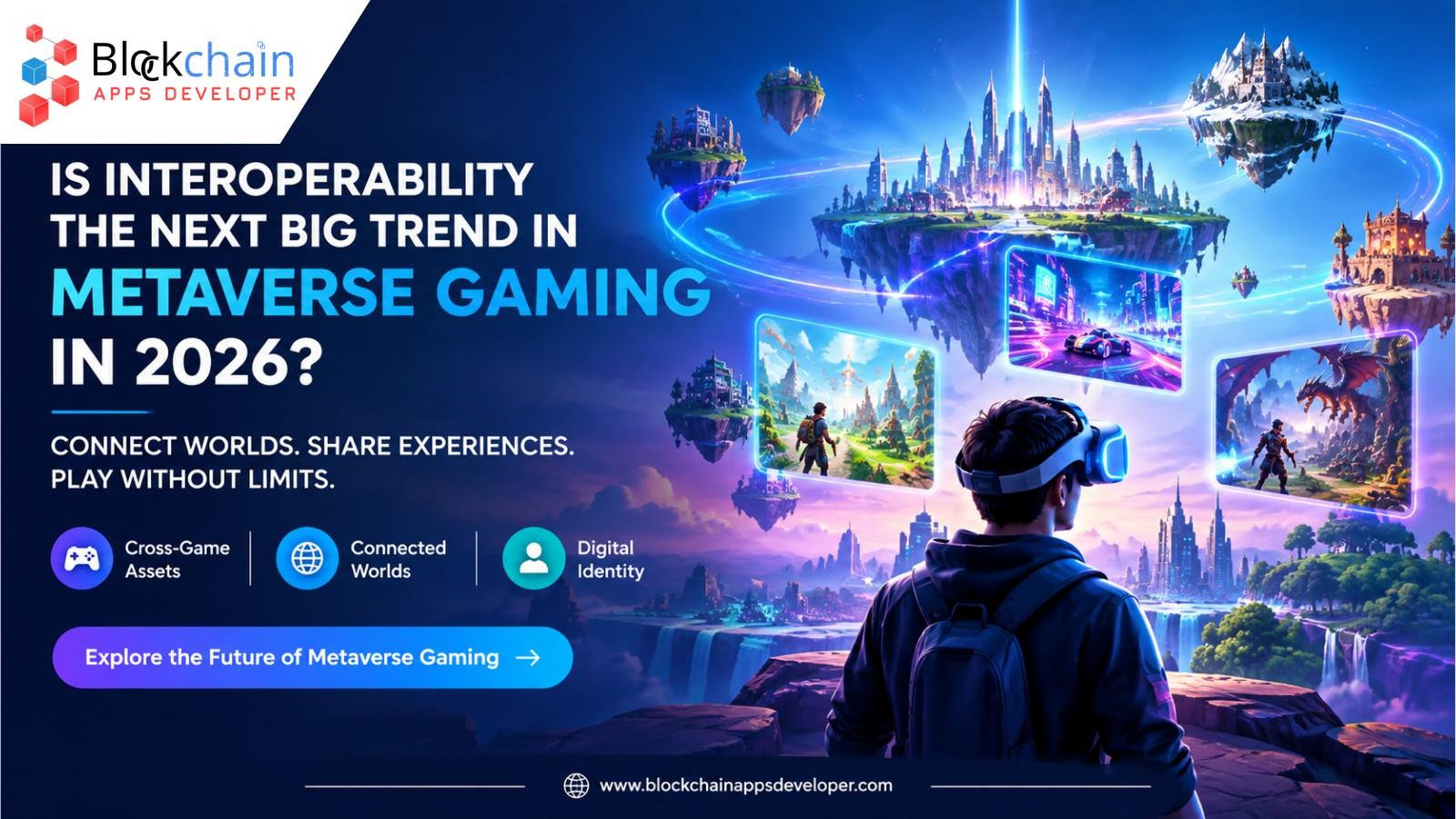
Metaverse gaming is gradually moving beyond the idea of creating a single virtual world. One of the important discussions in 2026 is how different virtual experiences, platforms, devices, digital identities, and assets can become more connected.
Interoperability is not a new concept. It has been discussed for years across gaming, blockchain, virtual worlds, and digital identity. What is changing is the increasing focus on how interoperability can be applied to metaverse gaming in practical ways.
For a Metaverse Game Development Company, this means thinking beyond graphics and gameplay. Developers may also need to consider compatibility, digital identity, asset portability, security, scalability, and how players interact across different environments.
1. Connected Gaming Worlds
Traditional games usually operate as independent ecosystems. Players create accounts, characters, inventories, and achievements within a particular game.
Interoperable metaverse environments could make different virtual experiences more connected. Instead of treating every virtual world as an isolated destination, users could potentially move between compatible experiences with fewer barriers.
This could make the metaverse feel more like a network of virtual spaces rather than a collection of unrelated games.
2. Portable Digital Identities
Digital identity is another important part of interoperability.
A player's avatar, profile, achievements, preferences, or reputation could potentially be used across multiple compatible environments. This could reduce the need to create a completely new identity whenever players enter another virtual experience.
However, identity portability also raises questions around authentication, privacy, security, and user control. These areas need to be carefully considered when designing connected gaming experiences.
3. Cross-Game Digital Assets
Digital assets are often created for use within a specific gaming environment. Interoperability could create opportunities for certain assets to have utility across multiple compatible experiences.
For example, a digital item could maintain its identity while serving different purposes in different environments.
This does not mean that every NFT or digital asset will automatically work across every game. Compatibility requires technical standards, platform support, suitable formats, licensing considerations, and proper implementation.
4. Cross-Platform Experiences
Players access games through PCs, smartphones, consoles, VR headsets, and other devices.
Cross-platform development can make virtual experiences available to a wider audience. Technologies such as WebXR are also contributing to discussions about browser-based immersive experiences and device accessibility.
The challenge is maintaining a consistent experience across hardware with different processing capabilities, screen sizes, input methods, and performance limitations.
5. Evolving Virtual Economies
Metaverse gaming can include virtual currencies, digital collectibles, marketplaces, and player-driven economies.
Greater connectivity between platforms could create new possibilities for digital economies. However, it also introduces additional challenges involving transaction security, asset valuation, fraud prevention, platform policies, and economic balance.
A successful virtual economy should support the overall gaming experience rather than make every interaction feel focused on transactions.
6. User-Generated Content
User-generated content is becoming an important part of modern gaming.
Players and creators can contribute maps, characters, items, environments, experiences, and other forms of content. If compatible standards become more common, creators could potentially distribute their work across multiple connected environments.
This could encourage a more participatory gaming model where users are not only consumers but also contributors to virtual worlds.
7. Social Gaming Experiences
Metaverse gaming is closely connected with social interaction.
Multiplayer games, virtual events, communities, social spaces, and live experiences can bring users together beyond traditional gameplay.
Interoperability could make these experiences more connected. Players could potentially participate in an event, interact with other users, and move between compatible environments without completely rebuilding their social presence.
This could make social interaction a more continuous part of the gaming experience.
8. New Possibilities for Developers
Interoperability can also influence how developers approach game architecture.
Instead of designing a game exclusively for one platform, development teams may need to consider:
Cross-platform compatibility
Scalable backend infrastructure
Digital identity
Asset standards
APIs and data exchange
Security and privacy
Multiplayer architecture
User experience
These considerations become particularly important for large virtual environments designed to support many users and connected experiences.
9. Technical and Business Challenges
Interoperability sounds simple in theory, but implementing it can be difficult.
Different platforms may use different technologies, file formats, identity systems, economic models, and security requirements. Companies may also have different business objectives and platform policies.
Common standards can help address some of these challenges, but technical compatibility alone is not enough. Successful interoperability also requires cooperation between developers, platforms, creators, technology providers, and users.
There are additional considerations around intellectual property, content moderation, privacy, asset ownership, and responsibility when digital identities or assets interact across different environments.
10. What Could the Future Look Like?
The long-term idea behind interoperability is not simply allowing users to transfer an item from one game to another.
The broader goal is to create connected digital experiences where identity, social interaction, content, and selected digital assets can work across compatible environments.
If these technologies mature, metaverse gaming could gradually move from isolated virtual worlds toward more connected ecosystems.
However, interoperability should not be treated as something every project must implement. It should solve a genuine user or business need. For some games, a controlled standalone ecosystem may provide better performance, security, and user experience.
The more important question for 2026 is therefore not “Can everything be connected?” but “What should be connected, and why?”
Final Thoughts
Interoperability could become an important part of the next stage of metaverse gaming, but its success will depend on practical implementation. Connecting virtual worlds is not simply about transferring assets or identities. It also involves security, privacy, performance, compatibility, usability, and common standards.
Companies working in this space, including BlockchainAppsDeveloper, are exploring metaverse gaming technologies such as 3D virtual environments, multiplayer experiences, blockchain, NFTs, avatars, and virtual economies. As the industry develops, these technologies can provide a foundation for creating more connected and interactive gaming experiences.
The future may not be one single universal virtual world. Instead, it could be a collection of different gaming environments that become increasingly connected through shared technologies, standards, identities, and digital ecosystems.
Ultimately, interoperability will be valuable when it makes gaming more convenient, engaging, accessible, and meaningful for playersnot simply because it is a popular technology trend.
Related Articles