Can You File Micro Entity Accounts Yourself? A Guide for UK Companies
-
- Published Updated
- 1,626 views
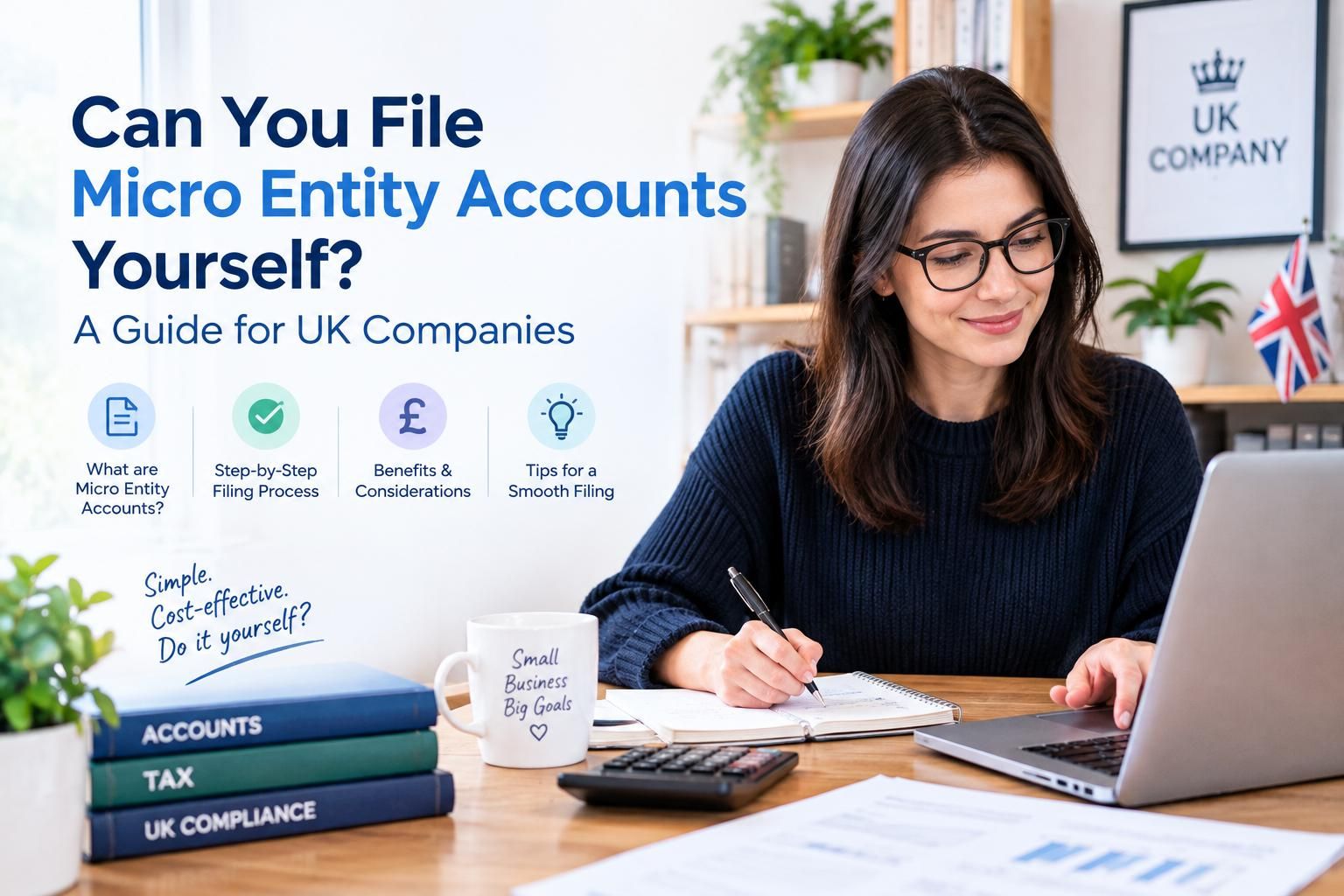
Running a small limited company in the UK involves several administrative responsibilities. One of the most important is preparing and filing annual accounts with Companies House. For eligible businesses, the micro-entity accounting regime can reduce the amount of financial information that needs to be prepared and reported.
This leads many company directors to ask: Can you file micro entity accounts yourself?
The answer is yes. An eligible company can generally prepare and file its own accounts without appointing an accountant. However, filing independently does not remove the company's legal responsibilities. The accounts still need to meet the applicable accounting requirements and reach Companies House by the correct deadline.
For businesses researching the process, Micro Entity Accounts provides information focused on the accounting and filing requirements that apply to small UK limited companies.
What are micro entity accounts?
Micro entity accounts are simplified annual accounts available to companies that meet the relevant size conditions.
For accounting periods beginning on or after 6 April 2025, a company generally qualifies as a micro-entity when it meets at least two of these three conditions:
- Annual turnover of no more than £1 million
- Balance sheet total of no more than £500,000
- Average number of employees of no more than 10
The company must satisfy the relevant eligibility requirements for the accounting period concerned.
Micro-entity accounts can contain less information than accounts prepared under some other reporting regimes. However, simplified reporting does not mean that accounting records can be ignored. Directors remain responsible for maintaining appropriate records and submitting accurate information.
Can a director prepare the accounts?
Yes. There is no general requirement for a limited company to appoint an accountant solely to prepare its annual accounts.
A director can maintain the company's accounting records, calculate the relevant figures and prepare the accounts for filing. The director is responsible for ensuring that the information submitted is complete and accurate.
Preparing accounts involves more than transferring figures from a bank statement. The underlying records should support the figures reported in the accounts. Bank transactions, sales, expenses, assets, liabilities, loans and other relevant transactions may need to be reviewed before the accounts are finalised.
Micro Entity Accounts covers these areas as part of its focus on accounting requirements for small UK companies.
What information is needed?
The information required depends on the company's circumstances and accounting period. A director preparing micro entity accounts will generally need organised financial records covering the relevant year.
These may include:
- Business bank statements
- Sales and income records
- Expense records and invoices
- Details of company assets
- Information about loans and liabilities
- Director's loan account records
- Payroll information where applicable
- Corporation Tax information
- Previous year's accounts
Keeping these records organised throughout the year can make the annual accounts process easier to review.
What are the main steps?
Filing micro entity accounts yourself generally involves several stages.
1. Check eligibility
First, confirm that the company qualifies for the micro-entity reporting regime for the relevant accounting period. Eligibility should be checked for each accounting period rather than assumed from a previous year's status.
2. Gather accounting records
Collect the financial information for the complete accounting period. Check that transactions have been recorded consistently and investigate unexplained differences.
3. Prepare the accounts
The company's financial information must be presented according to the applicable accounting requirements. Micro-entity accounts benefit from simplified reporting, but the figures still need to be accurate.
4. Review the figures
Review the balance sheet and other relevant information before submission. The figures should agree with the company's underlying accounting records.
5. File with Companies House
Submit the accounts to Companies House by the applicable deadline. A private company normally has nine months from the end of its financial year to file its accounts.
6. Deal with Corporation Tax separately
Companies House filing and Corporation Tax reporting are separate responsibilities. Filing annual accounts with Companies House does not automatically complete the company's Corporation Tax obligations.
What happens if accounts are filed late?
Companies House can impose penalties when company accounts are submitted late.
For a private company, the penalty depends on how late the accounts are filed. The amount can increase when the filing remains outstanding for longer.
Late filing can therefore create an unnecessary cost for a small company. Directors should know their accounting reference date and calculate the filing deadline in advance.
What about audit requirements?
Many qualifying small companies can claim audit exemption when they meet the relevant conditions. Micro-entities may therefore be able to prepare and file accounts without an audit.
However, audit exemption and micro-entity reporting are separate matters. A company should check the applicable conditions rather than assuming that its size automatically removes every audit requirement.
Companies House filing changes from 2028
Company directors should also be aware of forthcoming changes to accounts filing.
From 1 April 2028, companies will be required to file accounts using commercial software in iXBRL format. Companies House has announced that its existing web and paper-based accounts filing services will close from that date.
Micro-entities will also be required to deliver a copy of their profit and loss account to Companies House under the new arrangements. Smaller companies will have an option to opt out of having profit and loss information published on the public register, with further details expected before implementation.
These changes mean that directors who currently prepare and file accounts manually should consider how they will manage their accounts under the future filing system.
Is filing yourself the right option?
Preparing micro entity accounts yourself can be suitable for a straightforward company where the director understands the accounting requirements and keeps complete records.
However, additional complexity can make the process more difficult. Examples include director loans, asset purchases, dividends, payroll, multiple income sources, outstanding liabilities or transactions requiring accounting adjustments.
The important question is not simply whether a director can file the accounts. The director must also be able to prepare accurate accounts and meet the company's wider filing and tax responsibilities.
Final thoughts
Eligible UK companies can generally prepare and file their own micro entity accounts. The process can be manageable when financial records are complete, transactions are straightforward and the director understands the applicable requirements.
For directors researching the subject, microentityaccounts focuses on micro company accounts, Companies House filing, Corporation Tax and related accounting requirements for UK small companies.
Before filing, directors should check their company's eligibility, review the financial records, confirm the filing deadline and consider Corporation Tax obligations separately. With Companies House filing requirements scheduled to change from April 2028, maintaining accurate records and understanding the filing process will remain important for small companies.