Milking Machine Price Guide for Dairy Farms and Milk Processing
-

- September 16th, 2026
- 32 views
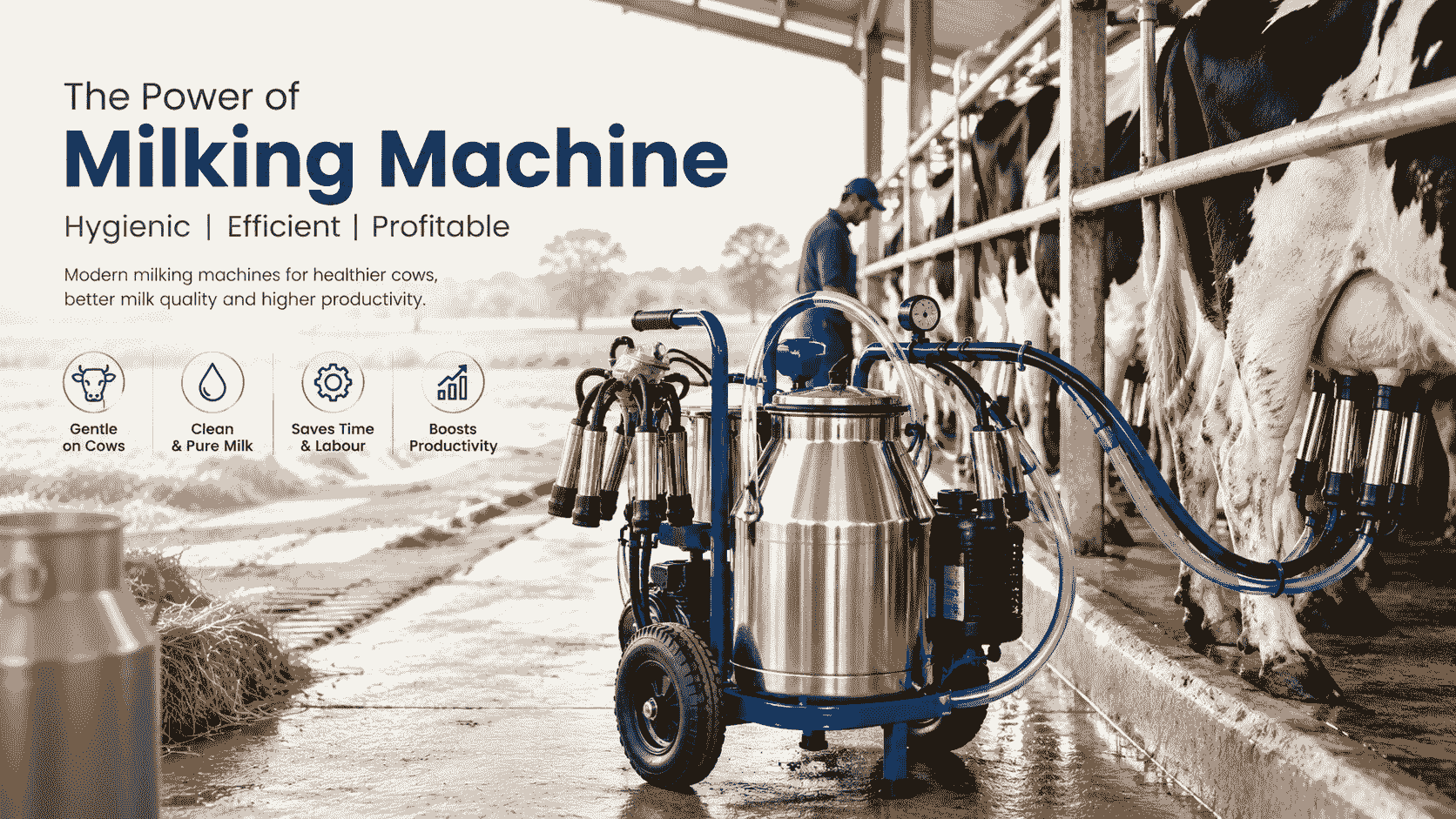
For dairy farmers, choosing the right equipment is an important part of managing daily milk production. A Milking Machine can help streamline milk collection and reduce the physical effort involved in manual milking. However, one of the first questions buyers usually ask is about the milking machine price.
The cost of a milking machine is not fixed. It can change according to the machine's design, capacity, number of milking units, vacuum pump, material, automation, and additional features. Current Indian market listings show a wide range of prices, from smaller manual or portable machines to larger commercial systems.
What Determines Milking Machine Price?
When comparing a milking machine price, it is important to look beyond the basic quotation. Two machines may look similar but have different components and operating capacities.
Some of the major factors affecting the price include:
- Machine capacity
- Number of buckets or milking clusters
- Vacuum pump performance
- Motor specifications
- Stainless-steel construction
- Pulsator type
- Level of automation
- Cleaning system
- Installation requirements
- Warranty and after-sales support
For example, a compact single-bucket machine intended for a small dairy operation will generally have a different cost from a pipeline or automated system designed for a larger herd.
Choosing a Milking Machine According to Farm Size
Before focusing only on the milking machine price, farmers should consider how many animals need to be milked each day.
A small dairy farm may require a portable or single-bucket setup. These machines are easier to move and can be suitable when the number of animals is limited. Medium-sized operations may consider double-bucket or higher-capacity equipment, while larger farms can require pipeline or automated systems.
Published 2026 market guides show indicative prices ranging from tens of thousands of rupees for smaller machines to several lakhs or more for larger commercial and automated systems. Actual quotations can differ depending on specifications and supplier.
More Than Just a Milking Machine
A productive dairy setup often needs several types of equipment. The milking machine handles milk collection, while other machines can support testing, cooling, separation, processing, and distribution.
Milk Testing Machine
A Milk Testing Machine can be used to examine important milk quality parameters. Dairy farms and collection centers can use testing equipment to monitor incoming milk before further processing.
Milk Analyzer
A Milk Analyzer provides detailed information about milk composition and can support quality monitoring. It can be useful for dairy businesses that regularly handle milk from different sources.
Bulk Milk Cooler
Fresh milk needs suitable temperature management after collection. A Bulk Milk Cooler is designed to cool and store milk before transportation or further processing. It can be an important addition for farms and milk collection centers handling larger quantities.
Cream Separator
A Cream Separator is used to separate cream from milk. Dairy businesses producing cream, butter, ghee, or other value-added products may include this machine in their processing setup.
Butter Churner
For producers who process cream into butter, a Butter Churner can simplify the churning stage. The appropriate machine capacity depends on the amount of cream being processed.
Paneer Making Machine
A Paneer Making Machine can be useful for dairy businesses that want to expand beyond liquid milk sales. It supports the production of paneer and can become part of a small or commercial dairy processing line.
Milk Vending Machine
A Milk Vending Machine provides a practical option for businesses selling fresh milk directly to customers. It can be used at dairy outlets, farms, and milk distribution points.
Milk Can
A Milk Can remains useful for collecting and transporting milk. Depending on the operation, cans can complement modern milking and cooling equipment.
Why Comparing Specifications Matters
Searching for milking machine price alone may produce many different quotations. However, price comparison becomes more useful when buyers compare machines with similar specifications.
Check the capacity, bucket size, vacuum system, motor, pulsator, teat cups, liner quality, construction material, and included accessories. Installation, transportation, spare parts, and maintenance may also affect the overall cost of ownership.
A lower initial price does not necessarily mean the same specifications or long-term operating requirements as a higher-priced machine. Comparing the complete equipment configuration can provide a clearer picture of what each quotation includes.
A lower initial price does not necessarily mean the same specifications or long-term operating requirements as a higher-priced machine. Comparing the complete equipment configuration can provide a clearer picture of what each quotation includes.
Other Dairy Equipment to Consider
A dairy business can gradually build its equipment setup according to production requirements. A typical workflow