7 Things to Check Before Choosing a Mobile Compactor Manufacturer in India
-

- Published Updated
- 7,160 views
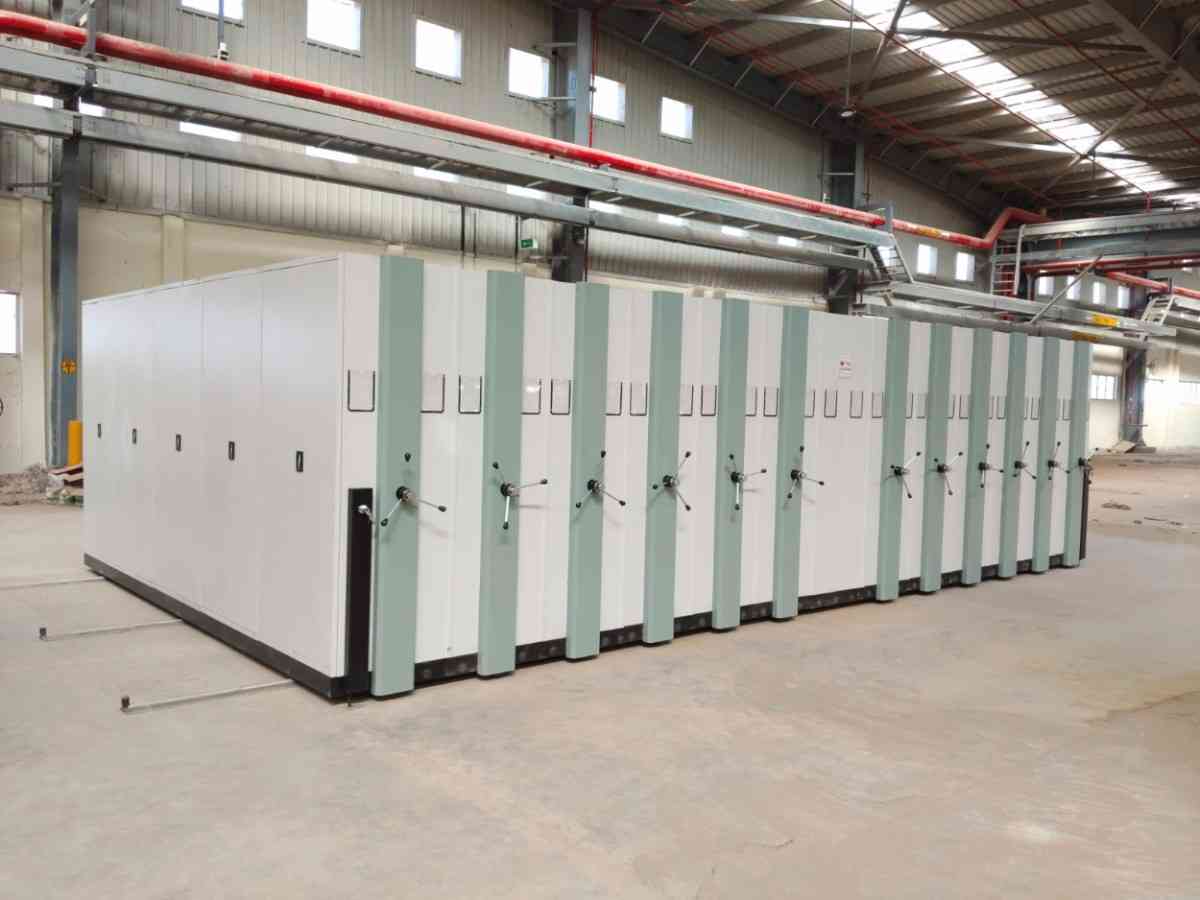
Storage space is one of the most underestimated challenges facing Indian businesses today. Whether you manage a bank branch document room, a hospital patient records department, or a government archive, the system you choose will impact your operations for the next 10 to 20 years. Choosing the wrong mobile compactor manufacturer is a costly mistake — and one that is surprisingly common in India's B2B market. Here are seven things every buyer must verify before signing a purchase order.
Whether you are setting up a new record room in a bank branch, expanding a hospital's patient file storage, or reorganising a government archive, one decision matters more than most people realise: which mobile compactor manufacturer you choose.
A mobile compactor system is not a commodity purchase. It is a long-term infrastructure investment that will sit in your facility for 10 to 20 years. Getting it wrong means wasted budget, poor space utilisation, and a system that breaks down when you need it most.
Having seen hundreds of installations across India — from corporate offices in Mumbai to government record rooms in Delhi — here are the seven things every buyer should check before signing a purchase order.
1. Is the manufacturer actually manufacturing?
This sounds obvious, but it matters enormously in India's storage industry. Many companies calling themselves "manufacturers" are actually traders or assemblers who source components from third parties and rebrand them.
A genuine manufacturer controls the full production process — steel cutting, fabrication, powder coating, rail assembly, and quality testing — all in-house. Ask to visit the factory. If they cannot show you a production facility, they are not manufacturing.
Why does this matter? Because a trader cannot customise dimensions, cannot guarantee material quality, and has no control over delivery timelines. For installations in tight spaces — hospital corridors, bank back offices, government record rooms — custom sizing is not optional, it is essential.
2. Do they have verifiable client references?
Before committing to any manufacturer, ask for a client reference list and verify it. Look specifically for:
- Clients in your sector (banking, healthcare, government, corporate)
- Installations of similar scale to yours
- Projects completed in your city or region
Any credible manufacturer should be able to provide 10 to 20 verifiable references. If they cannot, or if the references are vague, that tells you everything.
India's most respected institutions — ISRO, State Bank of India, Tata, L&T — are among the organisations that have trusted certain manufacturers with their storage infrastructure. That level of institutional trust is not earned without consistent quality and reliability.
3. What is their customisation capability?
Standard sizes rarely work. Bank branches have irregular floor plans. Hospital corridors have fixed ceiling heights. Government record rooms have non-standard door widths.
Before choosing a manufacturer, ask these questions:
- Can they manufacture to custom dimensions (width, height, depth)?
- Can they accommodate non-standard file sizes (A3, legal, foolscap)?
- Can they work around existing structural elements like pillars or drainage points?
- Can they provide single-sided and double-sided configurations?
A manufacturer without in-house customisation will struggle to meet these requirements. This is where the gap between a genuine manufacturer and a trader becomes painfully obvious.
4. What is the operation mechanism — and is it right for your use case?
Mobile compactors come in three primary operation types, each suited to different environments:
Manual push-pull: Best for light to medium usage — small offices, libraries, schools. No electricity required. Lowest cost.
Mechanical chain-driven: Best for medium to heavy usage — bank branches, corporate record rooms. Smooth operation using a handle-driven chain mechanism. No electricity required.
Motorised / electrical: Best for heavy usage with large systems — hospitals, government archives, warehouses. Push-button operation. Requires stable power supply.
Choosing the wrong mechanism is a common and costly mistake. A bank that installs a manual push-pull system in a high-traffic document room will find staff struggling to operate it within months.
5. Check the warranty terms and after-sales service
A mobile compactor system has moving parts — rails, wheels, chains, and bearings. These require periodic maintenance. Before purchasing, ask:
- What is the warranty period (standard is 1 year; some manufacturers offer 2)?
- Is there an Annual Maintenance Contract (AMC) option?
- Do they have service engineers in your city?
- What is their average response time for a breakdown call?
A manufacturer who cannot answer these questions confidently is not a manufacturer you want to trust with a 15-year installation.
6. Is the price transparent — and does it include installation?
In India's B2B market, price opacity is common. Many manufacturers quote a low per-unit price and add charges for installation, transit, foundation work, and commissioning separately — often pushing the final cost 30 to 40 percent above the quoted price.
Ask for a fully itemised quote that includes:
- Manufacturing and materials
- Freight from factory to site
- On-site installation by trained technicians
- Foundation / floor preparation if required
- Commissioning and handover
- Warranty documentation
A manufacturer who provides a clear, all-inclusive quote with no hidden charges is demonstrating the kind of transparency that will matter throughout the relationship.
7. Do they understand your compliance requirements?
Depending on your sector, your storage system may need to comply with specific regulatory guidelines:
- Banking: RBI guidelines on physical record retention periods (10 years for most transaction records)
- Healthcare: NABH and MCI guidelines on patient file retention and accessibility
- Government: Central Secretariat Manual of Office Procedure (CSSMOP) for record room management
- Defence: DRDO and Ministry of Defence specifications for classified document storage
A manufacturer who understands your sector's compliance requirements can design a system that meets them from the start — saving you costly modifications later.
Making the Right Decision
Choosing a mobile compactor manufacturer in India is a long-term decision. The system you install today will serve your organisation for the next decade or more. The seven checks above will help you separate credible, capable manufacturers from traders and assemblers who cannot deliver what they promise.
If you are evaluating options, it is worth spending time with a manufacturer who can show you their factory, walk you through their client reference list, and provide a clear, compliance-aware proposal — rather than simply presenting the lowest price.
For organisations across banking, healthcare, government, and defence, Myriad Storage System is a Mumbai-based mobile compactor manufacturer in India with 500+ installations and clients including ISRO, State Bank of India, Tata, and L&T. They offer free site assessments and custom quotations across India.