Naoris Protocol’s Blueprint for Quantum-Resilient Financial and Digital Systems
-

- May 01st, 2026
- 7,410 views
Decentralized Security Architecture and Technology
Rather than reinforcing legacy approaches, Naoris Protocol pursued a model that continuously measures and verifies trust across networks. Early research explored how blockchain and artificial intelligence could support a system capable of simultaneously validating device behavior, transaction integrity, and operational health. This work resulted in the creation of decentralized proof of security, known as dPoSec, a consensus mechanism that evaluates the condition of digital environments in real time.
Through this model, validation extends beyond confirming transactions to assessing whether systems themselves remain secure. The mechanism incorporates principles from practical Byzantine fault tolerance and proof of stake while recording validation outcomes onchain. Verge Clusters allow large volumes of activity to be processed efficiently, ensuring that performance can scale without sacrificing oversight. This architecture enables enterprises, financial platforms, and decentralized ecosystems to maintain constant awareness of system integrity.
Security within the protocol is further strengthened by a decentralized trust mesh that distributes responsibility across participating devices. Instead of relying on a single authority, devices act as validators of one another, forming a shared network of accountability. This collective structure removes single points of failure and allows threats to be identified through collaboration among systems rather than through isolated monitoring tools.
Advancing this collaborative approach, Naoris Protocol integrated Swarm AI as a distributed intelligence layer capable of learning from patterns observed across the entire network. Swarm AI analyzes activity and shared conditions to detect anomalies and coordinate responses through collective awareness. Because intelligence is distributed, the system can adapt dynamically while avoiding the delays associated with centralized decision making.
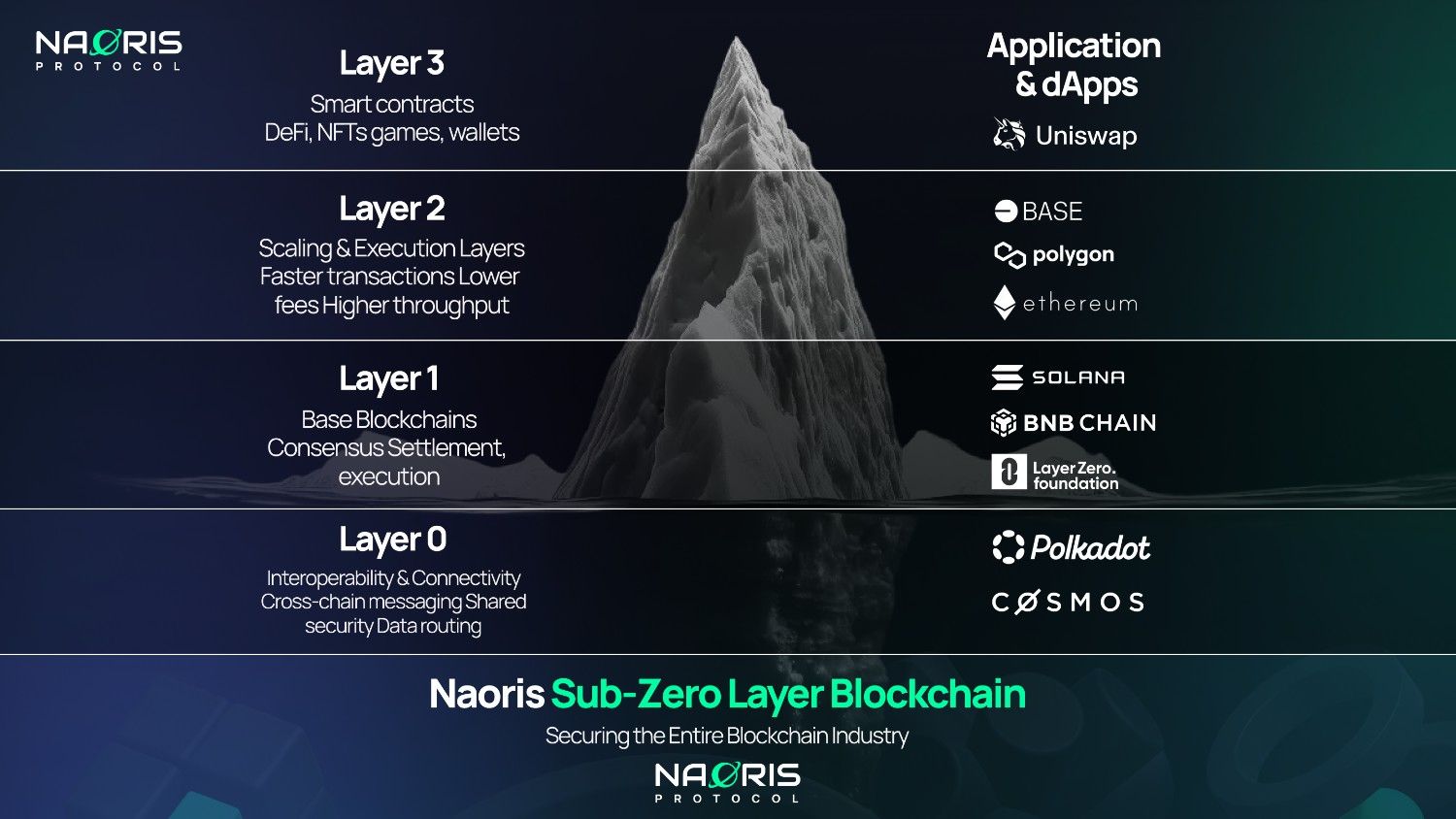
A key technological component supporting this adaptive environment is the Sub-Zero Layer, an EVM-compatible blockchain designed to deliver quantum-safe protection to transactions and infrastructure. The Sub-Zero Layer allows organizations to strengthen their security posture without restructuring existing networks or blockchain deployments. Its cryptographic framework aligns with standards developed by NIST, NATO, and ETSI, including the use of Dilithium five for signature protection against future quantum attacks.
Operational validation of the protocol’s architecture was demonstrated during the launch of its decentralized physical infrastructure testnet in early 2025. During its initial period, the network validated more than 106,178,587 post-quantum transactions, supported the creation of 3,353,759 Naoris wallets, and activated approximately 1,065,218 distributed security nodes. The network also mitigated around 603,040,584 threats in real time, demonstrating the scalability of decentralized cybersecurity infrastructure operating under live network conditions.
The protocol gained attention from regulatory and institutional stakeholders evaluating long-term digital resilience. During 2025, its model was cited in a research submission to the United States Securities and Exchange Commission as a reference design for quantum-resistant blockchain infrastructure.
Leadership, Adoption, and Future Outlook
Beyond its technical foundation, Naoris Protocol has introduced products and services that translate its decentralized trust model into operational environments. These include a Sub Zero Layer blockchain for continuous validation, a distributed browser security extension that blocks malicious activity using collective defense, and secure communication tools developed for regulated sectors and government applications. The protocol’s infrastructure is designed to support secure enterprise collaboration, financial system protection, and government-grade communications within both Web2 and Web3 environments. Each offering extends the trust mesh into daily operations where verification and resilience are essential.
Leadership continues to guide this evolution through a focus on research-driven innovation and global collaboration. David Carvalho serves as founder, chief executive officer, and chief scientist, shaping the protocol’s technical direction while leveraging extensive experience in ethical hacking, C-level leadership, and critical infrastructure security. Chief Business Officer Youssef El Maddarsi directs strategic development and international engagement. He is CEO of Naoris Consulting and was recognized by EMEA Entrepreneur as the most influential entrepreneur from Morocco in 2025. With more than ten years of experience in strategic development, El Maddarsi has graduated from Regent’s University and completed executive programs at Wharton, INSEAD, and Duke, with additional certifications from Yale and École Polytechnique. His expertise guides the adoption of Naoris Protocol across enterprise, institutional, and cross border applications.
The broader significance of Naoris Protocol lies in its effort to redefine how trust is engineered across digital infrastructure. As financial systems and connected technologies expand, resilience must be designed to scale alongside them. By combining decentralized validation, collective intelligence, and quantum aware cryptography, Naoris Protocol offers a blueprint for protecting the integrity of digital and financial ecosystems in an era defined by rapid technological transformation.