Essential Best Practices for Paper Shredding Policies and Procedures
-

- February 23rd, 2026
- 1,169 views

👉 Best IPTV Services 2026 – 10,000+ Channels, 4K Quality – Start Free Trial Now
Organizations should adopt clear paper shredding policies to reduce the risk of data breaches, meet regulatory requirements, and protect personal and sensitive information. A well-defined policy clarifies who is responsible for secure document disposal, which materials require destruction, and which methods meet legal and operational standards.
- Paper shredding policies provide consistent rules for identifying, storing, and destroying sensitive paper records.
- Key elements include retention schedules, chain-of-custody, approved destruction methods, and vendor controls.
- Compliance with standards and regulators—such as NIST guidance, GDPR, and HIPAA—improves legal defensibility and reduces breach risk.
Paper Shredding Policies: purpose and core elements
Purpose-built paper shredding policies define the scope of protected materials (for example, personally identifiable information or financial records), designate roles and responsibilities, and set required destruction timelines. Core elements usually include document classification, retention schedules, approved shredding methods, chain-of-custody procedures, employee training, and documentation of destruction such as certificates of destruction.
Why formal policies and procedures matter
Formal policies reduce ambiguity, ensure consistent treatment of records across departments, and create an auditable trail to show reasonable care in protecting sensitive information. They help organizations meet legal and regulatory obligations—examples include data protection rules under the EU General Data Protection Regulation (GDPR) and U.S. health information rules such as HIPAA—as well as industry standards and guidance like NIST publications on media sanitization.
Risk reduction and data protection
Consistent document destruction lowers the chance of accidental exposure of personal data, trade secrets, or confidential business records. Procedures that require secure storage until destruction, supervised transport, and verified destruction reduce the attack surface for both internal and external threats.
Compliance and auditability
Policies that map retention requirements to applicable laws and maintain destruction records assist during audits or investigations. A documented chain of custody and certificates of destruction support compliance efforts and demonstrate due diligence.
Designing effective procedures
Classify records and set retention schedules
Begin by inventorying record types and assigning classifications (e.g., public, internal, confidential, restricted). Tie each classification to a retention period and a required disposal method. Legal counsel or records managers typically help define retention periods based on statutes of limitation, tax rules, and sector-specific regulations.
Select appropriate destruction methods
Shredding remains the most common physical destruction method for paper. Cross-cut and micro-cut shredders provide smaller particle sizes and greater security than strip-cut shredders. For very sensitive items, consider complementary controls such as pulping or incineration. Procedures should specify acceptable methods and particle-size standards where relevant.
Chain of custody and transport security
Procedures should describe how documents are collected, logged, stored, and transported for destruction. Use locked containers or consoles, assign custody to trained personnel, and require documented handoffs. For offsite destruction, require secure transport, sealed containers, and a documented chain of custody that covers both pickup and final destruction.
Vendor selection and management
Outsourced shredding vendors should be screened for security practices, insurance, compliance history, and certifications. Contracts should require background-checked staff, secure handling and transport, a certificate of destruction, and rights to audit. Periodic vendor reviews and proof of insurance and compliance reduce third-party risk.
Training, enforcement, and incident response
Employees should receive regular training on classification, handling, and disposal procedures. Enforcement mechanisms and disciplinary policies help ensure adherence. Procedures should also link to the organization’s incident response plan so potential exposures trigger appropriate notifications and mitigation steps.
Documentation and verification
Maintain logs of destruction activities, including dates, volumes or weights of material destroyed, responsible personnel, and certificates of destruction from vendors. Periodic audits or spot checks help verify that procedures are being followed and that physical controls remain effective.
For guidance on secure media sanitization and destruction methods, consult relevant standards such as the National Institute of Standards and Technology publications: NIST Special Publication 800-88 Revision 1.
Common challenges and mitigation strategies
Balancing access and security
Keeping documents both accessible for business needs and secure until destruction requires clear classification and storage rules. Use tiered access controls and minimize the number of people with access to highly sensitive documents.
Managing mixed-format records
Records often exist in both paper and electronic formats. Policies should address both media types, ensuring that digital copies are deleted or sanitized in line with paper destruction and that backup copies are accounted for.
Costs and operational impact
Shredding programs incur direct costs and operational overhead. Risk-based classification helps prioritize resources so the highest-risk records receive the strongest controls while lower-risk materials follow streamlined processes.
Keeping policies current
Regulatory requirements and technologies evolve. Establish a review cadence—typically annually—to update retention schedules, destruction methods, vendor contracts, and training programs.
Implementation checklist
- Create a records inventory and classify by sensitivity.
- Map retention periods to legal and business needs.
- Define approved destruction methods and particle-size targets.
- Establish chain-of-custody and secure transport procedures.
- Contract and vet vendors, requiring certificates of destruction.
- Train staff and audit compliance regularly.
What are paper shredding policies and why are they important?
Paper shredding policies are organizational rules that specify how paper records containing sensitive information are identified, stored, and destroyed. They are important because they reduce the risk of information exposure, help meet legal obligations, and provide documentation for audits.
How often should paper shredding policies be reviewed?
Policies should be reviewed at least annually and whenever significant legal, operational, or technological changes occur that affect record-keeping or destruction practices.
Can shredded paper still be reconstructed?
Reconstruction risk depends on shred type. Strip-cut shredders produce long strips that can be more easily reassembled; cross-cut and micro-cut shredders produce much smaller particles, reducing reconstruction risk. For highly sensitive material, consider pulping or incineration in addition to shredding.
Should shredding be done onsite or offsite?
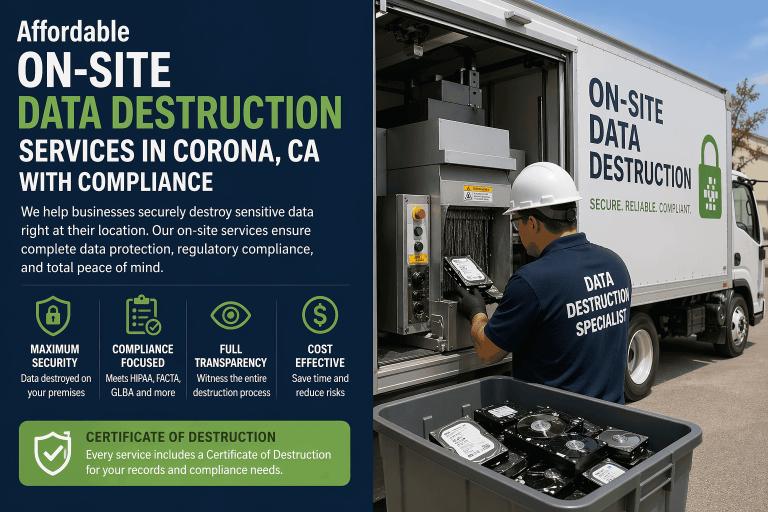
Onsite shredding provides more control and immediate destruction; offsite shredding can be cost-effective for large volumes. Either approach is acceptable if chain-of-custody, secure transport, vetted vendors, and certificates of destruction are in place.
Who regulates document destruction and what standards apply?
Applicable regulators and standards vary by sector and jurisdiction. Examples include GDPR for personal data in the EU, HIPAA for health information in the U.S., and technical guidance such as NIST Special Publication 800-88. Consult legal and compliance advisors to determine specific obligations.