Peptide Stability Testing: Shelf Life, Degradation Pathways, and Storage Protocols for Labs
-
- Published Updated
- 6,229 views
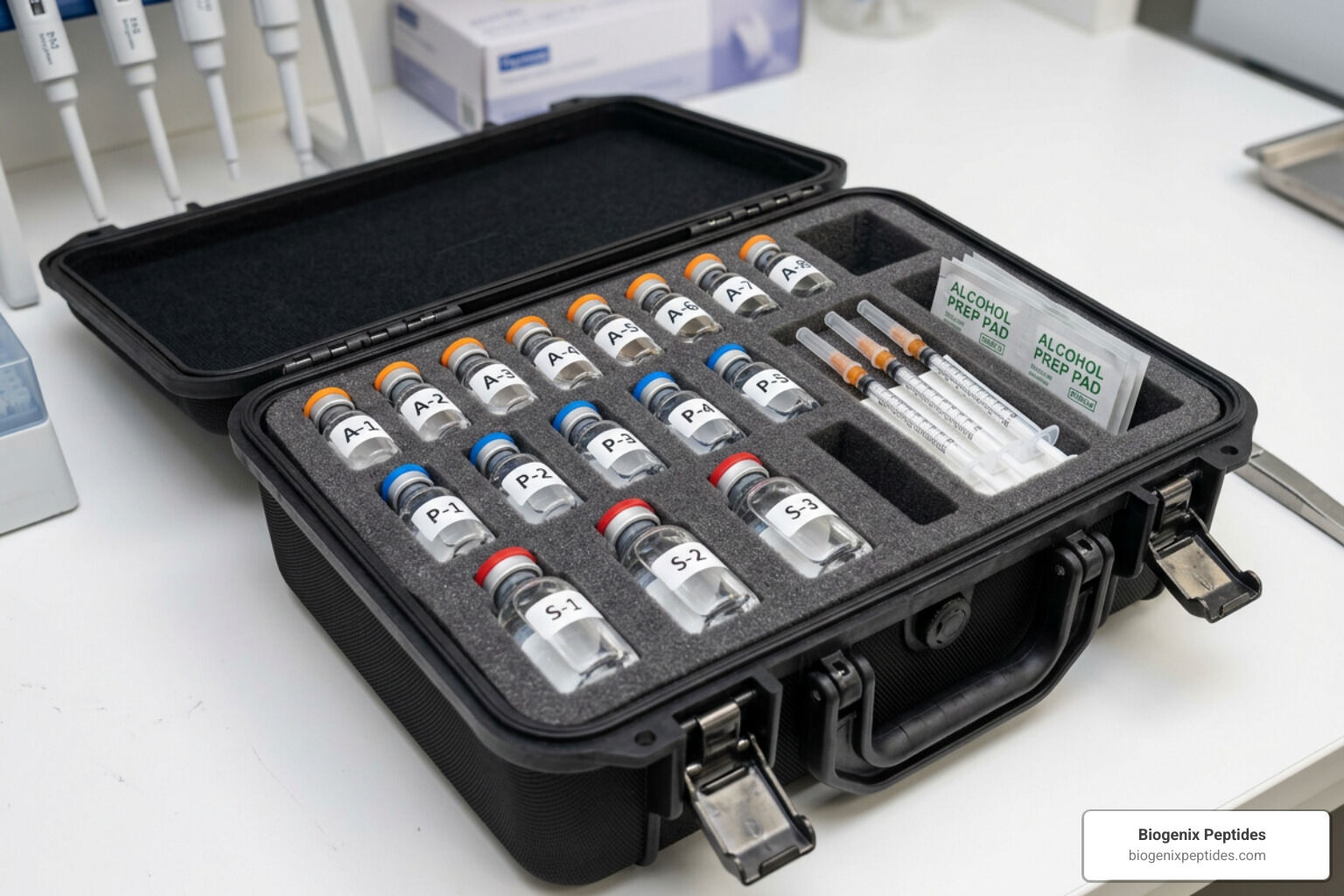
Walk into any peptide stability research lab right now and you will find the same problem on every bench: a freezer full of vials and no clean answer for how long any of them are actually good for. Peptides do not come with a simple expiration date the way packaged food does. Their shelf life depends on sequence, formulation, storage conditions, and a handful of chemical reactions that quietly chip away at the molecule long before anyone notices a visible change.
This guide breaks down how a serious peptide stability research lab actually tests shelf life, which degradation pathways show up most often, and what storage protocols hold up under real lab conditions instead of just looking good on a label. Whether you are running your own stability studies or trying to figure out the best place to buy peptides online for a project, understanding this part of the process will save you from wasted reagents and bad data.
Why Peptides Break Down Faster Than Most People Expect
Proteins and peptides are fragile in ways small molecule drugs are not. A peptide chain can be attacked from multiple directions at once, and the reactions do not need extreme conditions to happen. Room temperature, ordinary light, and even trace moisture are enough to start the clock.
Part of the issue comes down to structure. Many peptides rely on a specific shape to stay functional, and that shape is held together by weaker forces than people assume. Researchers studying short peptide chains have found that some lose their stable folded shape in solution simply due to entropy, the natural tendency of a flexible chain to drift away from an ordered structure over time. Once that happens, the peptide can still technically be intact while behaving nothing like it did on day one.
The Main Degradation Pathways a Stability Lab Has to Watch For
Most peptide degradation falls into a short list of repeatable patterns. Knowing which one is most likely for a given sequence helps a lab design a smarter testing protocol instead of guessing.
Hydrolysis is the most common pathway, and it is exactly what it sounds like, water molecules breaking peptide bonds along the chain. This is one reason lyophilized powder form survives so much longer than reconstituted liquid. Remove the water, and you remove most of the opportunity for hydrolysis to happen.
Oxidation targets specific amino acids, particularly methionine, cysteine, and histidine side chains. Exposure to air, light, or trace metal ions can accelerate this reaction, which is why amber vials and sealed packaging are not just cosmetic choices.
Proteolytic degradation is a bigger concern in biological environments than in a sealed vial, but it matters during in vitro work. Peptides exposed to enzymes that cleave protein chains can break down quickly once introduced into a cell culture or biological sample, which is part of why some engineered peptides are deliberately built to resist this kind of breakdown.
Aggregation happens when peptide molecules start clumping together instead of staying as separate units in solution. This is more common in peptides with a tendency to form ordered secondary structures, and it can show up as visible cloudiness in a vial long before lab testing confirms a chemical problem.
How Real Stability Studies Are Structured
A credible peptide stability research lab does not rely on a single test. Stability testing in the pharmaceutical world follows a structured approach, observing a substance under specific environmental conditions over a defined period of time, tracking how light exposure, humidity, and temperature affect the product. The same logic applies whether the lab is working with an approved pharmaceutical or a research grade peptide.
In practice, that means running parallel samples under different conditions on purpose. One set stays at recommended storage temperature as a control. Others get pushed to accelerated conditions, higher heat, more light exposure, or higher humidity, to force degradation to happen faster than it would naturally. The idea is simple: if a peptide can survive harsh accelerated conditions for a set number of weeks without significant breakdown, it gives researchers a reasonable basis to predict how it will behave in normal storage over a longer period.
Mass spectrometry and HPLC are the two workhorses for actually measuring what happened. HPLC separates the peptide from any breakdown products and shows what percentage of the original compound is still intact. Mass spectrometry confirms the molecular weight, catching that something has shifted, which is often the first sign of oxidation or a partial breakdown of the chain.
Synthetic Peptides Versus Naturally Occurring Ones in Stability Testing
Most peptides used in modern research are synthetic peptides built through stepwise chemical assembly rather than extracted from a natural source. This matters for stability testing because synthetic production allows for deliberate structural choices that natural peptides do not have.
Some labs work specifically with synthetic homologous histidine peptides, sequences engineered with repeated histidine residues to study how that specific amino acid behaves under oxidative stress or metal binding conditions. Histidine is particularly useful in this kind of research because it is one of the more reactive side chains, which makes it a good marker for tracking oxidative degradation in a controlled study. Comparing how these engineered sequences hold up against more standard peptide chains gives researchers a clearer picture of which structural features actually extend shelf life versus which ones just look stable on paper.
Storage Protocols That Actually Hold Up
The protocols that work in practice are usually less complicated than people expect, but they have to be followed consistently.
Lyophilized powder should be stored sealed, away from light, and at the temperature specified for that compound, typically a standard freezer range rather than refrigeration. Reconstituted peptide in liquid form should move to refrigeration immediately and be treated as having a much shorter working window, often measured in weeks rather than months.
Repeated freeze and thaw cycles are one of the most common ways labs accidentally damage their own samples. Every cycle stresses the peptide structure, so the better practice is drawing out only what is needed for that day's work and returning the rest to proper storage immediately.
Documentation matters just as much as the physical storage conditions. A peptide stability research lab that does not log reconstitution dates, diluent volumes, and storage temperature changes has no real way to explain inconsistent results later. The paper trail is what turns a stability protocol into something other than guesswork.
Choosing Where to Source Peptides for Stability Work
Stability data is only meaningful if the starting material was reliable to begin with. The best place to buy peptides online for serious research is not necessarily the cheapest option. Look for suppliers that provide a batch specific certificate of analysis with HPLC and mass spectrometry results, not a generic document reused across listings. A supplier with consistent manufacturing practices, ideally with documented quality certifications, gives a stability study a fighting chance at producing clean, reproducible data instead of results muddied by inconsistent starting material.
FAQs
What is the biggest cause of peptide degradation in storage? Hydrolysis and oxidation are the two most common pathways. Hydrolysis happens when water breaks peptide bonds, which is why lyophilized powder lasts longer than reconstituted liquid. Oxidation targets specific amino acids and is accelerated by light and air exposure.
How long does reconstituted peptide stay stable? Most reconstituted peptides are treated as stable for a few weeks under refrigeration, with stability dropping sharply if exposed to repeated freeze and thaw cycles or room temperature storage.
Why do some labs use synthetic homologous histidine peptides in stability research? Histidine side chains are particularly reactive to oxidative stress, which makes these engineered sequences useful markers for studying degradation patterns under controlled conditions.
What tests confirm whether a peptide has degraded? HPLC measures how much of the original peptide remains intact compared to breakdown products, while mass spectrometry confirms molecular weight and flags structural changes.
How do I know I am buying from the best place to buy peptides online? Check for a batch specific certificate of analysis, third party testing results, and clear documentation of manufacturing practices. A reliable supplier makes that information easy to find, not something you have to request repeatedly.
Final Thoughts
Shelf life is not a guess in a serious peptide stability research lab, it is a measured outcome built from accelerated testing, consistent documentation, and an understanding of exactly which degradation pathway is most likely to affect a given sequence. Whether the work involves synthetic peptides built from scratch or synthetic homologous histidine peptides designed to study oxidative stress, the same principle holds. Good storage protocols only work when they are paired with good source material, which is why sourcing decisions and stability testing should never be treated as separate problems.