PET vs HDPE Plastic Bottles: Which Material Is Right for Your Product?
-

- Published Updated
- 1,266 views
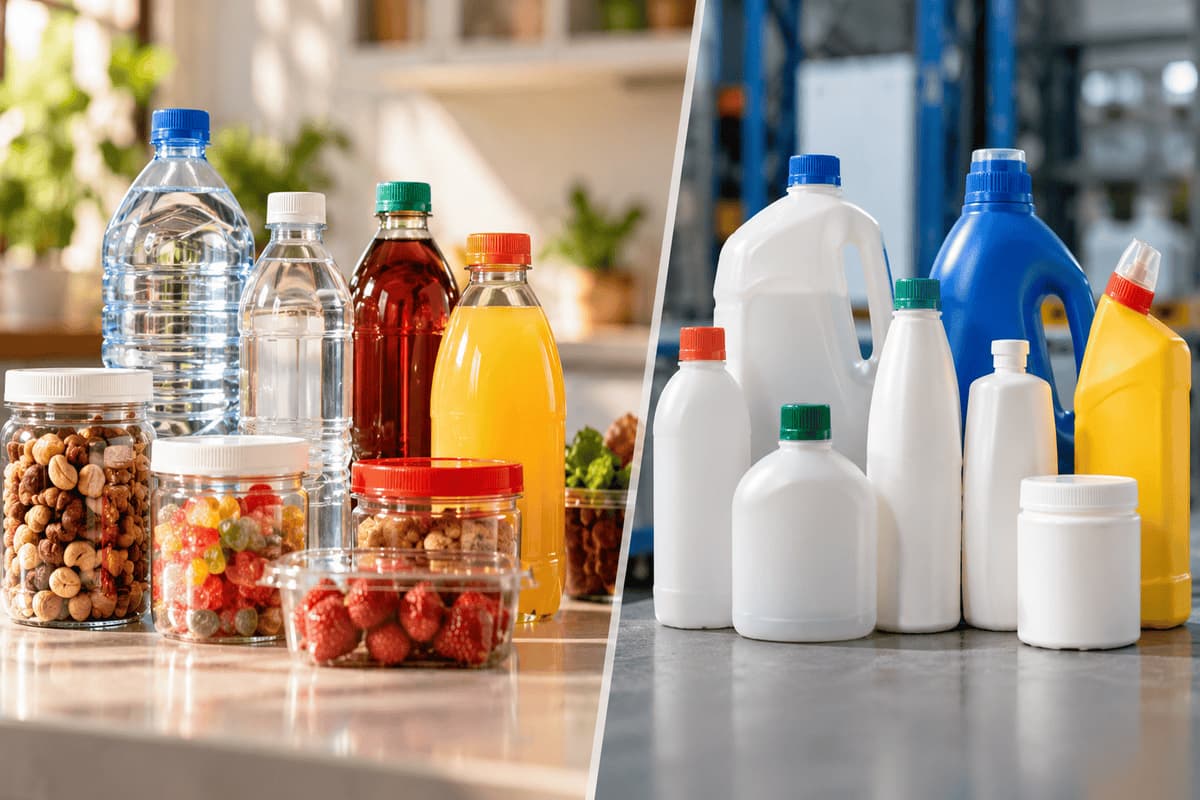
Choosing the right plastic for a bottle or container can affect much more than how the packaging looks. The material can influence product protection, shelf life, durability, transportation, customer experience, and overall packaging cost.
Two of the most widely used materials for plastic bottles and containers are PET and HDPE. Both have their own characteristics and are suitable for different applications. PET is known for its clarity, lightweight construction, and attractive appearance, while HDPE is recognized for its durability, impact resistance, and chemical compatibility.
For businesses sourcing packaging, the right choice depends on the product being packaged and how that product will be stored, transported, and used. A reliable Plastic Bottles manufacturer in Pakistan can help businesses evaluate these requirements and select a bottle material that fits their application.
What Is PET Plastic?
PET stands for Polyethylene Terephthalate. It is a strong, lightweight plastic commonly used to manufacture bottles, jars, and other packaging products.
One of PET's most recognizable features is its clear and transparent appearance. This allows customers to see the product inside, which can be particularly useful for beverages, juices, sauces, and other products where appearance contributes to the buying experience.
PET also offers good strength while remaining relatively lightweight. This makes it practical for packaging that needs to travel through distribution networks without adding unnecessary weight.
Some key characteristics of PET include:
- Clear and transparent appearance
- Lightweight construction
- Good rigidity and strength
- Useful barrier properties
- Suitability for many food and beverage applications
- Recyclability where appropriate collection and recycling systems are available
Because of these characteristics, PET is frequently used for bottles and jars across food, beverage, personal care, and household applications.
Common Uses of PET Bottles
PET bottles can be found in many everyday applications, including:
- Beverages and drinking products
- Plastic juice bottles
- Water and other liquid products
- Sauces and condiments
- Food products
- Personal care products
- Certain household products
For businesses that want their customers to see the color, texture, or quantity of the product, PET can be a practical packaging option.
What Is HDPE Plastic?
HDPE stands for High-Density Polyethylene. It is another widely used plastic for bottles, jars, containers, and industrial packaging.
HDPE is particularly valued for its toughness and resistance to impact. It can withstand regular handling and is suitable for applications where packaging may experience drops, pressure, or demanding transportation conditions.
Compared with PET, HDPE is often opaque or translucent rather than completely clear. This can provide a more solid and practical appearance when product visibility is not a major requirement.
Key characteristics of HDPE include:
- High durability
- Strong impact resistance
- Good chemical resistance
- Very good moisture resistance
- Opaque or translucent appearance
- Suitability for demanding storage and handling conditions
These characteristics make HDPE useful across personal care, household, pharmaceutical, chemical, food, and industrial packaging applications.
Common Uses of HDPE Bottles
HDPE bottles and containers are commonly considered for:
- Shampoo and personal care products
- Household cleaning products
- Chemical containers
- Pharmaceutical packaging
- Food and household products
- Industrial packaging
The exact suitability of HDPE depends on the formulation being packaged, bottle design, closure, and required performance.
PET vs HDPE: Key Differences
PET and HDPE can both produce reliable packaging, but their characteristics differ.
| Feature | PET | HDPE |
|---|---|---|
| Appearance | Clear and glossy | Usually opaque or translucent |
| Strength | Strong and lightweight | Highly durable and impact-resistant |
| Chemical resistance | Good for many applications | Excellent for many applications |
| Moisture resistance | Good | Very good |
| Product visibility | Excellent | Limited |
| Typical feel | Rigid and smooth | Tough and slightly flexible |
| Common applications | Beverages, food, personal care | Household, personal care, industrial products |
These characteristics should be treated as general comparisons rather than guarantees. Actual performance depends on the bottle's thickness, shape, formulation, manufacturing process, closure, and the product being packaged.
PET vs HDPE for Product Protection
Moisture and Oxygen Protection
Packaging plays an important role in protecting products from external conditions. Moisture and oxygen can affect the quality and stability of certain foods, beverages, personal care products, and other formulations.
PET offers useful barrier properties and is widely used for products where protection and product visibility are both important. HDPE also provides good moisture resistance and can be suitable for products that require durable packaging.
The correct material depends on how sensitive the product is to moisture, oxygen, light, and other environmental factors. Businesses should evaluate the actual formulation rather than selecting a material based only on general packaging trends.
Chemical Compatibility
Chemical compatibility becomes especially important when packaging shampoos, cleaning products, pharmaceuticals, industrial formulations, or other products containing active ingredients.
HDPE is known for its strong chemical resistance and is therefore widely used for many demanding applications. PET can also work well with numerous products, but compatibility should be evaluated based on the specific formulation, concentration, storage conditions, and intended shelf life.
Testing is particularly important when introducing a new formulation or changing packaging materials.
Which Material Looks Better on the Shelf?
Packaging appearance can influence how customers perceive a product.
PET
PET provides a clear, glossy appearance that allows customers to see the product inside. This can be useful when product color, texture, or quantity contributes to the purchasing decision.
Clear PET packaging can also create a clean and polished appearance for beverages, food products, sauces, and personal care items.
HDPE
HDPE is commonly available in opaque or translucent forms. While customers may not be able to see the entire product, the material provides a practical and durable appearance.
HDPE can be useful when protection, impact resistance, or chemical compatibility is more important than product visibility.
PET vs HDPE for Different Products
The best material often becomes clearer when you look at the product being packaged.
Beverages and Juice
PET is commonly considered for beverage applications because it combines lightweight construction, strength, and product visibility.
Plastic juice bottles made from suitable PET grades can provide customers with a clear view of the beverage while keeping packaging weight relatively low. Bottle design, wall thickness, closure selection, and sealing performance should also be considered when packaging liquid products.
Shampoo and Personal Care
HDPE can be a practical choice for shampoo and other personal care products because of its durability and resistance to everyday handling.
Bottles used in bathrooms, stores, warehouses, and transportation networks may experience repeated squeezing, dropping, and handling. A suitable HDPE design can provide the toughness needed for these conditions.
PET may also be suitable for certain personal care products, particularly where a clear or more polished appearance is desired.
Food and Spices
Food and spice packaging needs to protect the contents from contamination and environmental exposure.
Both PET and HDPE can be used for food-related applications when the material, manufacturing process, closure, and overall packaging design are appropriate for the product.
For dry foods and spices, plastic jar containers can provide a practical combination of protection, storage convenience, and shelf presentation.
Pharmaceuticals
Pharmaceutical packaging requires careful consideration of hygiene, compatibility, moisture protection, product stability, and applicable regulatory requirements.
PET and HDPE may both be used for different pharmaceutical packaging applications, but the final choice should be based on the specific formulation and packaging requirements.
Businesses should verify packaging suitability through appropriate testing and compliance procedures rather than assuming that one material works for every pharmaceutical product.
Household and Industrial Products
HDPE is frequently considered for household cleaning products and industrial applications because of its durability and chemical resistance.
Products that may encounter demanding transportation, storage, or handling conditions can benefit from packaging designed around impact resistance and chemical compatibility.
PET vs HDPE: Which Is More Cost-Effective?
There is no universal answer to which material is cheaper. The total packaging cost depends on several factors.
These may include:
- Material consumption
- Bottle weight
- Manufacturing process
- Bottle size and shape
- Closure requirements
- Order quantity
- Transportation costs
- Storage requirements
- Customization requirements
For example, a lightweight bottle may reduce transportation costs even if its material price is not the lowest available option.
Purchasing volume can also influence pricing. Businesses buying Plastic Bottle wholesale quantities may be able to achieve a lower per-unit cost than businesses purchasing small quantities.
For this reason, it is better to compare the complete packaging cost rather than looking only at the price of the raw plastic material.
Sustainability and Recycling Considerations
Both PET and HDPE are widely used plastics with established recycling streams in many markets. Their environmental impact, however, cannot be determined simply by declaring one material better than the other.
Factors such as bottle weight, recycled content, manufacturing processes, transportation distance, product shelf life, recycling infrastructure, and end-of-life handling can all influence the overall environmental impact of packaging.
Lightweight packaging can reduce the amount of material required and may also reduce transportation weight. At the same time, proper collection and recycling are necessary for recyclable packaging to return to useful material streams.
Businesses should therefore consider the complete packaging lifecycle when making sustainability decisions.
How to Choose Between PET and HDPE
Before selecting a bottle material, ask a few practical questions:
- What product will the bottle contain?
- Does the product need to remain visible?
- Is chemical resistance important?
- Does the packaging need high impact resistance?
- How sensitive is the product to moisture or oxygen?
- What bottle shape and size are required?
- Will the packaging travel long distances?
- What type of cap or closure is required?
- What quantity will be ordered?
- Are there specific regulatory or packaging requirements?
Answering these questions can narrow down the most suitable material and bottle design.
Working With a Plastic Bottles Manufacturer in Pakistan
Selecting packaging is easier when the manufacturer understands the product rather than simply supplying a standard bottle.
A Plastic Bottles manufacturer in Pakistan can help businesses evaluate requirements such as:
- Material selection
- Bottle size and capacity
- Bottle shape
- Wall thickness
- Cap and closure options
- Custom bottle designs
- Production quantities
- Wholesale requirements
- Packaging for transportation and storage
Businesses may need standard bottles for an existing product or custom packaging designed around a particular shape, capacity, or brand requirement.
A manufacturer can also help determine whether PET, HDPE, or another suitable packaging material fits the product and production requirements.
PET or HDPE: Which One Should You Choose?
Neither PET nor HDPE is the right choice for every product. The better material depends on what the packaging needs to accomplish.
PET may be suitable when:
- Product visibility is important
- Clear packaging is preferred
- Lightweight rigid packaging is required
- Beverage or food presentation matters
- A smooth, glossy appearance is desired
HDPE may be suitable when:
- Impact resistance is important
- Chemical resistance is a priority
- Opaque packaging is acceptable
- The product requires durable everyday handling
- Moisture resistance is an important consideration
The final decision should always consider product compatibility, storage conditions, transportation, bottle design, closure requirements, and applicable packaging standards.
Conclusion
PET and HDPE are both versatile materials used across the plastic packaging industry, but they serve different packaging needs.
PET offers clear product visibility, lightweight construction, strength, and a polished appearance, making it a common option for beverages, food products, and selected personal care applications. HDPE provides durability, impact resistance, moisture resistance, and strong chemical compatibility, making it useful for personal care, household, pharmaceutical, and industrial products.
Choosing between them is less about finding one universally better material and more about matching the packaging to the product.
If you are sourcing bottles, jars, containers, shampoo bottles, Plastic juice bottles, or custom packaging, discuss your product, required size, quantity, storage conditions, and transportation needs with an experienced manufacturer. The right packaging design can help protect the product while also meeting practical production and presentation requirements.