Effective Pharmacy Advertising Network Strategies for Search PPC
-
- Published Updated
- 1,870 views
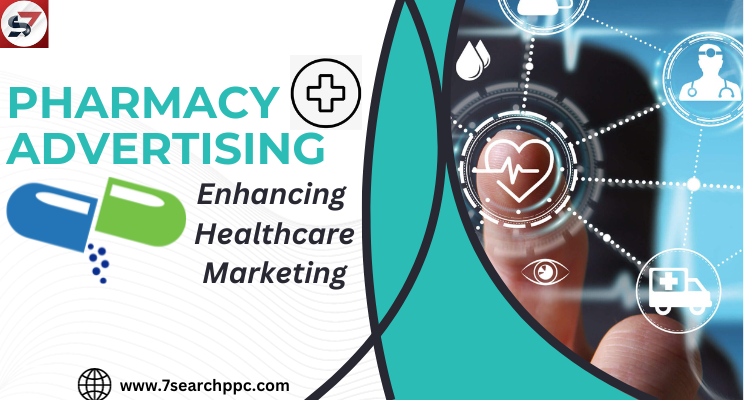
The Pharmacy Advertising Network is an approach to healthcare marketing that uses search PPC (pay-per-click) and related digital channels to connect pharmacies, health clinics, and clinicians with people searching for medications, services, or local care. Search PPC campaigns within a Pharmacy Advertising Network focus on relevance, compliance, and measurement to improve click-through rates (CTR), reduce cost-per-click (CPC), and support safe patient engagement.
- Pharmacy Advertising Networks combine search PPC tactics, targeting, and compliant creative to reach relevant audiences.
- Key components include keyword strategy, ad extensions, landing page experience, and conversion tracking.
- Compliance with privacy and advertising regulators (HIPAA, FTC, FDA) is essential.
- Measurement best practices include attribution, A/B testing, and quality score management.
Pharmacy Advertising Network: How search PPC adds value
Search PPC drives intent-based traffic by showing ads when potential patients or customers search for pharmacy services, prescriptions, immunizations, or over-the-counter options. A Pharmacy Advertising Network organized around search PPC can improve local visibility, increase qualified leads, and support public-health initiatives such as vaccination campaigns or medication adherence programs. Core performance metrics include CTR, conversion rate, cost per acquisition (CPA), and lifetime value (LTV) of patients or customers.
Benefits of using search PPC in a pharmacy advertising strategy
Immediate visibility and local reach
Search PPC places advertisers at the top of search results when users show intent. For pharmacies with physical locations, geotargeting and local ad extensions help capture nearby searches and drive in-store visits or click-to-call actions.
Control over budget and messaging
PPC campaigns allow precise budget control, scheduling, and messaging variations. Ad copy and extensions can highlight services such as same-day pickup, immunizations, or medication synchronization while using sitelinks to direct users to relevant pages.
Key components of a Pharmacy Advertising Network search PPC campaign
Keyword strategy and match types
Use a mix of branded, non-branded, product, and long-tail keywords that reflect user intent. Implement negative keywords to reduce irrelevant spend and optimize match types for balance between reach and precision.
Ad creative and relevance
Ad headlines and descriptions should align with search queries and landing pages. Include clear calls to action (CTAs) and make use of ad extensions—location, call, sitelink, and structured snippets—to boost ad real estate and CTR.
Landing page experience and conversion tracking
Landing pages must load quickly, be mobile-optimized, and present clear next steps for bookings, refill requests, or information requests. Set up conversion tracking and event measurement to attribute value to clicks and to inform bidding strategies.
Compliance, privacy, and regulatory considerations
Regulatory context
Advertising related to medications and healthcare is subject to oversight by regulators such as the Federal Trade Commission (FTC) and the Food and Drug Administration (FDA) for content accuracy, claims, and required disclosures. Handling patient data triggered by ads (for example, online refill forms or appointment bookings) requires attention to privacy rules like HIPAA in the United States.
Privacy best practices
Limit collection of personally identifiable health information in ad landing pages unless secure, consent-driven processes and appropriate business associate agreements are in place. When designing remarketing and audience strategies, avoid collecting sensitive health data unless compliant protocols are established and documented. For official guidance on privacy obligations such as HIPAA, consult the Department of Health and Human Services resources: HHS HIPAA guidance.
Targeting, bidding, and measurement
Audience segmentation and targeting
Combine search intent signals with location, device, and time-of-day modifiers to reach audiences when they are most likely to convert. Consider demographic constraints where appropriate and lawful; use first-party data from pharmacy management systems to refine audiences responsibly.
Bidding strategies and attribution
Choose bidding that reflects business goals—maximize clicks for traffic, target CPA for conversions, or use value-based bidding for revenue optimization. Implement cross-channel attribution models to understand how search PPC interacts with display, social, and direct channels.
Operational best practices
Testing and quality optimization
Run regular A/B tests for ad copy, landing pages, and call-to-action wording. Monitor quality score components—expected CTR, ad relevance, and landing page experience—to reduce CPC and improve ad rank.
Reporting and governance
Establish governance for creative approvals, data retention, and vendor access. Maintain audit trails for ad changes and ensure that marketing teams coordinate with compliance and clinical stakeholders for medically related content.
Implementation checklist
- Define campaign objectives tied to measurable outcomes (appointments, refills, phone calls).
- Develop keyword lists and negative keyword lists for each service area.
- Build mobile-optimized, privacy-conscious landing pages with clear CTAs.
- Configure conversion tracking and attribution reporting.
- Review ad content for regulatory compliance and obtain necessary approvals.
- Set up regular performance reviews and iterative optimization cycles.
Conclusion
A Pharmacy Advertising Network focused on search PPC combines intent-driven reach with precise targeting and measurement to support pharmacy services and patient access. Success depends on aligning campaign design with compliance requirements, user experience best practices, and continuous testing to improve efficiency and outcomes.
What is a Pharmacy Advertising Network and how does it use search PPC?
A Pharmacy Advertising Network uses search PPC to show ads to users who are actively searching for pharmacy-related terms. Campaigns leverage keyword strategy, local targeting, ad extensions, and optimized landing pages to convert search intent into actions such as bookings, refills, or store visits.
How should privacy and HIPAA concerns be handled in pharmacy advertising?
Privacy should be prioritized by minimizing collection of protected health information in ad flows, using secure forms when necessary, and coordinating with legal or compliance teams to ensure adherence to HIPAA or other applicable privacy rules.
Which performance metrics matter most for search PPC in a pharmacy context?
Key metrics include CTR, conversion rate, CPA, cost per click (CPC), quality score, and downstream measures like appointment fulfillment or prescription pickup rate. Combine these with attribution analysis for a full view of campaign impact.