Navigating the Frontiers of STEM Education: A Strategic Framework for Mastering Complex Physics Problem-Solving in the A
-

- Published Updated
- 5,241 views
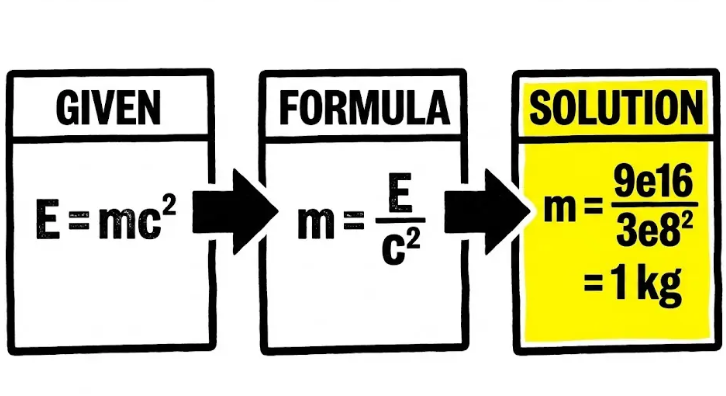
For students, educators, and researchers navigating the rigorous landscape of the 21st-century STEM curriculum, physics remains one of the most intellectually demanding disciplines. The challenge is rarely confined to simple mathematical computation; rather, it lies in the abstract conceptual synthesis required to bridge theoretical laws and physical reality. As the complexity of academic problems scales, many learners find themselves facing a "cognitive wall" where traditional study methods prove insufficient. To address this, the integration of advanced analytical tools, such as https://physicsai.chat, has become a pivotal component of modern learning workflows. By leveraging such resources, students can deconstruct multi-layered problems into logical, manageable components, ensuring that the conceptual foundation is secure before proceeding to the numerical solution.
1. The Cognitive Architecture of Physics Mastery
Mastering physics requires more than the rote memorization of formulas. It demands an understanding of the underlying "grammar" of the universe. When faced with a complex scenario—be it in classical mechanics, electromagnetism, or quantum theory—the first step must always be qualitative deconstruction. This involves identifying the "First Principles" at play. For instance, before writing down an equation for a moving object, one must determine if the system is isolated, if energy is conserved, and what external forces are acting upon the body.Without this initial qualitative phase, students often fall into the trap of "formula hunting," where they search for an equation that fits the given variables without understanding the physical context. This approach is prone to catastrophic errors, especially in advanced topics where boundary conditions change the fundamental nature of the governing equations.
2. Bridging the Mathematical and Conceptual Divide
The transition from a physical concept to a mathematical model is where most learners struggle. This is particularly evident in calculus-based physics, where the rate of change and accumulation are central to the phenomena being studied. For example, deriving the work done by a variable force requires a deep understanding of integration. Modern educational technology now allows students to verify these derivations in real-time. By using a specialized solver, a learner can cross-reference their intermediate steps, ensuring that a sign error or a misplaced constant doesn't derail an entire hour of work. This iterative feedback loop is essential for building confidence and technical proficiency.
3. The Diagnostic Power of Dimensional Analysis
A hallmark of a professional physicist is the constant use of dimensional analysis. This technique serves as a built-in error-detection system. If a student is solving for time but their final units result in kilograms, they know immediately that a logical error occurred in the setup of the problem. Beyond just checking units, dimensional analysis helps students understand the relationships between different physical quantities—how force relates to mass and acceleration, or how power relates to energy and time. In an increasingly automated world, maintaining this level of "manual" logical checking is vital for developing true scientific intuition.
4. Stress-Testing Solutions through Limiting Cases
To truly "own" a concept, one must understand how it behaves under extreme conditions. This is known as testing the limiting cases. If you are calculating the gravitational pull between two masses, what happens as the distance between them approaches infinity? The force should approach zero. If your derived formula does not reflect this reality, the model is flawed. This practice of stress-testing solutions forces the brain to reconcile the abstract math with observable physical reality, turning a static homework answer into a dynamic piece of knowledge.
5. The Future of STEM: Human-AI Collaboration
As we look toward the future of education, the role of artificial intelligence in the classroom is becoming more defined. It is not a replacement for critical thinking, but rather a sophisticated assistant that handles the "heavy lifting" of computation and verification. This allows the human mind to focus on the higher-order tasks of synthesis, hypothesis generation, and creative problem-solving. By integrating these tools into a daily study routine, students can spend less time on repetitive arithmetic and more time exploring the profound implications of physical laws.In conclusion, academic success in the physical sciences is a product of rigorous methodology and the strategic use of modern resources. By prioritizing conceptual deconstruction, utilizing verification tools for complex derivations, and consistently applying diagnostic techniques like dimensional analysis, learners can navigate the complexities of the STEM curriculum with greater ease. The goal of modern education is not just to find the answer, but to understand the journey taken to reach it.