Power Workholding: Improving Precision, Stability and Manufacturing Efficiency
-

- Published Updated
- 59 views
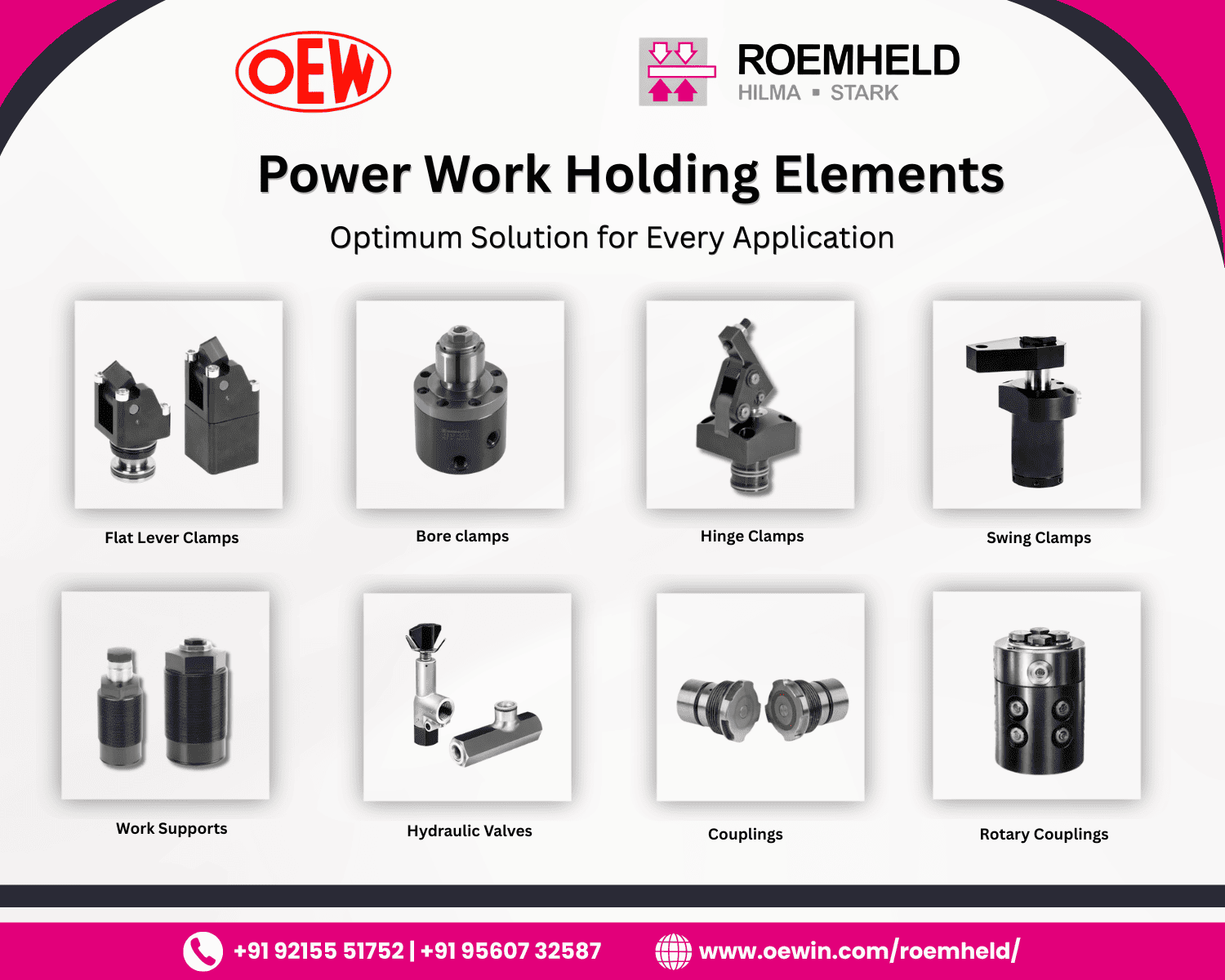
Modern manufacturing depends on accuracy, repeatability and efficient production processes. As machining operations become more demanding, manufacturers need reliable methods to hold and position components securely during production. This is where Power Workholding plays an important role.
Power workholding solutions are designed to provide controlled and dependable clamping of workpieces, helping manufacturers maintain consistent positioning during machining and other manufacturing operations. By supporting stable component handling, these systems can contribute to improved process control, repeatability and overall production efficiency.
What Is Power Workholding?
Power Workholding refers to powered systems used to secure workpieces during machining and manufacturing operations. Instead of relying only on manually operated clamping arrangements, powered workholding uses controlled mechanisms to apply clamping force.
The objective is simple: keep the component securely positioned while the manufacturing process takes place.
Depending on the application, workholding solutions can be integrated into machining centres, production lines, special-purpose machines and other industrial setups. The appropriate solution depends on factors such as component geometry, machining requirements, available space and required clamping force.
Why Stable Workholding Matters
A machining process can only deliver consistent results when the workpiece remains properly positioned. Movement or insufficient clamping can affect dimensional accuracy, surface quality and process repeatability.
A suitable workholding arrangement can help address these challenges by providing:
- Secure component positioning
- Consistent clamping force
- Better process repeatability
- Efficient component loading
- Improved machining stability
For production environments handling different components and demanding machining cycles, these benefits can make workholding an important part of the overall manufacturing strategy.
The Role of Roemheld Workholding
Roemheld workholding is associated with industrial workholding solutions developed for demanding manufacturing applications. These solutions cover different approaches to securing and positioning components according to specific production requirements.
The selection of a workholding solution should always consider the actual manufacturing process. Component size, shape, machining forces, accessibility and production volume can influence the type of system required.
For manufacturers, this means that workholding should not be treated as an isolated machine accessory. It is an important part of the complete production setup.
Power Workholding for Modern Manufacturing
Today's manufacturing operations increasingly focus on reducing unnecessary setup time while maintaining consistent quality. Power Workholding can support this objective by providing controlled clamping and simplifying repetitive workpiece handling.
When workpieces need to be positioned repeatedly, a suitable powered system can help establish a more consistent operating method. This can be particularly useful in production environments where the same or similar components are processed through repeated machining cycles.
Another important consideration is accessibility. A well-planned workholding system can provide secure positioning without unnecessarily restricting access to the areas that need machining.
Selecting the Right Workholding Solution
There is no single workholding arrangement suitable for every manufacturing application. Before selecting a solution, manufacturers should evaluate several technical factors.
1. Workpiece Geometry
The shape and dimensions of the component influence how it should be supported and clamped. Irregular or complex components may require a more application-specific arrangement.
2. Machining Requirements
Cutting forces, machining direction and the operations being performed should be considered when determining the required clamping approach.
3. Production Volume
High-volume production may benefit from solutions designed for repeatability and efficient handling, while lower-volume applications may have different priorities.
4. Machine Configuration
Available mounting space, machine layout and access to the workpiece can influence the final workholding design.
5. Process Consistency
Manufacturers should consider how easily the workpiece can be positioned and clamped consistently from one cycle to another.
Workholding and Production Efficiency
Production efficiency is not only about machining speed. It also depends on how effectively components move through each stage of the manufacturing process.
Workholding can influence setup, positioning, clamping and component accessibility. A properly selected solution can therefore become an important element in improving the consistency of repetitive operations.
For manufacturers looking to modernize their production processes, evaluating the workholding arrangement alongside machining equipment, tooling and process requirements can provide a more complete approach to manufacturing improvement.
OEW and Industrial Workholding Solutions
Oriental Engineering Works Pvt. Ltd. (OEW) has been the sole representative for the Roemheld Gruppe GmbH, Germany, in India since 1988.
Through its long-standing association with Roemheld, OEW supports industrial customers seeking workholding solutions suited to their manufacturing requirements. The focus is on understanding the application and identifying an appropriate technical solution rather than treating every production requirement in the same way.
For manufacturers exploring Power Workholding or roemheld workholding, understanding the application, component requirements and production process is an important first step toward selecting a suitable solution.
Looking Ahead
As manufacturing continues to move toward greater automation, repeatability and process efficiency, reliable workholding will remain an important consideration. Secure component positioning supports consistent machining and helps manufacturers build more controlled production processes.
From individual machining operations to larger production systems, the right workholding approach can contribute to stability, repeatability and efficient component handling.
For companies evaluating new manufacturing equipment or improving existing production processes, Power Workholding provides an important area to consider alongside machining, tooling and automation requirements.
To know more, check it out https://www.oewin.com/roemheld/