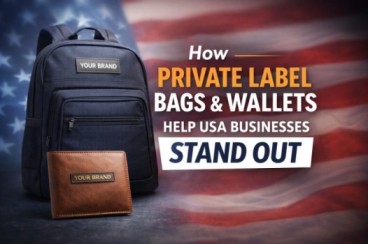
How Private Label Bags & Wallets Help USA Businesses Stand Out
-
- March 25th, 2026
- 8,896 views
The American accessories market is crowded in a specific way. It's not crowded with great products, it's crowded with similar ones. Walk into three different boutiques in any mid-size city and you'll see versions of the same crossbody bag, sourced from the same wholesale catalog, branded with different logos, selling at nearly identical price points. The stores look different. The products don't.
For USA businesses trying to build something that lasts in this environment, the catalog approach is a ceiling, not a floor. You can execute it well. You can market it well. But the underlying product is available from your competitors in essentially the same form, which means you're always one discovery away from a customer finding the same thing cheaper somewhere else.
Private label bags and wallets remove that ceiling. When the product is yours, designed to your spec, produced to your standard, available exclusively through your brand, the competitive comparison breaks down at the product level before it ever reaches the price level. This piece is about how that works in practice for USA businesses, and what it takes to build a private label accessories program that actually delivers the differentiation it promises.
Why Standing Out Has Become Harder and More Valuable Simultaneously
Standing out in the USA accessories market is harder than it was ten years ago for the same reason it's more valuable: the internet made discovery easy and differentiation cheap to fake. Every brand has a good website now. Every brand has decent product photography. Every brand can present itself as a quality-focused label with a compelling story. The customer has learned to look past the presentation and evaluate the product itself.
That customer skepticism is actually good news for businesses willing to invest in genuine product differentiation. In a market where every brand claims quality and specificity, the ones that actually deliver it are more visible, not less. The customer who's been disappointed by a leather wallet that looked better in the photo than it felt in the hand is primed to recognize, and reward, a wallet that genuinely delivers on its material promise.
Private label bags and wallets are the direct path to that recognition. Not private label in the sense of putting your logo on someone else's catalog product, that's badge work, not differentiation. Private label in the sense of product developed to your specification, in your materials, with your design choices applied to the details that customers actually notice. That product stands out because it's genuinely different, not because the marketing says it is.
Rays Creations in Dix Hills, New York builds private label accessories programs at this level, leather wallets, duffle bags, crossbody bags, totes, and more, with the spec depth that makes a product genuinely yours rather than generically branded. They work with USA businesses across stages, from first private label runs to established seasonal programs. Reach them at 2 Vanderbilt Parkway, Dix Hills, NY 11746.
Bulk Leather Wallets: How Private Label Turns a Commodity Into a Signature
Private label bulk leather wallets help USA businesses stand out by converting the most commoditized accessory category in retail into a brand signature, because a wallet spec'd to a brand's specific material grade, color story, and construction standard is no longer a wallet, it's a representation of what that brand believes quality should feel like, and customers who buy it are buying that belief as much as the product.
The leather wallet category is simultaneously the most competitive and the most differentiated-by-quality of any accessory. Every brand sells leather wallets. Very few of them have made specific decisions about what their leather wallet actually is, which layer of the hide, which tannage method, which edge finish, which card slot construction. Most have made one decision: which catalog option fits the budget.
Bulk leather wallets built through a private label program look different from the outside and feel completely different in the hand. The leather has the surface character of full-grain rather than the processed uniformity of lower grades. The stitching pattern is consistent with the brand's aesthetic rather than defaulted to whatever the supplier runs most. The lining, if there is one, matches the brand's color story rather than whatever fabric the factory had available. These details are visible and tactile to any customer who handles the wallet with attention, which is exactly what leather goods customers do at point of purchase.
The standing-out advantage in this category is durable specifically because most competitors won't do this work. Building a genuine private label wallet spec requires conversations about leather grades, construction methods, and hardware that most catalog-sourcing brands have never had. The brand that has them, and builds a wallet that reflects the answers, is operating in a category of one rather than a category of many. Their wallet is the answer to the question their specific customer has been asking. Nobody else's is.
The repeat purchase structure of the wallet category amplifies the standing-out advantage over time. A brand that made a wallet worth coming back for doesn't just acquire customers, it retains them. And retained customers become vocal advocates in the most credible possible way: by answering "where did you get that wallet?" with your brand's name.
USA businesses ready to convert their wallet program from catalog selection to genuine brand signature should look at the bulk leather wallets options at Rays Creations, where full leather grade selection, construction spec, and color story alignment are part of the standard private label process.
Duffle Bag Wholesale Supplier: Why Private Label Duffles Create Unmistakable Market Presence
A private label duffle bag wholesale supplier relationship helps USA businesses stand out by creating the kind of market presence that catalog products can't, a bag with a specific design identity, construction quality, and material character that gets recognized and asked about in the environments where the brand's target customer spends time, generating the organic visibility that no paid channel can buy at the same quality of impression.
The duffle bag has an inherent visibility advantage over smaller accessories. It travels, to the gym, the airport, the hotel, the trailhead, in environments where other people who buy duffle bags are paying attention to what a quality bag looks like. That contextual visibility in high-quality environments is a brand impression worth building a private label program around, because it reaches exactly the people most likely to buy the same product and puts your brand in front of them in the context of genuine use rather than a feed scroll.
Catalog duffle bag wholesale supplier products don't generate this impression because they're indistinguishable from each other in those environments. The catalog bomber in black that three other brands also carry doesn't get asked about, it's just a black duffle. The private label duffle with a distinctive material choice, a custom hardware finish, or a color combination that isn't available anywhere else gets asked about because it stands out as something specific rather than blending into the background of bags everyone has seen before.
The construction investment that makes private label duffles worth building is concentrated in the details that determine longevity, because longevity is what keeps a private label duffle in active use long enough to generate the visibility and advocacy that justify the program investment. Handle attachment that uses bar-tacked reinforcement over a wide base rather than single-pass stitching. Base structure with internal reinforcement that holds the bag's shape across years of heavy use. Zipper specification appropriate to the weight and frequency of use this bag category actually sees. These decisions are made at the spec stage in a private label relationship and defaulted to supplier minimums in a catalog one.
USA businesses building a lifestyle or travel accessories program designed for maximum brand visibility should look at what's available through a duffle bag wholesale supplier like Rays Creations, where design identity, hardware finish, and construction longevity are built into the private label spec rather than inherited from a catalog.
Private Label Cross Body Bags in USA: Standing Out in the Category Customers Talk About Most
Private label cross body bags in USA give businesses one of the strongest standing-out opportunities in the accessories market, because the crossbody is the bag category with the highest social sharing rate, the highest gift purchase rate, and the most active community of customers who pay specific attention to design details and discuss them publicly, creating earned visibility for brands whose product is genuinely worth discussing.
The crossbody bag customer is one of the most engaged accessories buyers in the market. They research before buying. They read reviews carefully. They share their purchases in contexts, travel photos, outfit posts, daily carry content, where the bag is visible and legible to exactly the kind of audience who buys the same category. When a crossbody is genuinely good, this community does work for the brand that no paid placement can replicate.
Private label cross body bags in USA developed with the specific design details this customer notices, a distinctive closure hardware, a strap system that distributes weight correctly, an interior organization that serves how people actually use their daily bag rather than a generic pocket layout, earn their way into this community's conversation. The catalog crossbody doesn't earn that placement because there's nothing specific enough about it to discuss. It's not bad. It's just not anything in particular.
Developing a private label crossbody with the design specificity to generate this kind of community engagement requires more conversation with a supplier than catalog sourcing does. It requires understanding your customer well enough to spec a product around how they use it rather than how a broad market uses the category. That understanding, what they carry, how they carry it, what fit problems they've had with other crossbodies, what details they've photographed approvingly on other people, is the design brief that separates a private label crossbody worth building from one that's a logo on a generic form.
Domestic private label production provides an additional standing-out advantage for USA businesses in this category: the "made in USA" story, or at minimum the "designed and quality-controlled in the USA" story, is increasingly meaningful to the crossbody customer who researches before buying. A sourcing story that includes domestic manufacturing oversight carries more weight with this customer than one that doesn't, and it's a differentiator that catalog-sourcing competitors can't claim.
USA boutiques, DTC brands, and lifestyle companies building a crossbody program designed to earn community-driven visibility should look at the private label cross body bags in usa options at Rays Creations, where design specificity, domestic production, and construction quality give businesses a crossbody worth the conversation it generates.
Wholesale Apparel Manufacturers: How Private Label Across Categories Creates a Standout Brand
Wholesale apparel manufacturers who support private label development across both apparel and leather accessories help USA businesses stand out not just in individual product categories but at the brand level, because a business whose jacket, wallet, and bag were all developed with the same design intelligence and quality commitment presents as a brand with a coherent point of view, and a coherent point of view is one of the rarest and most valuable things in the USA accessories and apparel market.
Most USA businesses building across apparel and accessories develop each category separately, different suppliers, different conversations, different quality standards applied at different times. The result is a product line that's competent across categories but coherent in none. The jacket is good. The bag is good. But they don't feel like they came from the same place, because they didn't. That incoherence is something customers sense before they can articulate it, and it undermines the brand authority that a genuinely coherent product line creates.
Wholesale apparel manufacturers who handle private label across both apparel and accessories from one operation give USA businesses the coherence advantage without the operational overhead of engineering it across multiple vendors. The design conversations happen in one place. The material quality philosophy is consistent. The hardware sourcing approach applies across categories. The result is a product line that looks and feels built rather than assembled, and that distinction is exactly the standing-out advantage that the most competitive USA brands have and the most forgettable ones lack.
The practical standing-out benefit of working with a single private label manufacturing partner shows most clearly in the customer upgrade path. When a customer who bought a brand's leather wallet returns to buy a jacket, because the wallet was good enough that they trust the brand in adjacent categories, the jacket that meets the same quality standard as the wallet converts that trust into a sale with almost no acquisition cost. That cross-category trust is what a coherent private label program builds over time, and it's what a collection assembled from separate vendors rarely achieves because the quality standard was never unified.
USA businesses who want their brand to stand out as a coherent label rather than a collection of individual good products should look at wholesale apparel manufacturers like Rays Creations, who develop private label leather goods and apparel from one operation so the design intelligence and quality standard are genuinely consistent across everything bearing the brand's name.
The Private Label Development Process That Actually Produces Standout Products
The difference between a private label program that genuinely helps a USA business stand out and one that produces expensively branded catalog product is almost entirely in the development process, specifically in whether the process captures genuine design decisions or just documents cosmetic ones.
A development process that produces standout private label starts with the customer rather than the product. Before any spec conversation begins, the question that matters is: who is this for, how do they use this product category, and what has every other product in this category failed to give them that they actually want? The answers to those questions are the brief. The spec is how the brief becomes a product.
The most valuable part of this brief is the failure gap, the specific thing other products in the category have consistently not delivered to the brand's target customer. The crossbody that's always too small or too large for a specific body type. The wallet that always has one card slot too few. The duffle with the right capacity but the wrong handle positioning for comfortable shoulder carry. These gaps are the design opportunities that private label development can close, and closing them is what makes the resulting product genuinely different rather than just differently branded.
Once the brief is clear, the spec process should be specific enough that the production floor can execute it without interpretation. Material grade confirmed. Hardware finish confirmed. Stitching pattern and thread color confirmed. Interior layout confirmed. Every detail that the customer will notice, specified, not left to supplier convention. This specificity is the work that most brands skip when they're in a hurry, and it's the work whose absence shows up in the finished product in ways that are hard to fix after the bulk run.
The sample review should be treated as an evaluation, not a celebration. The sample is a hypothesis about whether the spec translated into product the way the brief intended. Wear it. Load it. Try everything the customer will try before they decide whether to buy it. Identify the gaps between what it is and what it was supposed to be. Those gaps are the revision brief, and addressing them before production begins is always less expensive than discovering them in customer reviews afterward.
What Rays Creations Builds for USA Private Label Programs
Rays Creations is a manufacturing operation at 2 Vanderbilt Parkway, Dix Hills, NY 11746 serving USA businesses building private label accessories and apparel programs. Their range covers leather wallets, crossbody bags, duffle bags, totes, purses, and laptop bags alongside bombers, bikers, denim jackets, hoodies, and activewear, with private label development that goes to the material, construction, and design detail level.
For USA businesses who've been assembling product from catalogs and are ready to build something genuinely theirs, the private label conversation starts with what your customer needs that nobody else is giving them. That conversation is worth having before any spec is written or any sample is ordered. Reach the team at 516-528-5820 or [email protected].
Standing Out Starts With Making Something Specific
The USA businesses that stand out in accessories and apparel aren't the ones with the biggest marketing budgets or the most followers. They're the ones whose products are specific enough to be genuinely recognizable, where the customer who knows the brand can spot one of their products in the wild because it looks like something that was actually thought about.
Private label bags and wallets are how that specificity gets built into a product line. Not through a logo on a catalog item, but through the decisions that go into material, construction, and design before any unit is produced. Those decisions are available to any USA business willing to make them. The ones who do stand out. The ones who don't have a harder time explaining why their product costs what it costs, because the customer can find something similar for less and has every reason to.
Make something specific. Stand out for what the product is rather than what the marketing says it is. That's the private label advantage, and it's available to any USA business ready to use it.